
Bryce Canyon National Park: Nature’s Sculptures and the Art of Preservation
In the high desert of southern Utah, Bryce Canyon National Park reveals a landscape that feels almost surreal.
Thousands of towering rock formations—known as hoodoos—rise from the earth in intricate patterns, their shapes carved over time by the forces of water, ice, and wind. From a distance, they resemble a vast natural amphitheater. Up close, they feel like a gallery of sculptures, each one unique, each one temporary.
Bryce Canyon is not just a place of beauty—it is a place of transformation.
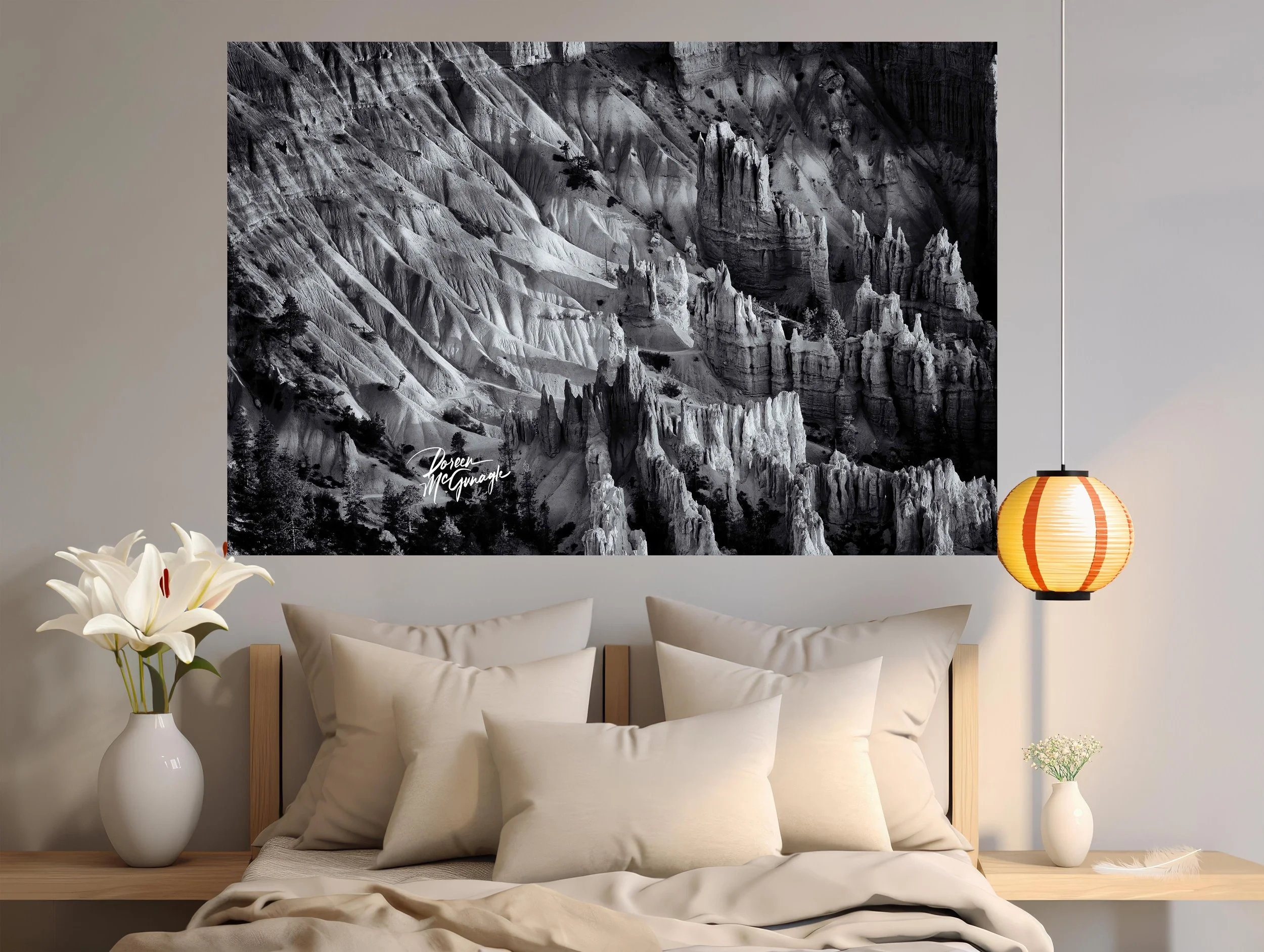
Bryce’s Sculpted Shadows
Bryce’s Sculpted Shadows presents a striking portrayal of a landscape defined by towering cliffs and jagged spires, their sharp vertical silhouettes etched into the horizon. Captured in black and white, this fine art photograph emphasizes the dramatic interplay of light and darkness. Deep shadows carve across the stone, accentuating its bold geometry, while highlights skim the rock’s surface to reveal intricate textures forged over millennia. The result is an image that captures both the monumentality and intimacy of the land—a balance of raw power and quiet contemplation.
🪨 A Landscape Carved by Ice and Time
Unlike many canyon landscapes shaped primarily by rivers, Bryce Canyon owes much of its formation to frost and ice.
Water seeps into cracks in the rock. As temperatures drop, that water freezes and expands, slowly breaking the rock apart in a process known as frost wedging. Over time, this repeated cycle creates the slender spires that define the park.
Each hoodoo is a result of this delicate process.
They are constantly changing—eroding, shifting, and eventually collapsing. New formations emerge as old ones disappear, creating a landscape that is always evolving.
This impermanence is part of what makes Bryce Canyon so remarkable.
🌅 Light, Color, and Depth
Bryce Canyon is a place where light brings the landscape to life.
At sunrise, the hoodoos glow in shades of orange, pink, and gold. Shadows stretch across the amphitheater, emphasizing the depth and complexity of the formations. As the sun rises higher, the colors shift, revealing subtle variations in the rock.
By sunset, the scene transforms once again—warmer tones return, and the interplay of light and shadow creates a sense of movement across the landscape.
For a photographer, Bryce Canyon offers an ever-changing canvas.
Through fine art photography, I aim to capture these transitions—the moments when light reveals the true character of the land.
Each image becomes a study in contrast, texture, and time.
🌿 A Fragile High-Desert Ecosystem
While the hoodoos dominate the visual landscape, Bryce Canyon is also home to a diverse and fragile ecosystem.
Plants and animals have adapted to survive in a challenging environment, where temperatures fluctuate dramatically and water is limited. Pine forests, meadows, and high-desert vegetation all contribute to the park’s ecological balance.
Wildlife—from mule deer to birds of prey—relies on this balance to survive.
Like many desert environments, Bryce Canyon is sensitive to disturbance. Soil erosion, climate changes, and human impact can all affect the stability of the landscape.
Preservation here means protecting not only the formations, but the entire ecosystem that surrounds them.
⚖️ Preserving the Impermanent
Bryce Canyon presents a unique perspective on conservation.
Unlike landscapes that appear stable, this park is defined by change. The hoodoos will not last forever. They are part of a natural cycle of formation and erosion.
Preservation, in this case, is not about stopping change—it is about protecting the natural processes that allow change to occur.
It means ensuring that water can flow, that temperatures can fluctuate naturally, and that the environment remains undisturbed enough for these processes to continue.
This approach challenges how we think about conservation.
It reminds us that protecting nature is not about preserving a moment—it is about preserving the conditions that make that moment possible.
📷 Translating Ephemeral Beauty Through Fine Art
Photographing Bryce Canyon is about capturing something that is constantly evolving.
The formations may appear solid, but their shapes are temporary. Light shifts, shadows move, and the landscape transforms with time.
Through fine art photography, I aim to hold onto these fleeting moments.
Each image becomes a reflection of a specific point in time—a way to preserve the beauty of a landscape that is, by nature, impermanent.
These photographs serve as reminders of both the fragility and resilience of the natural world.
🇺🇸 A Unique Chapter in America’s Natural Legacy
As the United States approaches its 250th anniversary, Bryce Canyon stands as a testament to the diversity and complexity of America’s protected lands.
It represents a different kind of beauty—one that is shaped by subtle forces, one that changes over time, and one that requires thoughtful preservation.
Bryce Canyon reminds us that not all landscapes are defined by permanence.
Some are defined by transformation.
And it is our responsibility to protect both.
🌿 Continuing the Parks & Preservation Journey
Bryce Canyon National Park adds another dimension to the story of America’s protected landscapes.
Each park in this series reveals something new—about time, about change, and about the importance of preserving the natural processes that shape our world.
Together, they form a narrative that is both powerful and deeply connected.
✨ Call to Action
If the unique beauty and ever-changing landscape of Bryce Canyon inspire you, I invite you to continue this journey of preservation and discovery.
📖 Pre-order the upcoming Parks & Preservation book, where fine art photography and storytelling come together to celebrate America’s most extraordinary landscapes and the importance of protecting them.
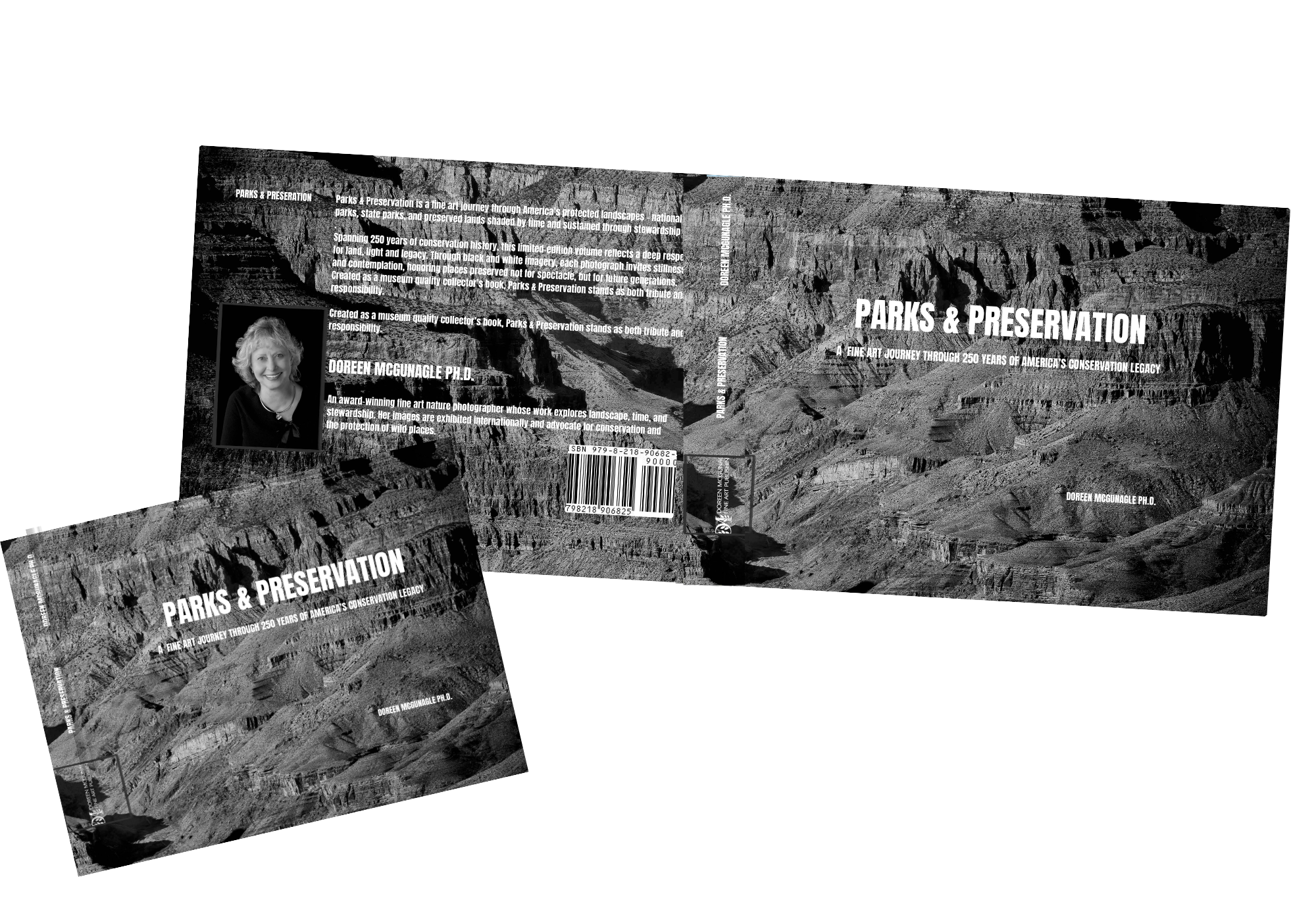
Parks & Preservation — First Edition (Signed Collector Copy)
Created in recognition of the 250th Anniversary of the United States, this volume reflects on preservation as both a civic responsibility and a form of generational stewardship. Through carefully composed imagery emphasizing form, light, and permanence, the collection honors America’s protected landscapes as enduring symbols of shared heritage and environmental responsibility.
🌍 Support Global Voices for Nature Foundation Inc., dedicated to advancing conservation through photography, education, and storytelling—helping preserve fragile and evolving ecosystems like Bryce Canyon for future generations.
Together, we can ensure that these natural sculptures—shaped by time and protected through care—continue to inspire for the next 250 years and beyond.