
There is a quiet stillness at Caddo Lake—one that feels almost suspended in time.
Located on the border of Texas and Louisiana, Caddo Lake State Park is unlike any other landscape in the United States. Here, towering cypress trees rise from dark, reflective waters, their branches draped in Spanish moss. The air is thick with humidity, and the light filters softly through the canopy, creating a scene that feels both mysterious and serene.
It is a place defined not by dramatic movement, but by reflection—both literal and emotional.
🌊 A Rare and Ancient Ecosystem
Caddo Lake is one of the largest naturally formed lakes in the southern United States, and one of the few remaining examples of a mature cypress swamp ecosystem.
Unlike many landscapes shaped by human intervention, Caddo Lake retains much of its natural structure. Its maze of bayous, sloughs, and wetlands supports a complex and interconnected ecosystem that has evolved over centuries.
Water here moves slowly, creating a mirror-like surface that reflects the surrounding trees and sky. This stillness is not inactivity—it is balance.
The lake’s ecosystem depends on this equilibrium, where water levels, vegetation, and wildlife exist in harmony.
🌿 The Iconic Cypress Landscape
The defining feature of Caddo Lake is its cypress trees.
These ancient trees stand rooted in water, their trunks rising vertically before branching outward. Their “knees” protrude above the surface, adding texture and depth to the landscape.
Spanish moss hangs delicately from the branches, softening the scene and creating an almost dreamlike atmosphere.
For a photographer, this environment offers endless opportunities for composition.
Reflections double the visual impact of each scene. Light filters through layers of trees, creating depth and contrast. And subtle movements—ripples in the water, a breeze through the moss—add life to an otherwise still environment.
Through fine art photography, I aim to capture these elements—the quiet complexity that defines this landscape.
🐾 Wildlife in a Hidden World
Caddo Lake is home to a wide range of wildlife, much of which remains hidden within its dense vegetation.
Birdlife is abundant, from great blue herons and egrets to owls and migratory species that pass through the region. Fish, amphibians, and reptiles thrive in the waters below, contributing to a rich and diverse ecosystem.
This is a place where wildlife does not announce itself—it reveals itself gradually.
Moments of observation become moments of connection.
A bird lifting from the water’s edge.
The ripple of movement beneath the surface.
The quiet presence of life woven into the landscape.
These encounters remind us that preservation is about more than protecting land—it is about protecting the life it sustains.
⚖️ The Importance of Wetland Preservation
Wetlands like Caddo Lake are among the most valuable—and most vulnerable—ecosystems in the world.
They filter water, store carbon, reduce flooding, and provide critical habitat for countless species. Yet they are often overlooked and, in many cases, threatened by development, pollution, and changes in water management.
Protecting Caddo Lake means protecting all of these functions.
It requires ongoing conservation efforts, responsible stewardship, and increased awareness of the role wetlands play in maintaining environmental balance.
These landscapes may appear quiet, but their impact is profound.
📷 Capturing Reflection Through Fine Art
Photographing Caddo Lake is an exercise in patience and observation.
There are no sweeping vistas or dramatic peaks. Instead, the beauty lies in details—reflections, textures, and subtle shifts in light.
Through fine art photography, I seek to translate that stillness into something lasting.
Each image becomes an invitation—to pause, to look closer, and to experience a landscape that reveals itself slowly.
These photographs are not just representations of place—they are reflections of a deeper connection to nature.
And through that connection, we begin to understand the importance of preservation.
🇺🇸 A Quiet but Essential Part of America’s Landscape
As the United States approaches its 250th anniversary, places like Caddo Lake remind us that America’s natural heritage is not defined solely by its most famous landmarks.
It is also shaped by quieter, less recognized landscapes—places that operate in balance, supporting life in ways that are not always visible.
Caddo Lake represents this quiet strength.
It is a reminder that preservation is not always about protecting what is most seen—but often about protecting what is most essential.
🌿 Continuing the Parks & Preservation Journey
Caddo Lake State Park adds another layer to the story of America’s protected lands.
Each park we explore in this series reveals something different—about ecosystems, about resilience, and about the responsibility we share in preserving them.
Together, they form a narrative that is both powerful and deeply connected.
✨ Call to Action
If the stillness and mystery of Caddo Lake inspire you, I invite you to continue this journey of preservation and connection.
📖 Pre-order the upcoming Parks & Preservation book, where fine art photography and storytelling come together to celebrate America’s diverse landscapes and the importance of protecting them.
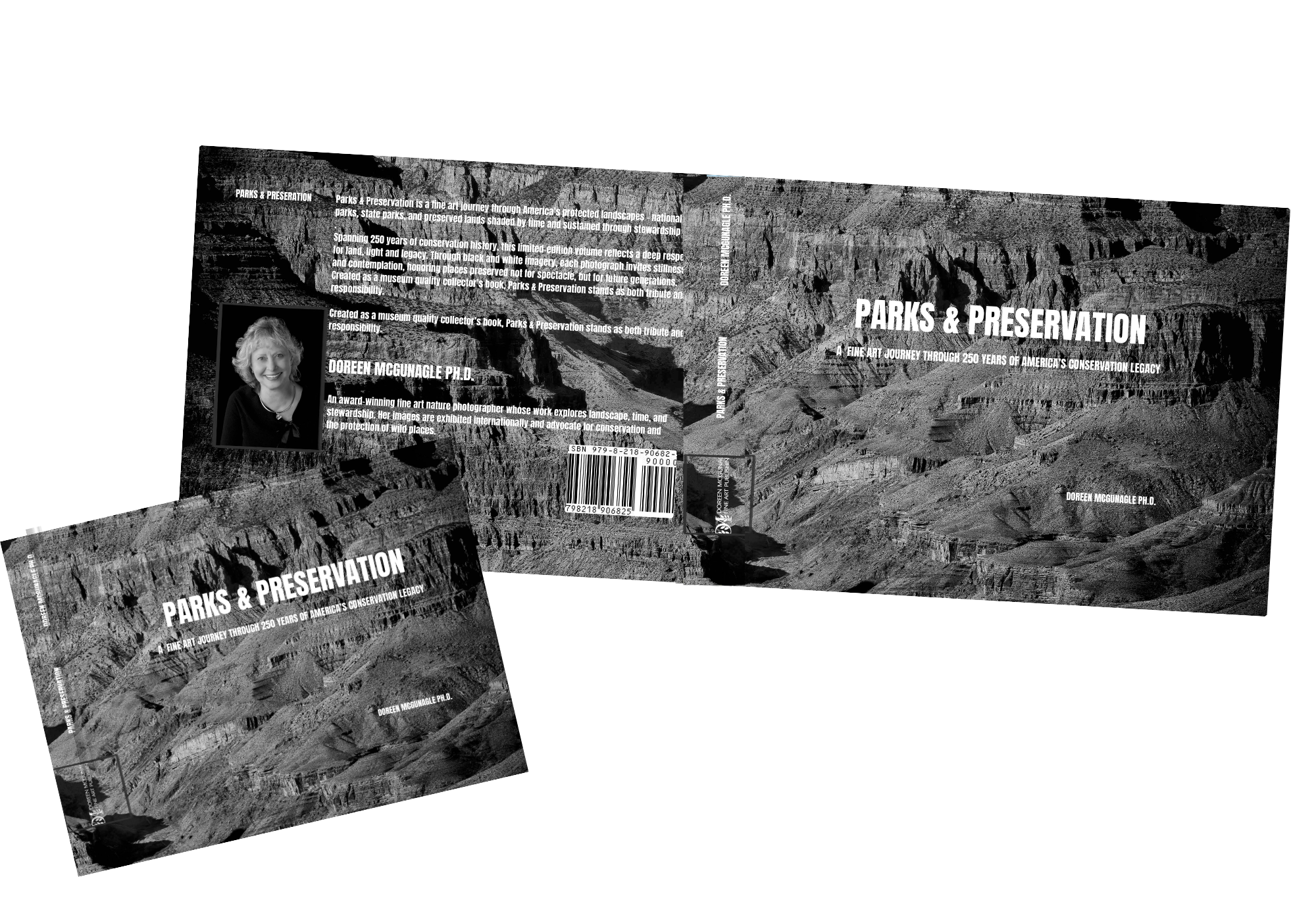
Parks & Preservation — First Edition (Signed Collector Copy)
Created in recognition of the 250th Anniversary of the United States, this volume reflects on preservation as both a civic responsibility and a form of generational stewardship. Through carefully composed imagery emphasizing form, light, and permanence, the collection honors America’s protected landscapes as enduring symbols of shared heritage and environmental responsibility.
🌍 Support Global Voices for Nature Foundation Inc., dedicated to advancing conservation through photography, education, and storytelling—helping preserve vital ecosystems like Caddo Lake for future generations.
Together, we can ensure that these quiet, reflective landscapes continue to exist—not just as memories, but as living ecosystems—for the next 250 years and beyond.