
Decorating with Large-Scale Fine Art Photography in Open Spaces
Open spaces offer a unique opportunity for design—and a unique challenge. High ceilings, expansive walls, and flowing layouts require artwork that can hold its own without overwhelming the environment. Large-scale fine art photography is especially well suited for these settings, bringing balance, emotional presence, and cohesion to open interiors.
As a fine art nature and landscape photographer, I create large prints with these spaces in mind—artwork designed not only to be seen, but to be experienced.
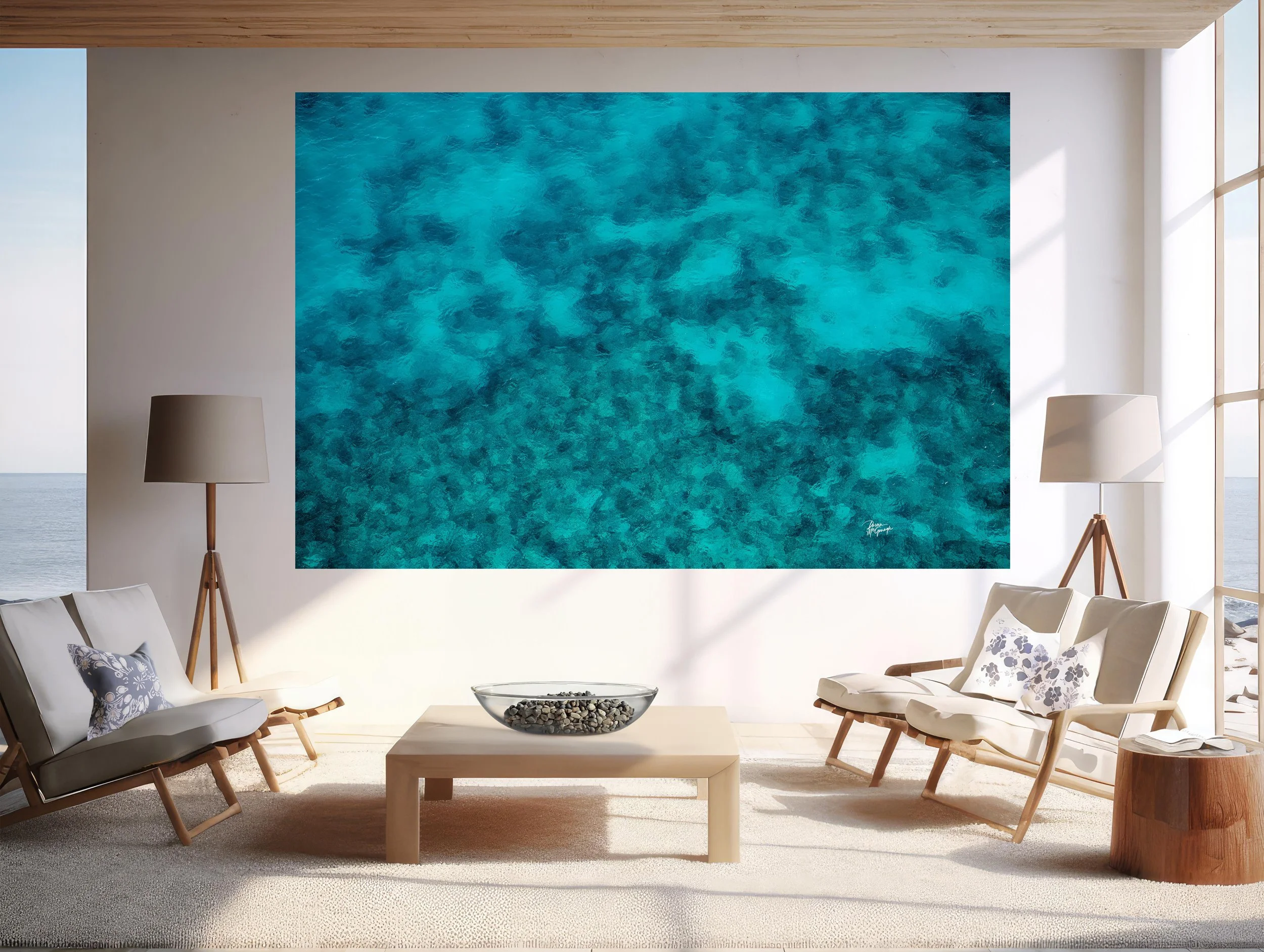
Veins of Serenity
The aerial vantage point plays a central role in shaping the work's emotional resonance. By focusing entirely on water, light, and underlying forms, the composition removes distractions and invites mindful observation. The absence of a horizon encourages the viewer to engage with pattern, color, and rhythm, fostering a meditative experience rooted in presence. This approach aligns with the principles of abstract realism, where authentic natural elements remain recognizable while inviting emotional interpretation. Each viewing becomes an opportunity to discover new details — subtle shifts in tone, hidden textures, and flowing pathways beneath the surface.
LKFL 2567-34 | c2026 | Learn More
Why Open Spaces Need Scale
In open-concept homes, lofts, offices, and galleries, small artwork often feels disconnected. It may be beautifully crafted, yet visually lost within the architecture. Large-scale fine art photography solves this by matching the scale of the space.
Large prints anchor open areas, creating visual structure where walls and rooms flow into one another. Rather than filling space, they define it—establishing focal points that guide the eye and bring cohesion to the design.
Landscape photography, in particular, thrives at scale, allowing depth, atmosphere, and movement to unfold naturally.
Choosing the Right Subject for Large Prints
Not all images are meant to be enlarged. Successful large-scale fine art photography relies on strong composition, clarity, and emotional intention.
Landscape photography works exceptionally well in open spaces because it mirrors the feeling of expansiveness. Wide horizons, layered terrain, and atmospheric light echo the openness of the architecture. Wildlife photography can also be powerful when the image captures calm, stillness, or environmental context rather than action-heavy moments.
Black and white fine art photography is another excellent choice for large walls. Its tonal simplicity allows for bold scale without visual overload.
Placement and Visual Flow
In open spaces, placement is just as important as size. Large prints should be positioned where they can be appreciated from multiple vantage points—across a room, from an entryway, or along a transitional corridor.
Rather than clustering multiple smaller pieces, a single large-scale fine art photograph often creates greater impact and clarity. This approach reduces visual noise while allowing the artwork to breathe.
Centering the artwork at eye level when possible, and allowing generous negative space around it, helps maintain balance and sophistication.
Creating Emotional Tone Through Art
Large-scale fine art photography does more than decorate—it shapes how a space feels. A serene landscape can soften a modern interior, while a powerful wildlife image can introduce quiet strength and presence.
In professional environments, nature-inspired wall art has been shown to support focus and well-being. In residential settings, it creates a sense of calm and connection. Large prints allow these emotional qualities to resonate fully.
The artwork becomes part of the architecture, influencing how people move through and experience the space.
Craftsmanship Matters at Scale
When artwork is displayed at large sizes, quality becomes critical. Fine art photography intended for large-scale presentation must be produced using museum-quality materials to ensure sharpness, tonal accuracy, and archival longevity.
Limited edition large prints reflect intentional craftsmanship. They are created to endure—not just visually, but physically—maintaining their presence and integrity over time.
For collectors, this level of quality ensures that the artwork remains a meaningful and lasting element of the space.
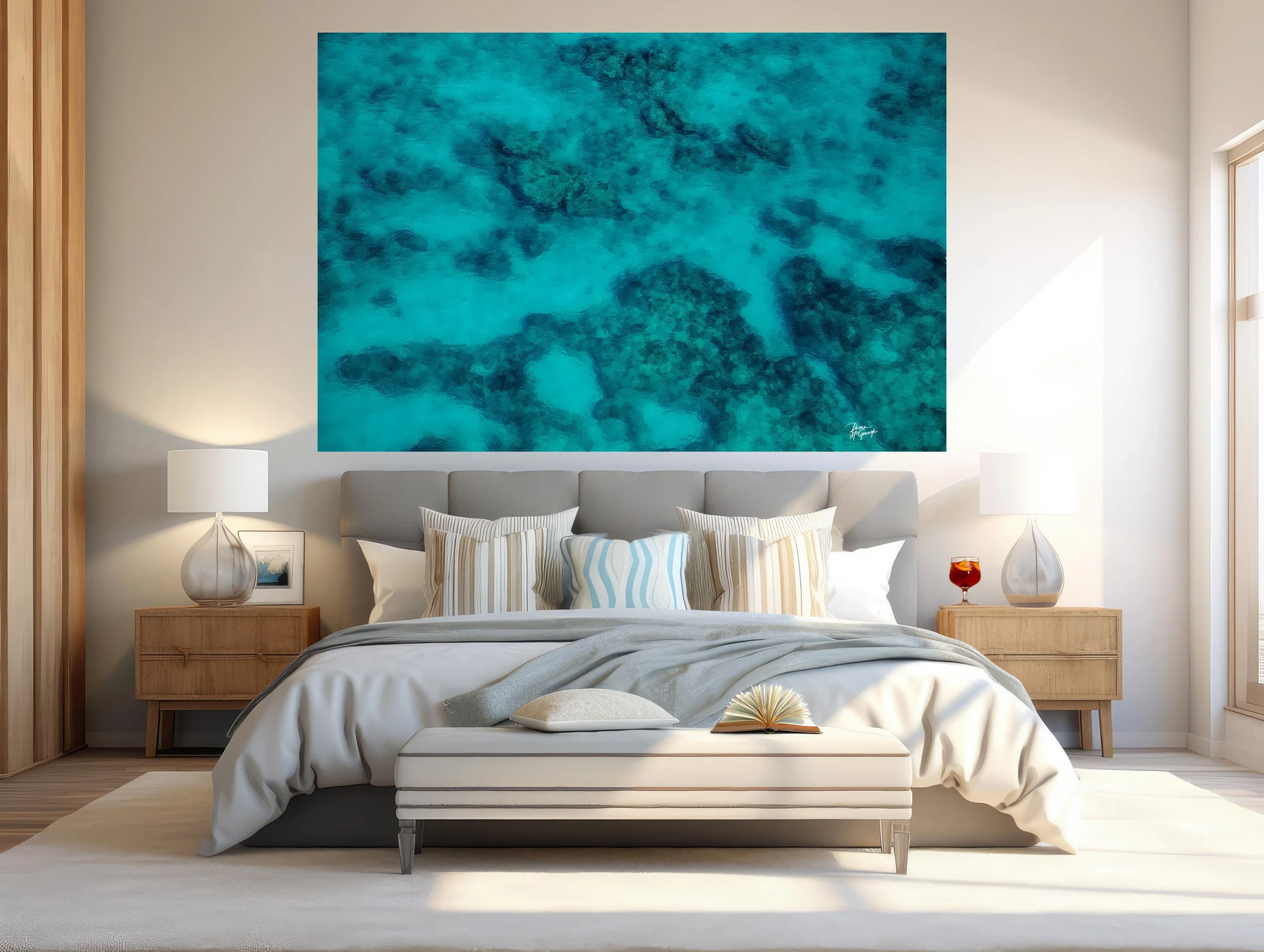
Turquoise Veins of Hidden Eden
The aerial perspective enhances immersion by revealing patterns that are impossible to observe from sea level. Without a visible horizon, the viewer is drawn entirely into the textures and rhythms of the water, experiencing the ocean as an abstract landscape of flow and structure. The layered composition suggests continuous movement, yet the overall mood remains tranquil and meditative. This contrast between subtle energy and profound stillness defines the work's emotional tone, creating a visual space where contemplation comes naturally.
LKFL 2529-33 | c2026 | Learn more
Art with Purpose
Choosing large-scale fine art photography for open spaces is both an aesthetic and values-driven decision. Nature-inspired artwork reflects appreciation for beauty, balance, and the environments that inspire creative work.
A portion of proceeds from fine art photography sales supports Global Voices for Nature Foundation Inc., a nonprofit dedicated to conservation education, environmental awareness, and protecting the landscapes and wildlife that inspire this work. Through collecting fine art, patrons actively contribute to preserving the natural world for future generations.