
Everglades National Park: Protecting America’s River of Grass
There is a quiet power to the Everglades—one that doesn’t shout, but instead reveals itself slowly, in reflections on still water, in the movement of wildlife through sawgrass, and in the rhythm of a landscape shaped entirely by water.
Everglades National Park is unlike any other place in the United States. Often called the “River of Grass,” this vast subtropical wilderness flows gently across South Florida, supporting one of the most diverse ecosystems in North America. It is a place where freshwater meets saltwater, where alligators and wading birds coexist, and where light transforms the landscape from moment to moment.
But beyond its beauty, the Everglades tells a deeper story—one of fragility, resilience, and the urgent need for preservation.
🌊 A Landscape Defined by Water
At its core, the Everglades is a story of water in motion.
Unlike rivers that carve through mountains or rush toward the sea, the Everglades moves slowly—almost imperceptibly—across a wide expanse of land. This gentle flow sustains life, creating habitats for endangered species like the Florida panther, American crocodile, and countless migratory birds.
Water shapes everything here. It determines where wildlife gathers, how vegetation grows, and how light reflects across the surface. In the early morning, mist rises softly above the marsh. At sunset, the sky ignites in color, mirrored in the stillness below.
As a photographer, these moments are both fleeting and profound. The Everglades teaches patience. It invites you to slow down, observe, and connect with a rhythm that feels increasingly rare in today’s world.
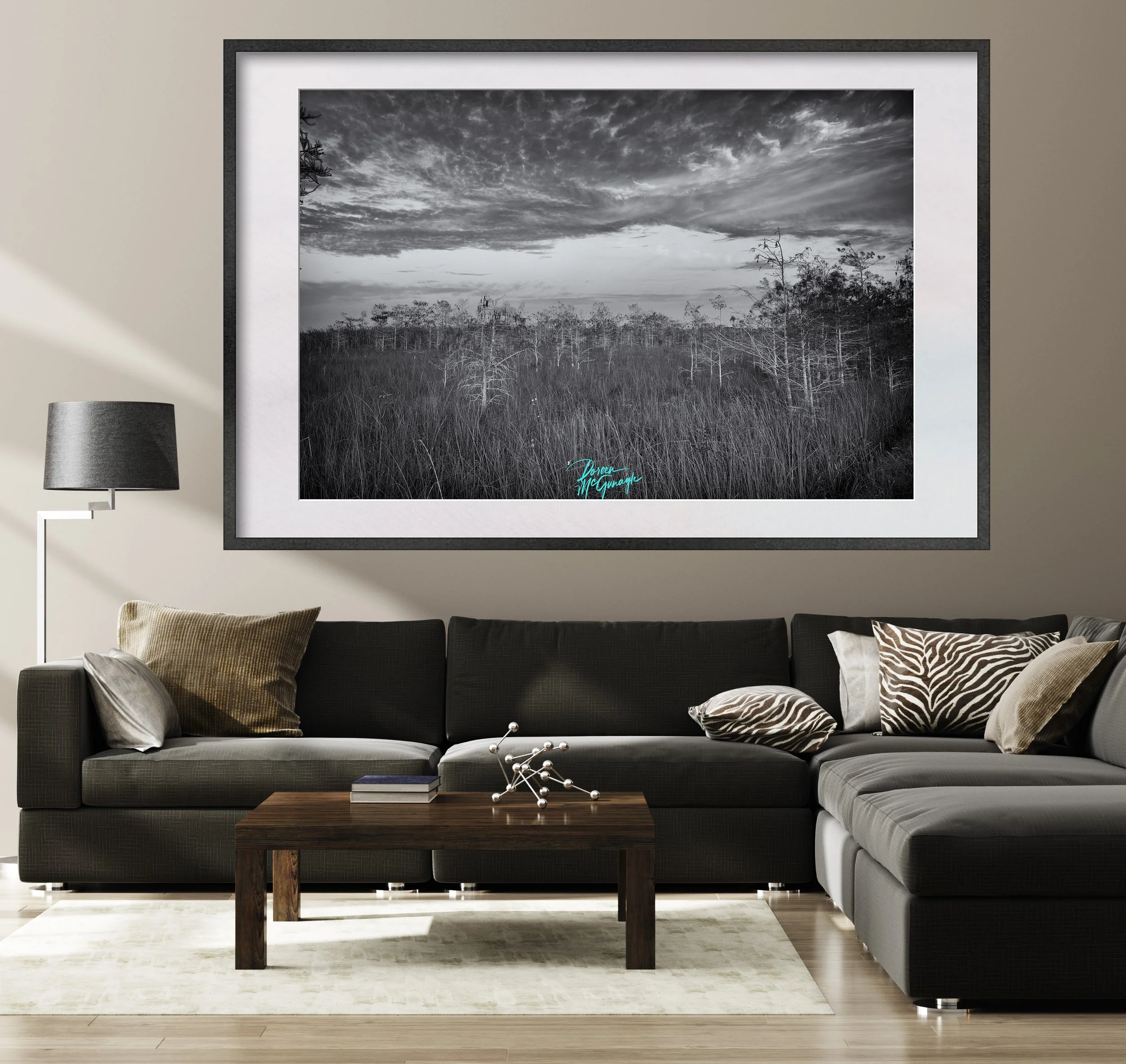
Morning Clouds Over Everglades National Park
Pictures of Everglades National Park offer the most notable features of the park like sawgrass prairie, which is home to a wide variety of plants, including mangroves, cypress trees, and orchids. Photos of Everglades National Park might also include a large variety of wetlands, including freshwater sloughs, mangrove swamps, and saltwater marshes. The wetlands of Everglades National Park offer a crucial habitat for many species of fish, crustaceans, and shellfish.
🐾 A Sanctuary for Wildlife
Everglades National Park is not just a landscape—it is a sanctuary.
It is home to more than 350 species of birds, making it one of the most important bird habitats in the world. Roseate spoonbills, great blue herons, and wood storks move gracefully through the wetlands, while alligators glide silently beneath the surface.
What makes the Everglades truly remarkable is its role as a refuge. Many of its species depend entirely on this ecosystem for survival. Without the Everglades, they would have nowhere else to go.
This makes preservation here not just important—but essential.
⚖️ The Balance Between Survival and Threat
Despite its protected status, the Everglades faces ongoing challenges.
Urban development, water diversion, and climate change have all impacted the natural flow of water that defines this ecosystem. When the balance is disrupted, the effects ripple outward—affecting wildlife, vegetation, and water quality.
Restoration efforts are underway, representing one of the largest environmental restoration projects in the world. These efforts aim to return the Everglades to its natural state, ensuring that water can once again flow freely across the landscape.
But restoration is not just about science—it’s about awareness. It’s about recognizing the value of this ecosystem and understanding that its survival is tied to our own.
📷 Capturing Stillness and Strength Through Fine Art
Photographing the Everglades is a deeply personal experience.
There is no single dramatic peak or iconic formation here. Instead, its beauty lies in subtlety—in reflections, textures, and quiet interactions between light and water.
Through fine art photography, I aim to capture that stillness. To preserve not just what the Everglades looks like, but what it feels like.
These images become more than photographs. They become reminders—of a place that exists beyond the noise, and of the importance of protecting it.
Art has the ability to create connection. And connection is where conservation begins.
🇺🇸 A Reflection of America’s Natural Legacy
As we approach America’s 250th anniversary, places like Everglades National Park remind us of what is truly worth preserving.
This is not just a park—it is a living system, a national treasure, and a symbol of the delicate balance between human progress and environmental responsibility.
The Everglades represents a different kind of American story—one rooted not in expansion, but in protection. In recognizing that some of the most valuable landscapes are those we choose to leave untouched.
🌿 Continuing the Parks & Preservation Journey
The Everglades is just the beginning.
Throughout this Parks & Preservation series, we will explore National and State Parks across the country—each with its own story, its own challenges, and its own beauty.
Together, they form a powerful reminder of what we stand to lose—and what we still have the opportunity to protect.
✨ Call to Action
If the beauty and fragility of the Everglades speak to you, I invite you to take the next step in this journey.
📖 Pre-order the upcoming Parks & Preservation book, where fine art photography and storytelling come together to celebrate America’s most treasured landscapes and the urgent need to preserve them.
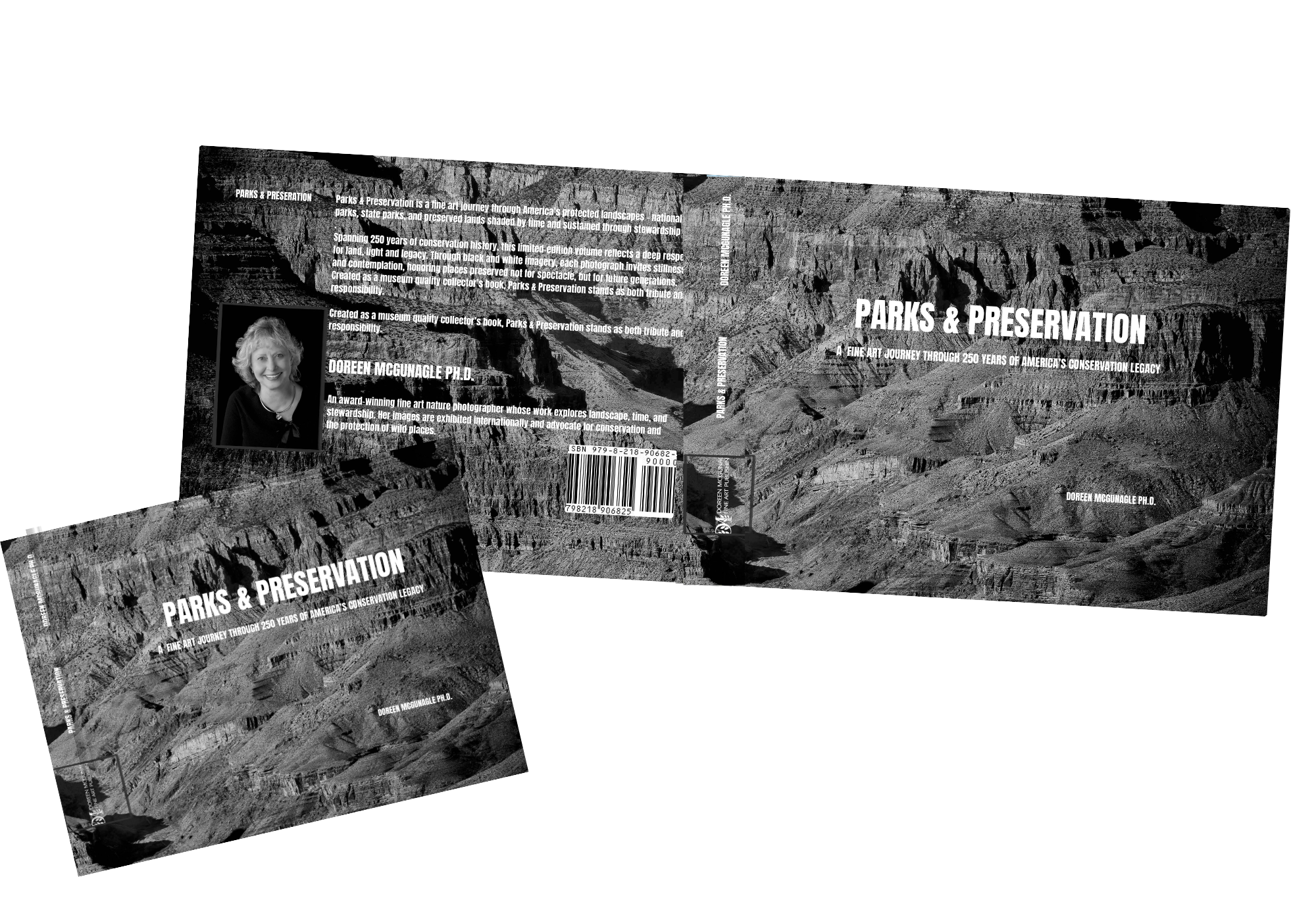
Parks & Preservation — First Edition (Signed Collector Copy)
Created in recognition of the 250th Anniversary of the United States, this volume reflects on preservation as both a civic responsibility and a form of generational stewardship. Through carefully composed imagery emphasizing form, light, and permanence, the collection honors America’s protected landscapes as enduring symbols of shared heritage and environmental responsibility.
🌍 Support Global Voices for Nature Foundation Inc., dedicated to advancing conservation through photography, education, and global storytelling—helping protect ecosystems like the Everglades for future generations.
Every image, every story, and every effort makes a difference.
Together, we can ensure that the River of Grass continues to flow—quietly, powerfully, and endlessly—for the next 250 years and beyond.