
Monument Valley Tribal Park: Preserving Sacred Landscapes
There are landscapes that feel iconic—and then there are landscapes that feel sacred.
Monument Valley Tribal Park, located on the border of Arizona and Utah within the Navajo Nation, is one of the most recognizable and meaningful landscapes in the United States. Towering sandstone buttes rise from the desert floor, their shapes etched against an endless sky.
But Monument Valley is more than a visual symbol of the American West.
It is a living cultural landscape—one that holds deep spiritual, historical, and environmental significance.
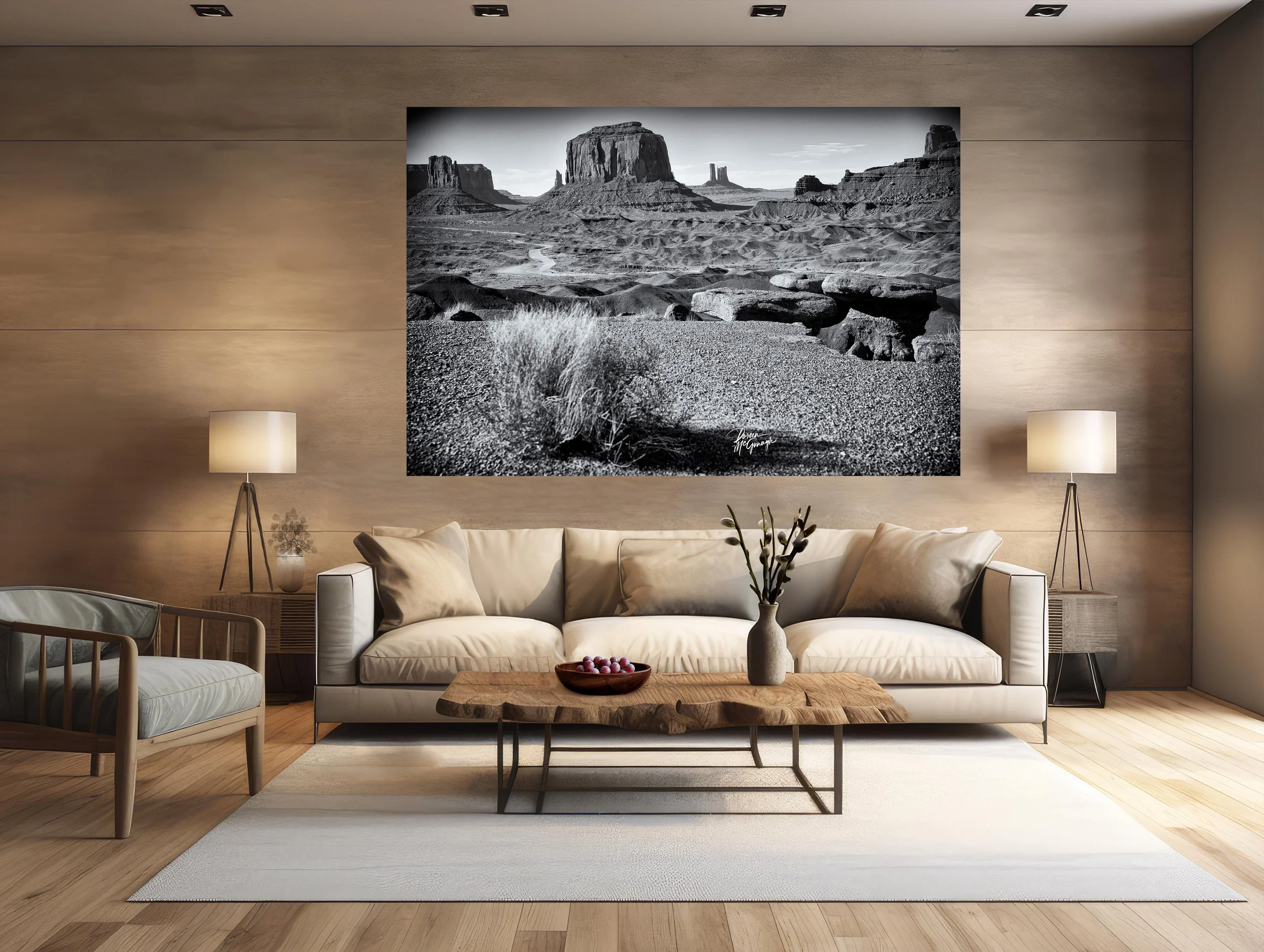
Shadowed Giants of the Navajo Land
An impactful addition to interiors. Shadowed Giants of the Navajo Land brings presence and grounding energy into modern spaces. Its clean tonal range complements a wide variety of styles—minimalist, Japandi, modern rustic, and desert-inspired interiors. In living rooms and dining areas, the photograph serves as a commanding focal point, anchoring the space with a sense of scale and strength. In offices or libraries, it fosters quiet reflection, encouraging focus and balance. Its expansive sky and monumental forms pair beautifully with tall ceilings and large walls, making it an ideal choice for statement installations.
🏜️ A Landscape Shaped by Time and Meaning
At first glance, Monument Valley appears timeless.
The massive rock formations, sculpted over millions of years by wind and water, stand as enduring features of the desert. Their scale is immense, their presence commanding.
Yet what makes Monument Valley truly unique is not just its geology—it is its meaning.
For the Navajo people, this land is sacred.
Each formation holds cultural significance. Each part of the landscape is connected to stories, traditions, and identity. The land is not separate from life—it is part of it.
This perspective shifts how we understand preservation.
It is not just about protecting a place—it is about respecting its purpose.
🌿 Indigenous Stewardship and Preservation
Monument Valley Tribal Park is managed by the Navajo Nation, reflecting a model of stewardship rooted in tradition.
Indigenous stewardship emphasizes balance.
It recognizes that the land provides, but also requires care. It values long-term sustainability over short-term use. And it understands that preservation is not an isolated effort—it is part of a continuous relationship between people and environment.
This approach offers an important perspective.
Preservation is not only a modern concept. It has been practiced for generations—through respect, understanding, and connection to the land.
In Monument Valley, this philosophy is still alive.
🌅 Light, Shadow, and the Spirit of the Desert
Monument Valley is a place where light transforms everything.
At sunrise, the buttes are softly illuminated, their edges defined by gentle shadows. As the sun rises higher, the landscape becomes more dramatic—deep contrasts highlighting the scale and texture of the rock.
By sunset, the valley glows.
Warm tones of red and orange reflect across the desert, and the formations seem to stand in quiet silhouette against the fading light.
For a photographer, Monument Valley offers a powerful visual experience.
But it also requires intention.
Through fine art photography, I aim to capture not just the beauty of the landscape, but the feeling it evokes—the stillness, the scale, and the sense of presence that defines this place.
⚖️ The Responsibility of Visiting Sacred Lands
Monument Valley draws visitors from around the world.
Its iconic status makes it a destination for photographers, travelers, and those seeking to experience the American Southwest. But with that visibility comes responsibility.
This is not just a park—it is a homeland.
Respecting Monument Valley means understanding its cultural significance. It means following guidelines, honoring traditions, and recognizing that this land holds meaning beyond what we see.
Preservation here is not just environmental—it is cultural.
And both must be protected.
🌍 A Broader Understanding of Preservation
Monument Valley expands how we define conservation.
It reminds us that preserving landscapes is not only about ecosystems—it is also about preserving the relationships between people and place.
This includes:
Cultural heritage
Traditional knowledge
Spiritual connection
These elements are often less visible, but equally important.
As we consider the future of preservation, it is essential to include these perspectives—to recognize that conservation is not one-dimensional.
It is layered, just like the land itself.
Monument Valley and America’s Natural Identity
As the United States approaches its 250th anniversary, Monument Valley represents a powerful part of the nation’s identity.
It reflects both natural beauty and cultural depth.
It reminds us that America’s landscapes are not just scenic—they are meaningful. They carry stories that extend far beyond modern history.
Preserving Monument Valley is about honoring those stories.
It is about recognizing that the land has always held significance—and that our role is to ensure it continues to do so.
📷 Photography as a Bridge
Art has the ability to connect people to places.
Through fine art photography, Monument Valley becomes more than a destination—it becomes an experience that can be shared, reflected upon, and understood.
Images create awareness.
They invite curiosity.
They inspire respect.
They encourage preservation.
In this way, photography becomes a bridge—linking viewers to landscapes they may never visit, but can still value.
🌿 Continuing the Parks & Preservation Journey
Monument Valley Tribal Park adds a vital dimension to the story of America’s protected lands.
It reminds us that preservation is not only about protecting what we see—but also about honoring what we may not fully understand.
Each landscape in this series brings a new perspective.
And together, they form a deeper, more meaningful narrative.
✨ Call to Action
If the beauty and significance of Monument Valley inspire you, I invite you to continue this journey of preservation and connection.
📖 Pre-order the upcoming Parks & Preservation book, where fine art photography and storytelling come together to celebrate America’s most meaningful landscapes and the importance of protecting them.
🌍 Support Global Voices for Nature Foundation Inc., dedicated to advancing conservation through photography, education, and storytelling—helping preserve both natural and cultural landscapes for future generations.
Together, we can ensure that places like Monument Valley remain not only protected—but respected—for the next 250 years and beyond.
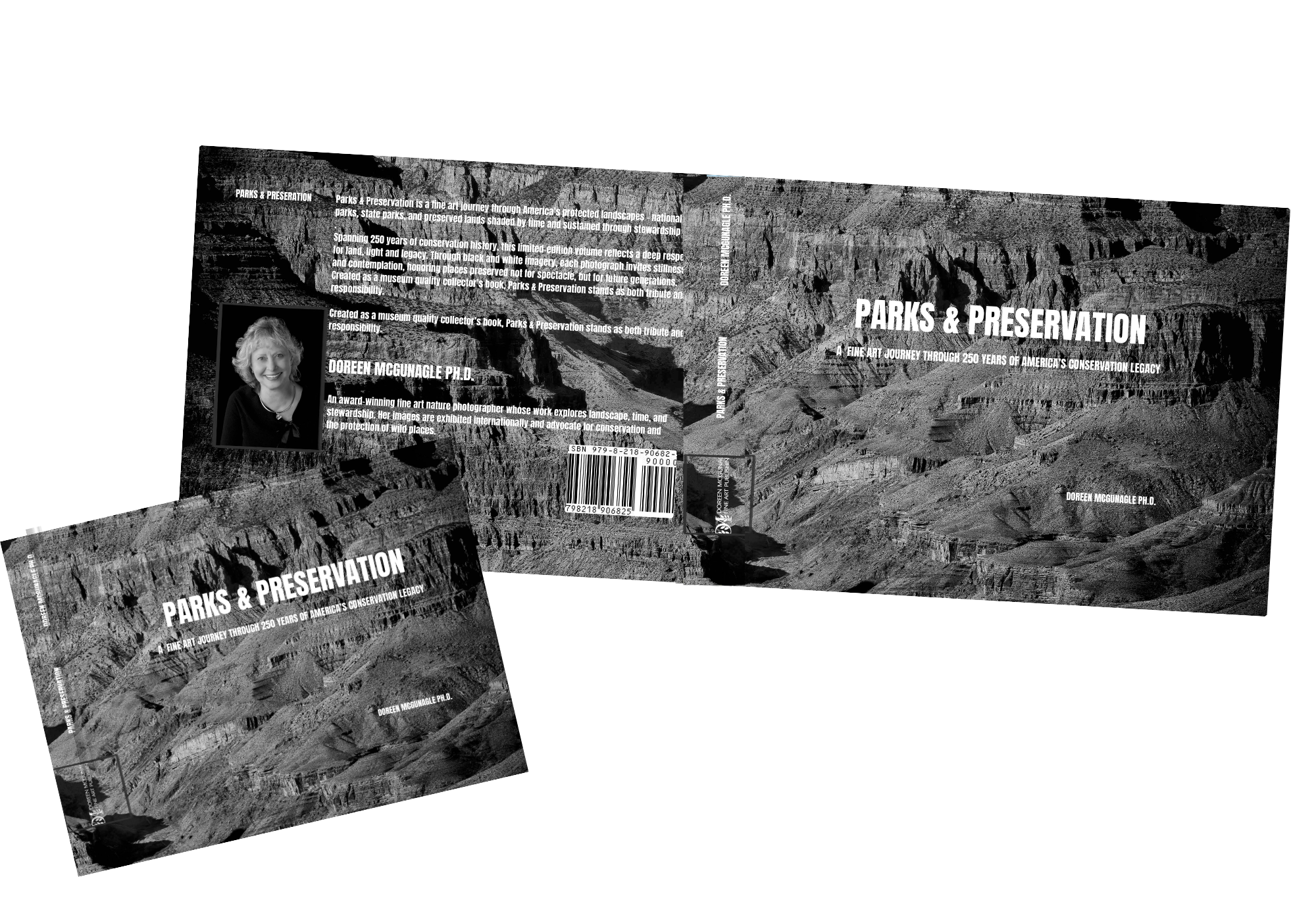
Parks & Preservation
Created in recognition of the 250th Anniversary of the United States, this volume reflects on preservation as both civic responsibility and generational stewardship. Through carefully composed imagery emphasizing form, light, and permanence, the collection honors America’s protected landscapes as enduring symbols of shared heritage and environmental responsibility.