
The Role of Photography in Wildlife Conservation (Global Voices for Nature)
Photography has the power to do far more than capture a beautiful moment—it can inspire change, raise awareness, and protect the vulnerable. In the realm of wildlife conservation, photography has become one of the most impactful tools for telling the stories of endangered species and fragile ecosystems. Every image carries the potential to educate, motivate, and move viewers toward stewardship.
Through Doreen McGunagle Fine Art and the Global Voices for Nature Foundation, my mission is rooted in the belief that art can create a bridge between people and the natural world. By bringing wildlife photography into homes, galleries, schools, and public spaces, we can spark a deeper appreciation for our planet’s wildlife—and inspire action to protect it.

Graceful Sentinel of Botswana
This striking photograph features a magnificent cheetah in its natural habitat, embodying the essence of wildlife photography and nature pictures. With its elongated body and distinctive black spots on golden fur, the cheetah stands poised against Botswana's earthy landscape, exuding grace and poise. The cheetah’s sleek physique and black-ringed tail add to the artistry, creating a powerful side profile that highlights its adaptability and resilience in the wild.
Botswana 1563-173 c2024 | Africa | Learn More
Photography Makes the Invisible Visible
Many environmental challenges unfold far from human eyes—deep in remote wilderness, dense forests, or protected reserves. Photography brings these hidden moments into the public consciousness.
A photograph of:
An elephant mother guiding her calf
A leopard resting in a golden acacia tree
A lion emerging from morning shadows
A quiet wetland at sunrise
A coral coastline thriving with life
…makes the viewer feel present within the story.
Because of this power, wildlife conservation photography has become essential in raising awareness about habitat loss, climate change, human-wildlife conflict, and the plight of endangered species. It turns data into emotion. It transforms abstract issues into personal understanding.
And with understanding comes action.
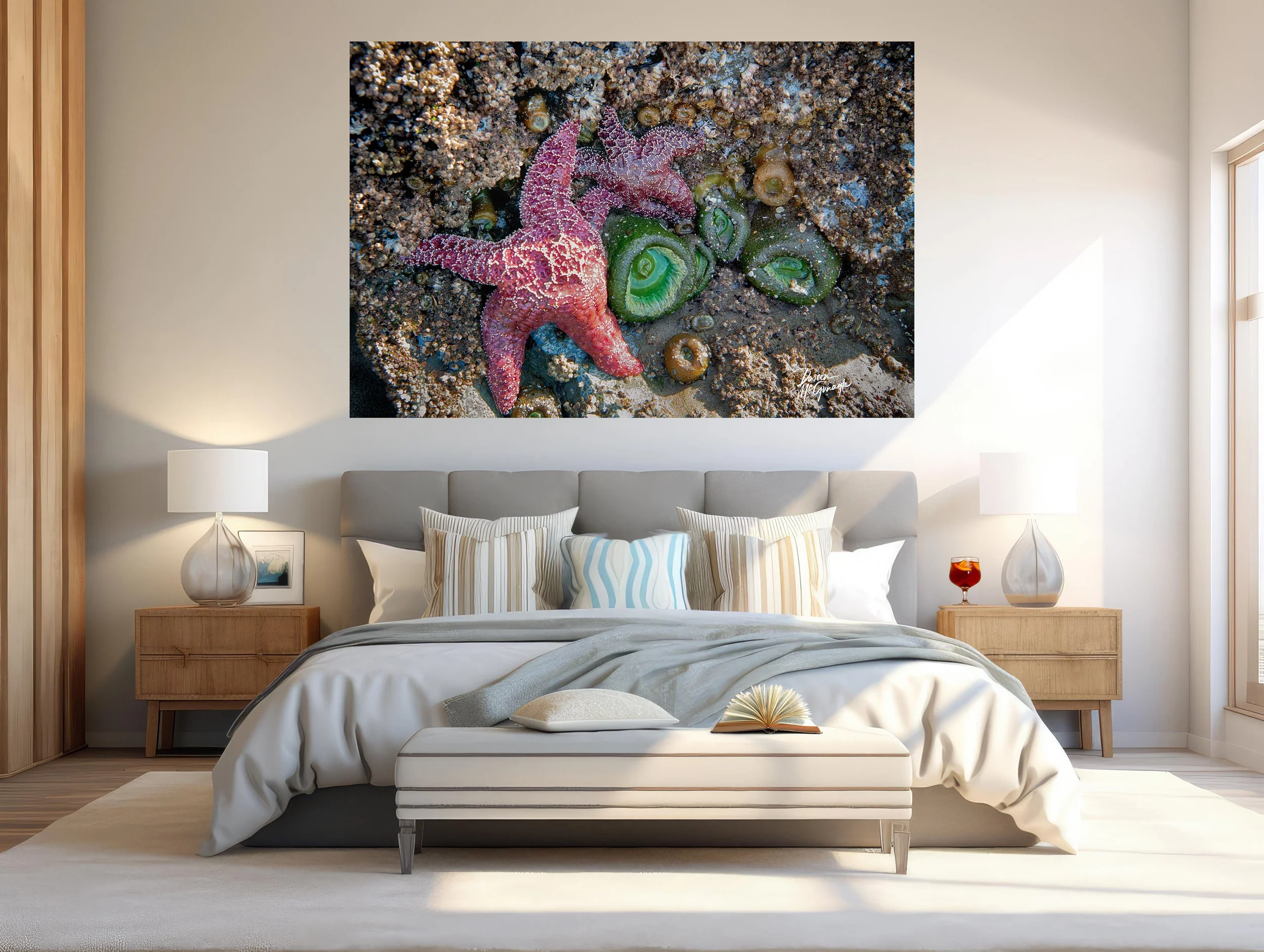
Whispers of the Sea’s Mosaic
Where it sings: coastal living rooms • wellness/reading nooks • bedrooms seeking calm color • spa baths and powder rooms • entries that need a serene welcome • over a desk for focused ease.
Room palette ideas: walls in warm white, sea-glass, or cloud grey; accents in indigo, coral, and brushed nickel or blackened steel; ground with matte black sparingly.
Scale guidance: mid sizes create a contemplative anchor; statement sizes turn the work into the centrepiece that sets the room’s rhythm.
OR 1598-58 SBSSC c2025 | Oregon Coast| Learn more
Emotional Connection Is the Heart of Conservation
While scientific reports are crucial, emotion creates movement. People protect what they feel connected to—and photography creates that connection instantly.
Through fine art nature photography, viewers experience:
The tenderness of family groups
The strength and vulnerability of wildlife
The beauty of untouched landscapes
The urgency to preserve what remains
Collectors often share that a piece such as Enduring Bonds or Mystic Monochrome reminds them daily of the importance of protecting wildlife. The emotional resonance of a single image has the ability to shift mindsets and elevate awareness.
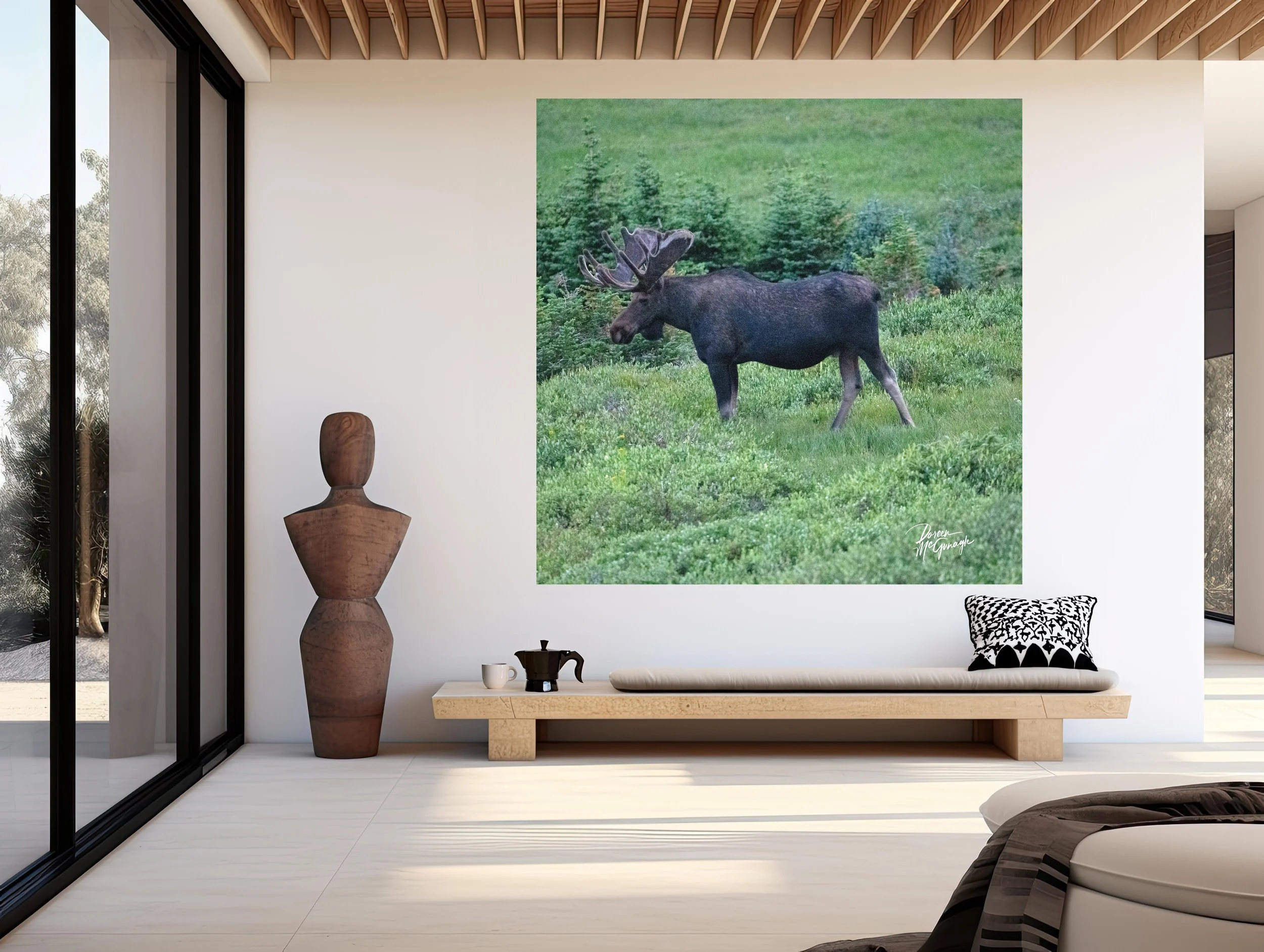
Antlers Against Emeril Veil
The moose, one of the wilderness’s most powerful inhabitants, is presented here not in motion but in equilibrium. Its stance is steady, its gaze composed, and its antlers—wide, bold, and unmistakably iconic—become a natural crown rising against the forest backdrop. The textured details of grass, leaf, and antler lend the piece a subtle painterly quality, transforming the photograph into a tactile experience that feels both intimate and timeless.
CO543-74 RMNP | Colorado | Learn more
Fine Art Photography Extends Conservation Beyond the Field
Large format wildlife art displayed in homes, offices, and public buildings becomes a constant ambassador for nature. When people encounter these images—whether in a gallery, airport, or private home—they engage with wildlife in a meaningful way.
Fine art photography prints:
Spark conversations about conservation
Inspire curiosity in children and adults
Keep endangered species front of mind
Encourage sustainable choices
Align households and businesses with environmental values
The role of fine art isn’t only to beautify—it is to illuminate. When an elephant portrait or landscape image becomes a centerpiece in a room, it reminds everyone who enters that the natural world matters.
Global Voices for Nature Foundation: Art With Impact
The creation of the Global Voices for Nature Foundation Inc. formalized my lifelong commitment to using photography as a tool for conservation education. The foundation supports programs that help communities understand the importance of protecting wildlife and preserving natural resources.
Our initiatives include:
Educational workshops for youth and adults
Public exhibitions that highlight endangered species
Photography-based conservation storytelling
Support for state and national parks
Collaborations with schools, museums, and cultural councils
The foundation is built on a simple truth:
When people see nature differently, they protect it differently.
By pairing fine art nature photography with conservation programs, Global Voices for Nature ensures that each image helps create real-world impact.
Photography as a Catalyst for Change
Throughout history, iconic photographs have ignited global movements. Wildlife photography is no different. It fosters empathy, shifts perspectives, and shows the beauty—and fragility—of the world before us.
As a conservation photographer, my goal is to:
Honor wildlife with dignity
Document habitats ethically
Inspire stewardship
Support conservation through fine art sales
Amplify the stories of wild places and the species that inhabit them
Art and advocacy are deeply intertwined. Photography creates the spark. Conservation carries the flame.
How You Can Support Conservation Through Art
You don’t need to be a scientist, ranger, or wildlife expert to make a difference. Choosing fine art nature photography for your home or office is a powerful act of support.
Collectors directly contribute to:
Wildlife education
Conservation programming
Public exhibitions
Environmental storytelling
Youth nature initiatives
Each piece of art becomes part of a larger mission—one that protects wildlife and preserves natural beauty for generations to come.
Explore Art That Protects the Wild
Discover conservation-focused fine art photography at DoreenMcGunagle.com, where each piece is crafted to inspire, educate, and connect. Together, we can use art to celebrate the natural world—and safeguard its future.
Meet the Artist Invitation
Local collectors are warmly invited to schedule a private visit to meet the artist and experience the artwork in person at the Artists Studios & Gallery at Plaza 222, located at 222 U.S. Highway 1, Tequesta, Florida. Join me Monday through Saturday between 10:00 AM and 3:00 PM to explore fine art wildlife photography, view new releases, and discover pieces that resonate with your space and style. This personalized, behind-the-scenes experience offers an intimate look at the stories, inspiration, and conservation work behind each limited-edition print.
Global Voices for Nature Foundation
A portion of every fine art photography purchase directly supports Global Voices for Nature Foundation Inc., my nonprofit dedicated to conservation education and protecting the natural world. Your investment in fine art nature photography helps fund programs that elevate environmental awareness, inspire stewardship, and preserve our wild places for future generations.