
Behind the Lens: How to Frame and Display Limited Edition Fine Art Prints for Longevity
Investing in limited edition fine art prints is more than a matter of taste—it's a commitment to preserving artistic vision and cultural value. Whether you’re a seasoned collector or a first-time buyer, understanding how to frame and display your artwork correctly is essential to maintaining its integrity, beauty, and market value. These works are more than décor; they are museum-quality photography prints created with precision, printed on archival materials, and signed and numbered to verify their exclusivity.
In this edition of Behind the Lens, we’ll explore professional strategies for framing and displaying fine art photography prints, ensuring that your investment not only remains protected but also becomes a focal point in your home or gallery space.
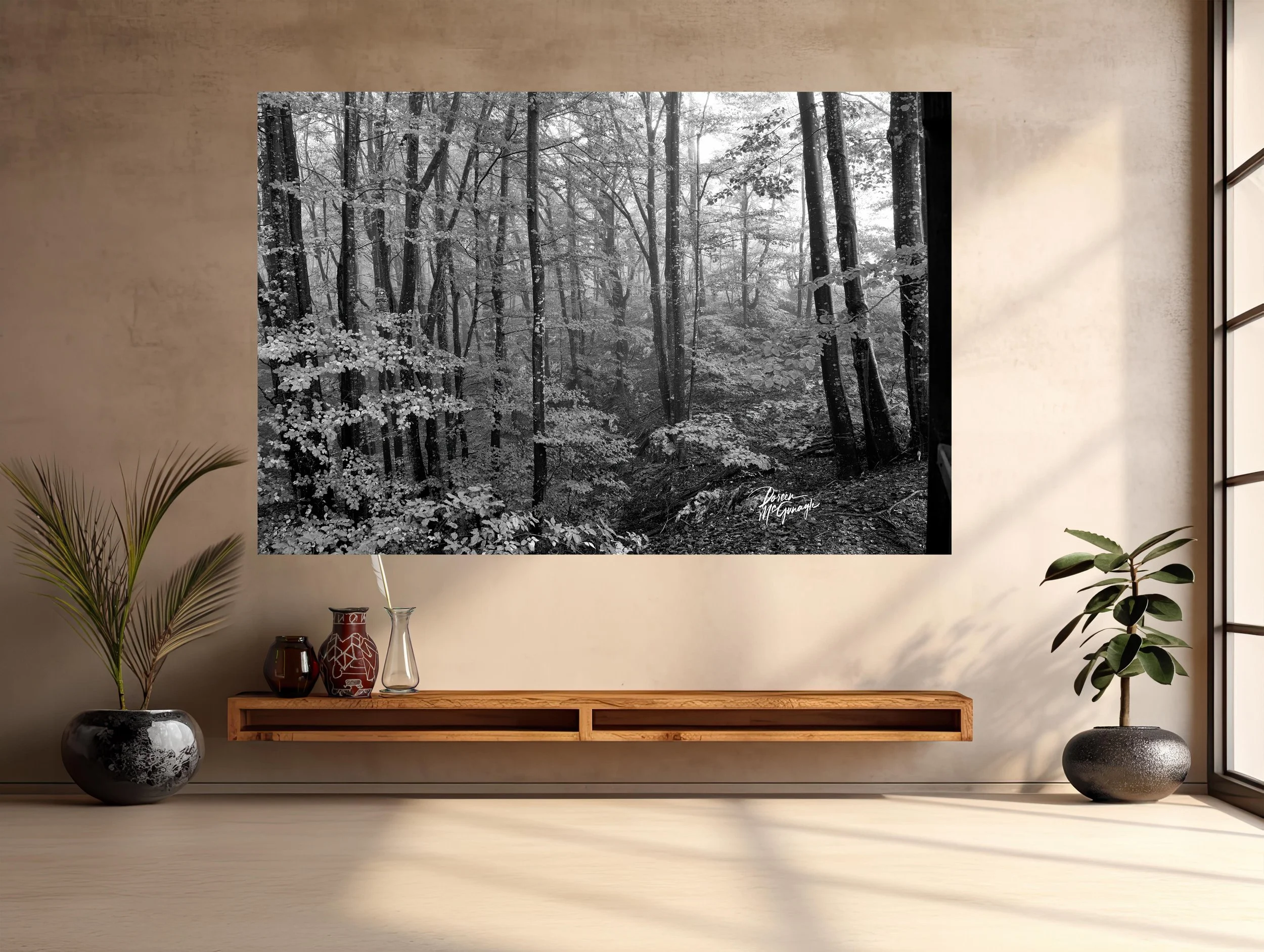
The Forest Whisper
Ideal for those who appreciate black and white photos and fine photography prints, "The Forest's Whisper in Monochrome" serves as both a visual masterpiece and a meditative experience. Perfect for photography wall art enthusiasts or those searching for large photography prints, this piece is a testament to the delicate artistry found in nature. Experience the peaceful allure of landscape photography with this breathtaking art photo—a perfect addition to any photo art gallery or photographic art collection.
Why Proper Framing Matters
Framing isn’t just an aesthetic decision—it’s one of the most critical steps in safeguarding your limited edition fine art prints. Improper materials or techniques can lead to fading, discoloration, or physical damage over time. A museum-quality frame acts as a barrier against light, dust, pollutants, and humidity, all of which can accelerate deterioration.
A thoughtfully chosen frame also enhances the visual appeal of your art, allowing the imagery to take center stage without distraction. When done right, framing preserves both the emotional and monetary value of your print.
Choosing the Right Frame
1. Archival Materials
Always use archival, acid-free matting and backing boards. Acidic materials can cause staining or yellowing that devalues and damages the art. Museum-quality mats and backing not only support the print but create a protective barrier from environmental threats.
2. UV-Protective Glazing
UV radiation from sunlight or artificial lighting is one of the leading causes of fading in photographic prints. Opt for UV-filtering acrylic or glass (often labeled as “museum glass”) to reduce this risk. Acrylic has the added benefit of being lightweight and shatter-resistant, making it ideal for larger prints.
3. Avoid Direct Contact
Ensure the print does not touch the glazing. A mat or spacer should be used to prevent any part of the image from sticking to the glass or acrylic surface, which can cause long-term damage. This separation also adds visual depth to the piece.
4. Custom Framing vs. Pre-Made Frames
While pre-made frames can be cost-effective, custom framing is often the best option for high-end photography for collectors. Custom frames are tailored to the specific dimensions and needs of your print and offer greater control over aesthetics and materials.
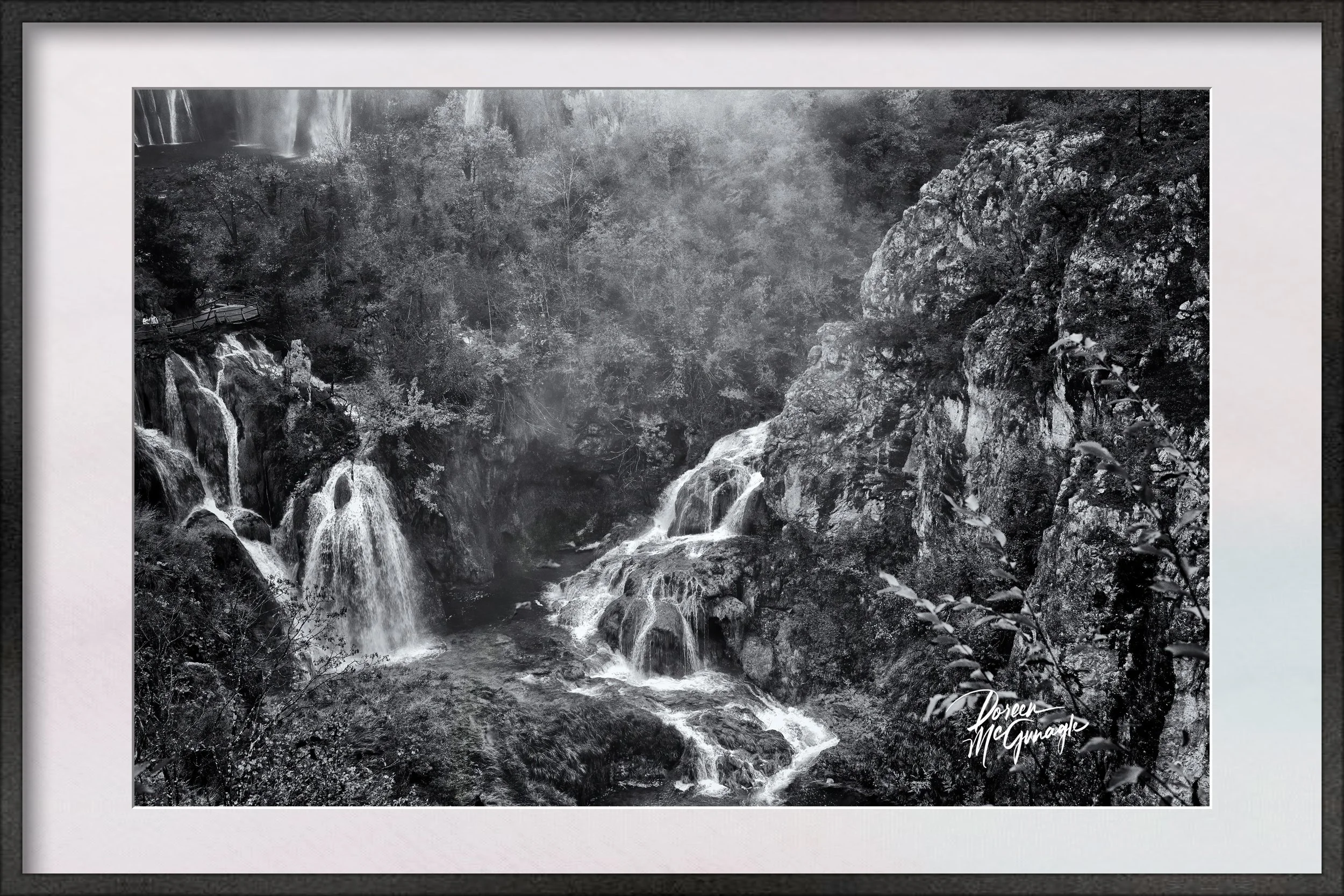
Cascade Into Stillness
Perfect as landscape photo art for any photography gallery, art photo collection, or home and office wall, 'Cascade into Stillness' is a timeless reminder of nature’s raw and serene beauty. Available as large photography wall art, landscape photography prints, and photo prints for sale, this fine art photo offers a captivating way to celebrate the harmony and strength of the natural world. Framed on Archival Paper, this looks different from the black and white.
Mounting Techniques for Longevity
1. Hinge Mounting
Professional conservators recommend hinge mounting for fine art photography prints. This technique uses acid-free tape or Japanese paper hinges to hold the print in place without applying adhesive directly to the artwork. It’s fully reversible and ideal for preserving value.
2. Float Mounting
If you wish to showcase the edges of the print or the hand-deckled finish of certain fine art papers, float mounting is a striking option. This style raises the print slightly above the backing board, creating a three-dimensional effect and emphasizing the craftsmanship of the print.
Display Considerations to Protect Your Investment
1. Avoid Direct Sunlight
Even with UV protection, direct sunlight can degrade fine art photography prints over time. Place your framed prints in areas with indirect lighting, or consider using dimmable LED lighting specifically designed for artwork.
2. Control Humidity and Temperature
Fluctuations in humidity and temperature can cause materials to expand and contract, potentially leading to warping, mold, or damage to the print. Ideal conditions include a temperature range of 65–75°F and humidity between 40–50%. Avoid hanging art in kitchens, bathrooms, or areas prone to moisture.
3. Choose a Safe Wall
Avoid hanging art above fireplaces or near heating vents. These locations experience significant temperature shifts and airflow that can dry out and warp your frame or damage your print.
4. Lighting for Display
To make your limited edition fine art prints shine, consider gallery-style lighting. Track lights, picture lights, or ceiling-mounted spotlights can highlight the texture and depth of the print without exposing it to harmful UV rays. Choose bulbs with a high color rendering index (CRI) to faithfully reproduce the image's true colors.
Considerations for Rotating or Archiving Prints
As your collection grows, you may wish to rotate artwork seasonally or archive certain pieces. To safely store limited edition fine art prints:
Use acid-free portfolios or flat archival boxes.
Store in a cool, dry, and dark location.
Keep each print separated with acid-free tissue or glassine sheets.
Rotating your art not only protects certain prints from prolonged exposure but also refreshes your space and highlights the diversity of your collection.
Enhancing Aesthetic Appeal While Protecting Value
While protection is paramount, the frame and display setting should also enhance the story and emotion conveyed by your print. A minimalist floating frame may suit black-and-white fine art photography prints, while a warm wood frame might complement the earthy tones of a landscape.
Choosing a cohesive display strategy—such as a salon-style wall, linear gallery layout, or single large statement piece—adds intentionality to your space and invites viewers into the world you’ve curated.
Final Thoughts
Limited edition fine art prints are more than decorative objects; they’re intimate reflections of an artist’s vision and powerful investments for collectors. With the right framing and display choices, your museum-quality photography prints will be preserved for decades, perhaps even generations. From archival materials to controlled lighting, every decision you make contributes to the story your collection tells—and its legacy.
At Doreen McGunagle Fine Art, every print is created with longevity in mind, using the highest quality materials and techniques. When you bring one of these prints into your collection, you're not only investing in a piece of high-end photography for collectors—you're preserving a moment of nature’s quiet brilliance.
If you’d like help selecting the best framing and display options for your new piece, feel free to reach out through our Contact Page.
Let your collection inspire, protect, and endure.