
In the remote stretches of southern Utah, just outside Capitol Reef National Park, lies a landscape that feels almost like a painting brought to life.
The Bentonite Hills are unlike any other terrain in the American Southwest. Rolling formations ripple across the earth in soft waves of color—lavender, blue, gray, gold, and deep rust tones blending seamlessly together. From a distance, they appear smooth and serene. Up close, they reveal a delicate and ever-changing surface shaped by time and the elements.
This is a place where geology becomes art—and where preservation is essential to protect its fragile beauty.
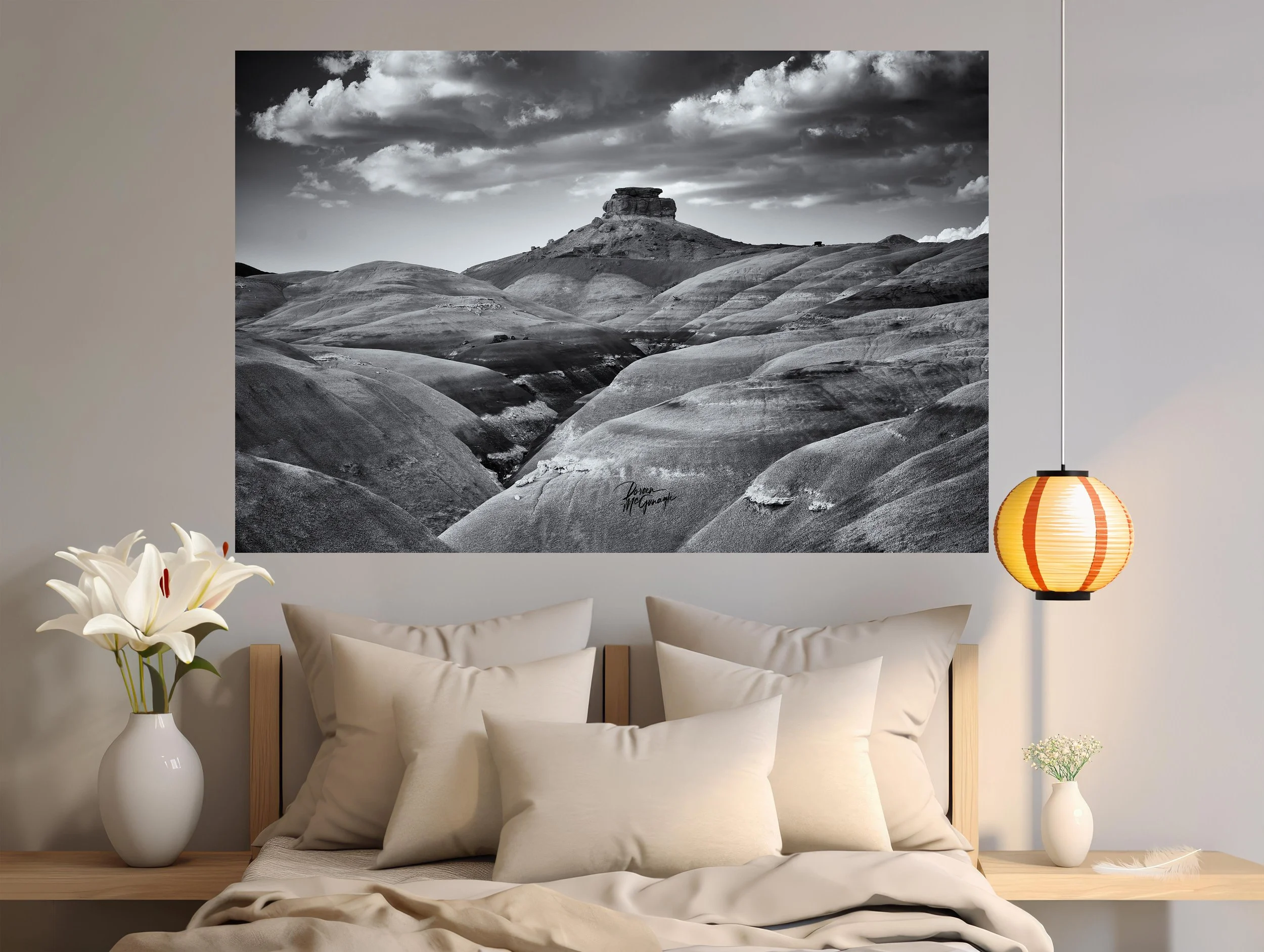
Harbored Shadows of Bentonite
A grounding statement for interiors. Harbored Shadows of Bentonite makes a commanding yet contemplative addition to design-forward spaces. Its strong tonal range integrates seamlessly with modern, minimalist, Japandi, desert-inspired, and rustic contemporary interiors. In living rooms or dining areas, the photograph serves as a dramatic focal point, its vertical and horizontal lines creating balance and flow. In offices, libraries, or meditation spaces, the image offers quiet resilience, encouraging focus and reflection. The flat-topped butte’s bold form makes it particularly well-suited for large-format installation, where it can anchor a wall with strength and stillness.
🌈 A Landscape Painted by Minerals
The Bentonite Hills owe their striking colors to the mineral composition of the soil.
Layers of volcanic ash, clay, and sediment have been compressed over millions of years, creating a surface rich in bentonite—a type of clay known for its fine texture and unique properties. Variations in mineral content produce the subtle gradients and vivid hues that define the landscape.
Iron creates reds and oranges.
Manganese brings purples and blues.
Other minerals soften the palette into grays and pastels.
Together, they form a natural canvas—one that shifts in tone depending on light, moisture, and perspective.
🌬️ Shaped by Time and Erosion
While the Bentonite Hills appear smooth, they are constantly evolving.
Wind and water play a critical role in shaping the terrain. Rainfall softens the clay, creating delicate ridges and flowing contours. As the ground dries, it hardens again—locking those patterns into place, at least temporarily.
This process is ongoing.
The hills are not permanent structures. They are dynamic, changing with each season, each storm, and each shift in climate.
This makes them both extraordinary—and incredibly fragile.
⚖️ Fragility Beneath the Surface
Bentonite clay is highly sensitive to disturbance.
When wet, it becomes soft and easily damaged. A single footprint can leave a lasting mark, disrupting the natural patterns that define the landscape. Even when dry, the surface is vulnerable to erosion and degradation.
Unlike more durable desert environments, the Bentonite Hills do not recover quickly.
Preservation here requires awareness and restraint.
Visitors must remain on established paths and avoid walking on the formations themselves. Respecting these boundaries ensures that the landscape remains intact—not just for visual enjoyment, but for its ecological and geological integrity.
🌅 Light, Color, and Fine Art Expression
The Bentonite Hills are a dream for fine art photography.
This is a landscape where color takes center stage.
At sunrise, soft light enhances the pastel tones, creating a calm and almost ethereal atmosphere. As the sun rises higher, contrast increases, revealing the intricate textures and subtle variations in the terrain. And at sunset, warm light deepens the colors, transforming the hills into a vibrant, living canvas.
Composition here is about simplicity and flow.
Lines guide the eye across the frame. Colors blend and contrast. The absence of distractions allows the landscape itself to become the subject.
Through fine art photography, I aim to capture these elements—not just as visual features, but as emotional experiences.
These images reflect a sense of quiet, of movement, and of connection to something both delicate and powerful.
🌿 A Lesser-Known Landscape Worth Protecting
Unlike many National Parks, the Bentonite Hills are not widely known.
They exist just beyond the boundaries of more recognized destinations, quietly offering one of the most unique visual landscapes in the region.
This lack of visibility can be both a strength and a vulnerability.
Fewer visitors mean less immediate impact—but also less awareness of the need for protection.
As interest grows, it becomes increasingly important to educate and encourage responsible exploration.
Preserving places like the Bentonite Hills ensures that their beauty remains—not altered, not diminished, but intact.
A Reflection of America’s Natural Diversity
As the United States approaches its 250th anniversary, landscapes like the Bentonite Hills remind us of the incredible diversity found within our borders.
From towering mountains to quiet wetlands, from rugged coastlines to colorful desert formations—each environment contributes to the story of America’s land.
The Bentonite Hills represent a different kind of beauty.
One that is subtle.
One that is fragile.
One that requires careful preservation.
📷 Art as a Bridge to Awareness
Through fine art photography, landscapes like the Bentonite Hills can reach beyond their remote location.
Images bring visibility.
Visibility creates awareness.
Awareness inspires protection.
Each photograph becomes a bridge—connecting people to places they may never visit, but can still learn to value.
And in that connection, preservation begins.
🌿 Continuing the Parks & Preservation Journey
The Bentonite Hills add a unique and colorful chapter to the story of America’s protected landscapes.
They remind us that preservation is not only about iconic destinations—it is also about protecting the subtle, lesser-known places that hold equal importance.
✨ Call to Action
If the beauty and fragility of the Bentonite Hills inspire you, I invite you to continue this journey of preservation and discovery.
📖 Pre-order the upcoming Parks & Preservation book, where fine art photography and storytelling come together to celebrate America’s most unique landscapes and the importance of protecting them.
🌍 Support Global Voices for Nature Foundation Inc., dedicated to advancing conservation through photography, education, and storytelling—helping preserve fragile environments like the Bentonite Hills for future generations.
Together, we can ensure that these natural works of art remain—protected, respected, and enduring—for the next 250 years and beyond.
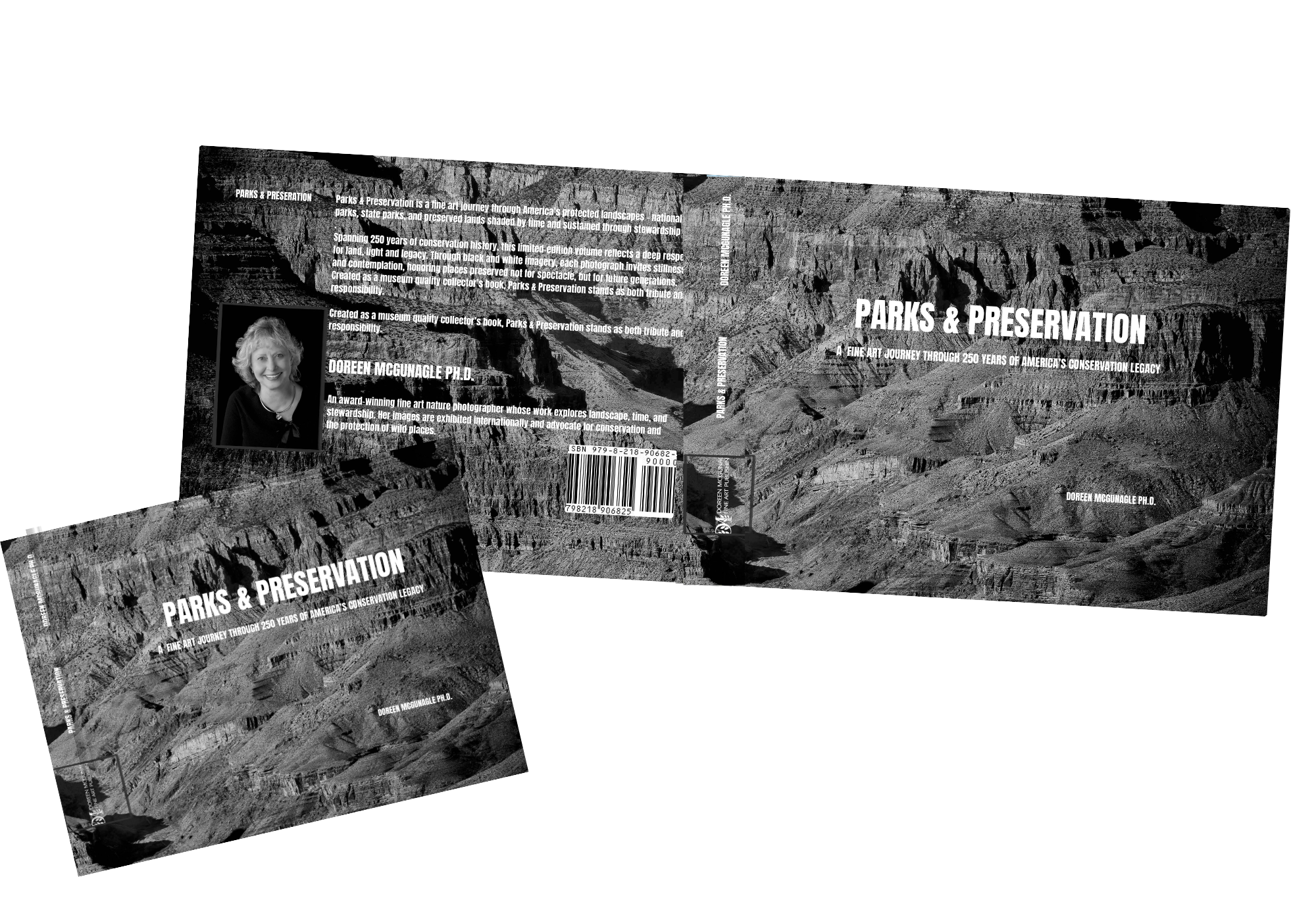
Parks & Preservation Fine Art Book
Created in recognition of the 250th Anniversary of the United States, this volume reflects on preservation as both a civic responsibility and a form of generational stewardship. Through carefully composed imagery emphasizing form, light, and permanence, the collection honors America’s protected landscapes as enduring symbols of shared heritage and environmental responsibility..