
Black & White Fine Art Photography: Timeless Design for Modern Interiors
Black and white fine art photography has an enduring presence that transcends trends. By removing color, the image is distilled to its most essential elements—light, shadow, texture, and form. The result is artwork that feels intentional, refined, and emotionally resonant, making it a natural fit for modern interiors.
For collectors and designers, black and white photography offers versatility and sophistication. Whether displayed as large prints or integrated into a curated gallery wall, monochrome fine art creates balance without competing with surrounding design elements.
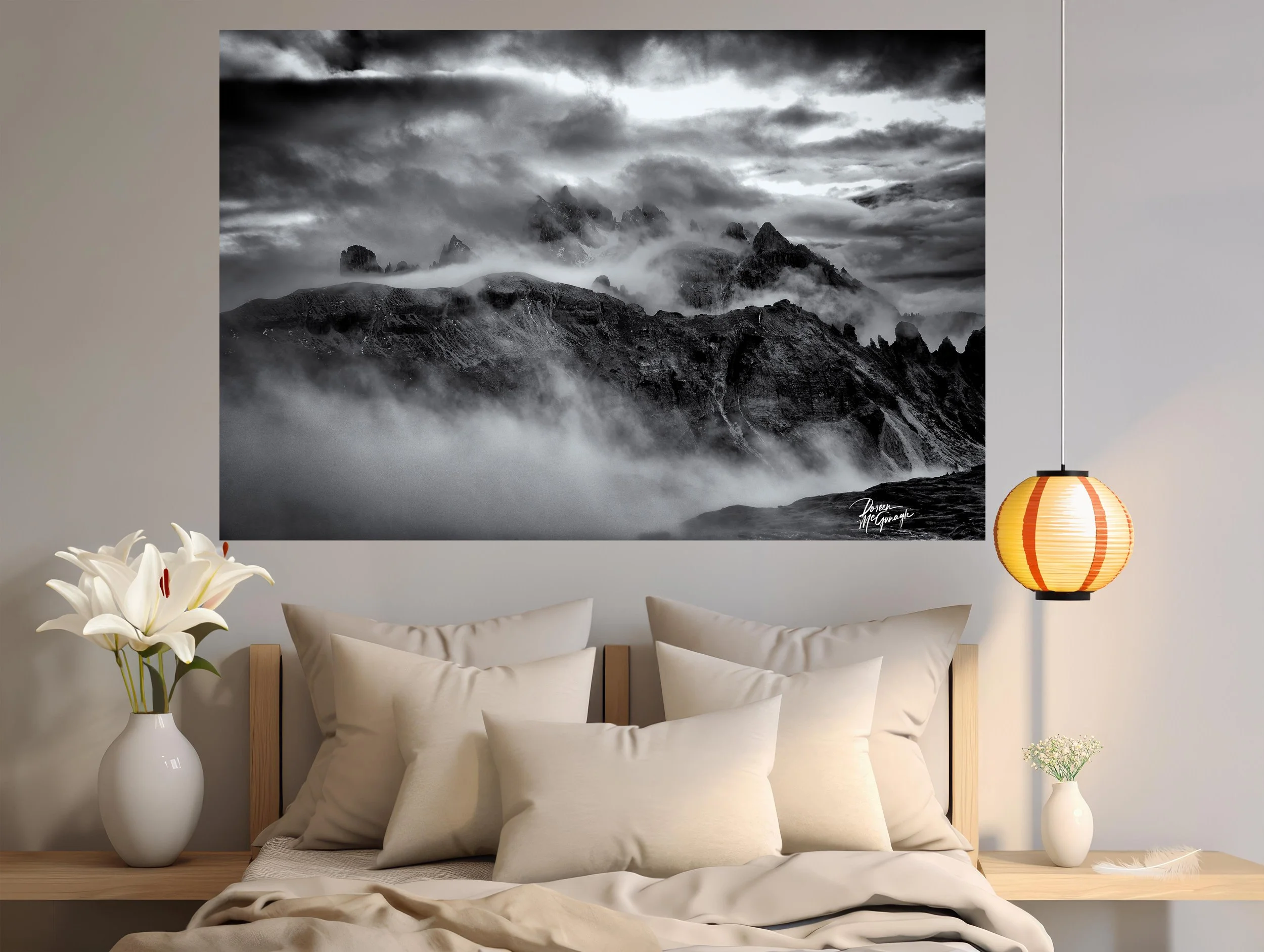
Monochrome Majesty of Mist
The mist moves through the composition like a living element—shifting, concealing, revealing. It wraps around the stone in delicate layers, softening the mountain's severe lines while creating pockets of depth that appear and disappear with the changing light. The fog becomes both canvas and collaborator, blurring edges and heightening the sense of mystery. It adds a fleeting, ephemeral quality to a landscape defined by permanence, creating a dynamic tension that lies at the heart of the photograph’s emotional impact.
IT 2073-68 BW Italy | c2025 | Learn More
Why Black and White Photography Endures
Color can influence mood quickly, but black and white photography invites slower engagement. Without the distraction of hue, the viewer is drawn into the composition—how light falls across a landscape, how texture defines form, how contrast shapes emotion.
This timeless quality is why black and white fine art photography remains a favorite in contemporary spaces. It complements minimalist, modern, industrial, and transitional interiors while maintaining a sense of permanence.
As a fine art nature and landscape photographer, I often choose black and white when the emotional story of an image is best told through light and form rather than color.
Emotional Depth Through Simplicity
Black and white photography encourages emotional interpretation. The absence of color allows viewers to project their own feelings and experiences onto the image, creating a deeper personal connection.
Landscape photography in black and white emphasizes scale and atmosphere. Subtle gradations of tone reveal mood—mist, movement, stillness—while wildlife photography highlights expression and gesture. These images feel intimate and contemplative, drawing the viewer inward rather than outward.
This emotional depth is what elevates black and white photography into fine art.
The Power of Large Prints in Black and White
Large prints amplify the impact of black and white photography. When displayed at scale, details become immersive: the grain of sand, the curve of a shoreline, the quiet strength of an animal’s gaze.
In modern interiors, large black and white fine art photography often becomes a focal point—anchoring a space with calm authority. Because monochrome images don’t overwhelm with color, they can be bold in size without feeling overpowering.
Large prints allow black and white photography to breathe, transforming walls into visual experiences rather than decorative accents.
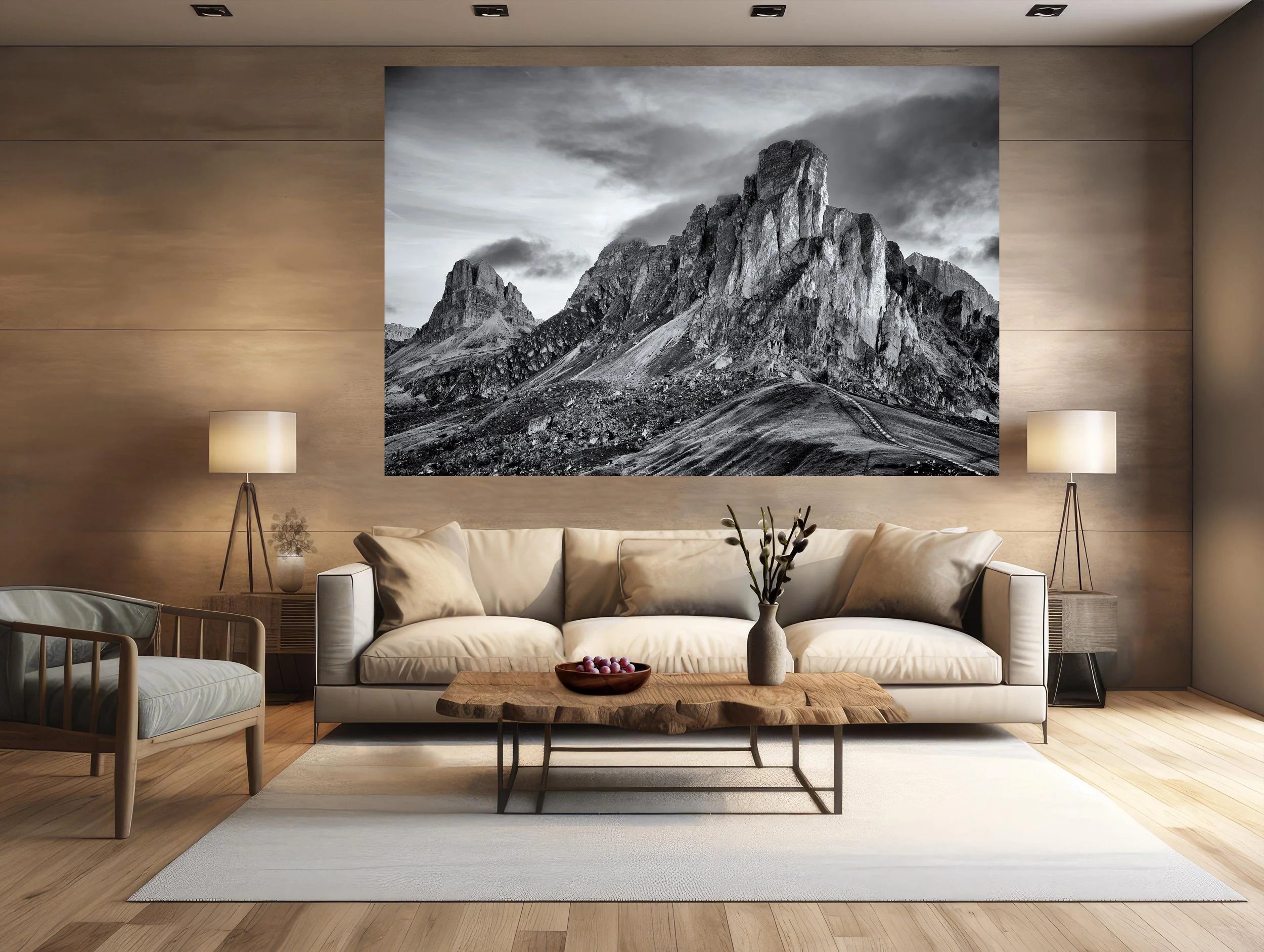
Jagged Echoes of Dolomite Shadows
Light sweeps across the formation in a dramatic rhythm. Bright highlights cascade over exposed rock faces, illuminating the mountain’s structure with almost tactile intensity. In contrast, deep shadows settle into crevices and fall along the slopes, sculpting the terrain in rich tonal gradients. This dynamic interplay forms the emotional heartbeat of the image—a visual echo of the mountain’s fierce yet silent presence. It is a landscape both rugged and refined, powerful yet contemplative.
IT 2138-83 BW Italy | c2025 | Learn More
Designing with Black and White Fine Art
One of the strengths of black and white photography is its flexibility. It pairs effortlessly with natural materials like wood and stone, as well as metals, glass, and neutral palettes. This makes it ideal for both residential and commercial environments.
In open spaces, a single large-scale black and white print can establish visual harmony. In more intimate settings, a series of smaller prints can create rhythm and flow. Regardless of placement, the artwork maintains its presence without demanding attention.
This quiet confidence is what makes black and white fine art photography so effective in modern design.
Craftsmanship and Longevity
Fine art black and white photography is defined not only by aesthetics but by craftsmanship. Limited edition prints produced using museum-quality materials ensure tonal accuracy, archival longevity, and consistency across editions.
Collectors value these works for their durability and timeless appeal. When thoughtfully chosen, black and white fine art photography remains relevant across changing design trends, making it both an emotional and practical investment.
Art with Purpose
Beyond aesthetics, fine art photography reflects values. Choosing nature-inspired black and white artwork expresses appreciation for simplicity, balance, and the natural world.
A portion of proceeds from fine art photography sales supports Global Voices for Nature Foundation Inc., a nonprofit dedicated to conservation education, environmental awareness, and protecting the landscapes and wildlife that inspire this work. Through collecting art, patrons actively contribute to preserving nature for future generations.