
Wildlife Photography as Fine Art: More Than a Beautiful Image
Wildlife photography has the power to stop us in our tracks. A single moment—an exchanged glance, a protective gesture, a quiet pause—can communicate emotion more powerfully than words. When wildlife photography is approached as fine art, it becomes more than a beautiful image; it becomes a story, a reflection, and a call to awareness.
Fine art wildlife photography is not about spectacle or rarity alone. It is about intention, respect, and connection. Each image is created to honor the animal, the environment it inhabits, and the fragile balance that sustains both.
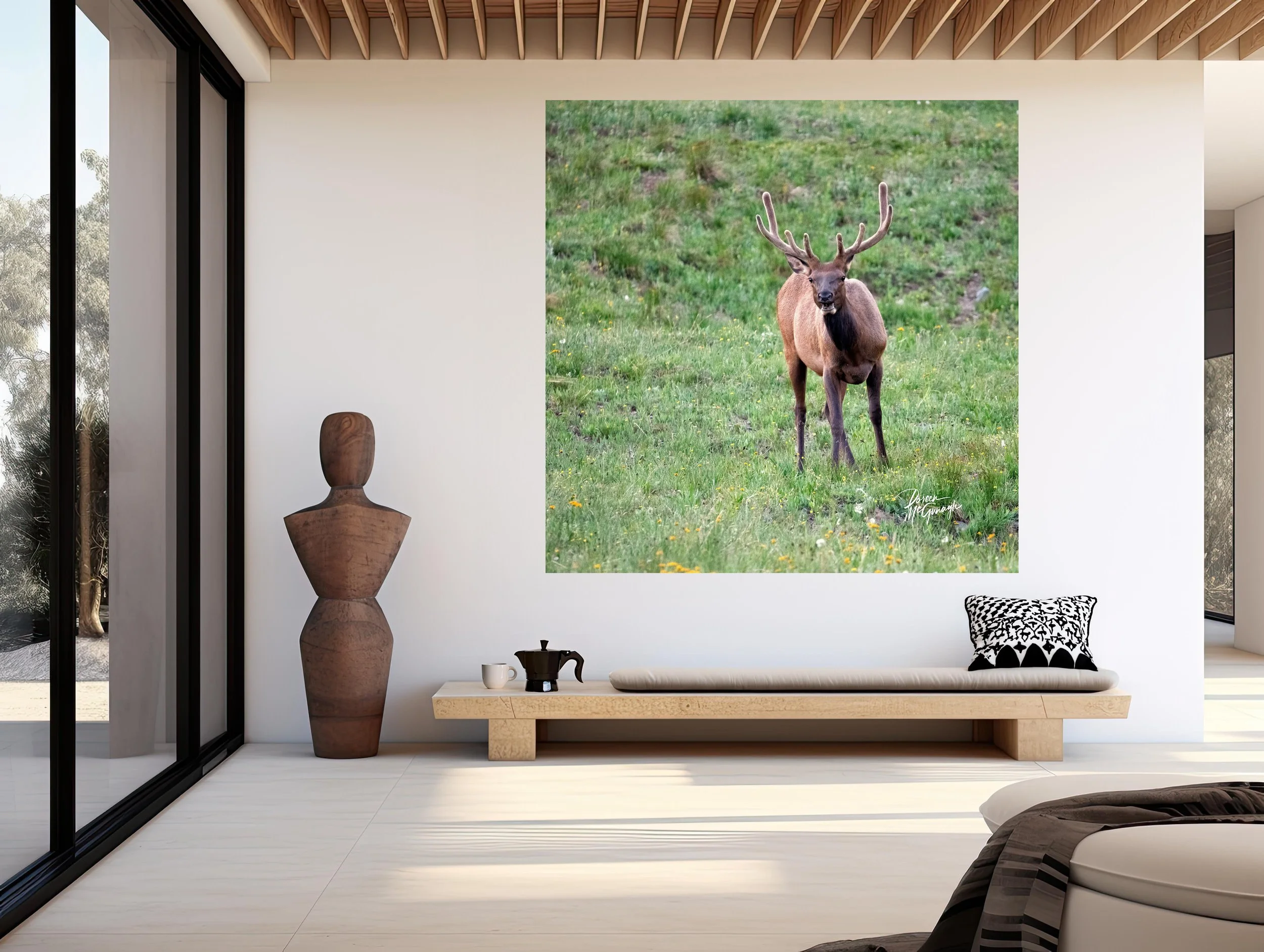
Stags Quiet Dominion
Wildlife photography often seeks to capture motion, yet here the drama is in stillness. The stag’s quiet posture is powerful—its antlers rise like a natural crown, while its body remains anchored in a meadow alive with subtle textures and color. The balance between strength and calm invites reflection. This is not an image of pursuit or conflict but of coexistence, where the animal is fully at ease in its landscape. In that presence, we witness the quiet authority that defines the wild.
CO695-75 Stag’s Quiet Dominion c2025 | Learn more
Beyond Documentation: The Fine Art Approach
Traditional wildlife photography often focuses on documentation—capturing an animal clearly and accurately. Fine art wildlife photography goes further. It considers mood, light, composition, and emotional resonance.
As a fine art nature and landscape photographer, I approach wildlife with the same artistic discipline used in landscape photography. The goal is not simply to show what the animal looks like, but to express how the moment feels. Stillness, vulnerability, strength, and interdependence are often the true subjects of the photograph.
This approach invites viewers to engage emotionally rather than observe passively.
Emotional Storytelling Through Wildlife Imagery
Wildlife photography prints have a unique ability to create empathy. When an image captures a tender or contemplative moment, it allows the viewer to recognize shared emotions—care, curiosity, protection, resilience.
Large wildlife prints amplify this connection. Scale allows details to emerge: texture in skin or fur, subtle expressions, the relationship between animal and environment. These details encourage viewers to slow down and reflect, transforming the photograph into an experience rather than decoration.
This emotional storytelling is what elevates wildlife photography into the realm of fine art.
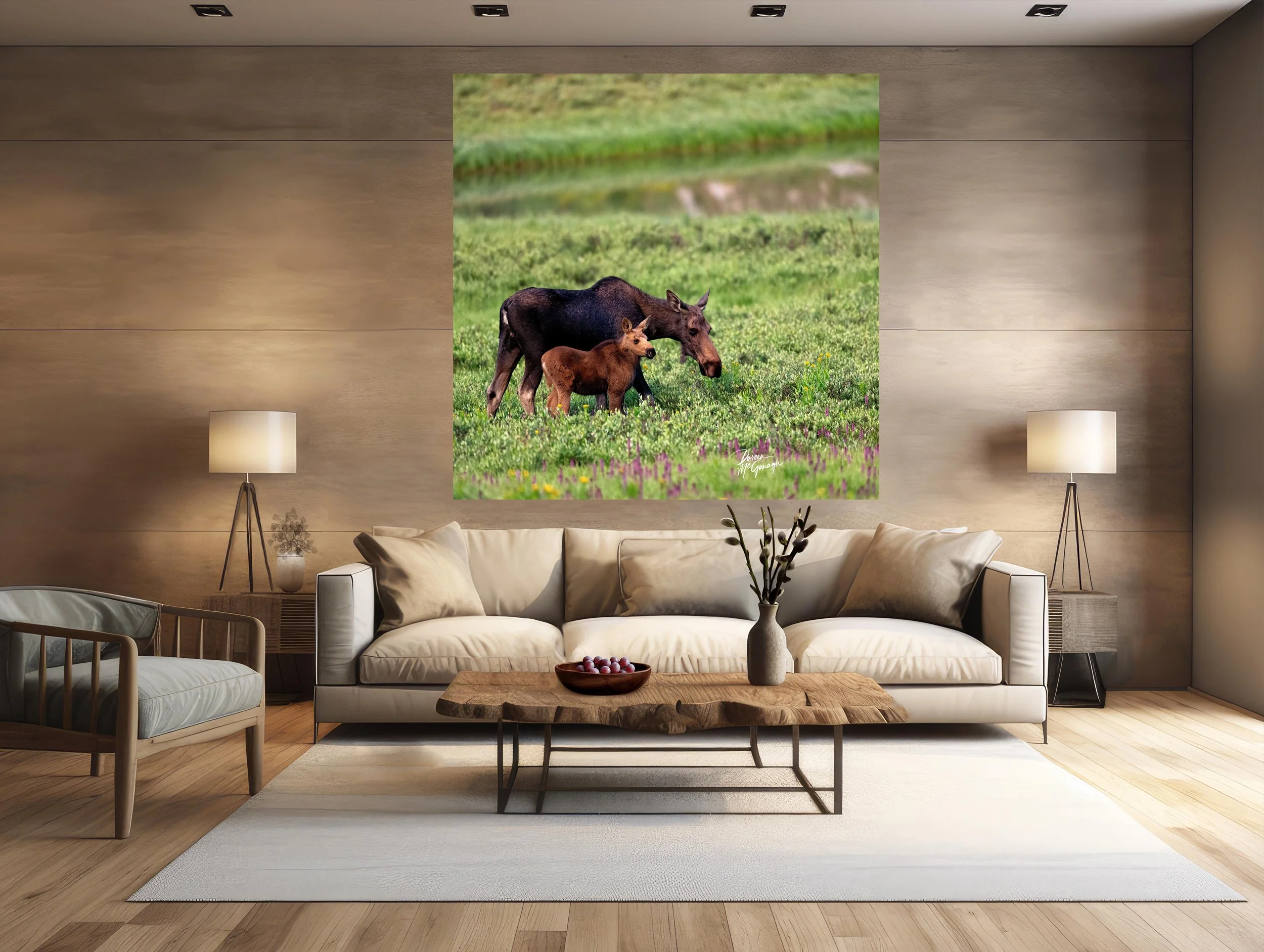
Embrace the Mountain Whisper
This composition thrives on contrast: the size and stature of the adult against the fragile presence of the calf; the rough texture of thick fur against the delicate petals of wildflowers; the strength of survival against the vulnerability of youth. And yet, rather than tension, what emerges is harmony. The closeness of the moose and calf embodies a natural rhythm of protection and growth—a quiet language of resilience that transcends words.
CO1903-21 RMNP c2025 | Learn more
The Role of Large Prints in Wildlife Fine Art
Large prints are especially impactful in wildlife photography. When an image is printed at scale, the subject commands presence and respect. The viewer is no longer looking at an animal—they are sharing space with it.
In homes, offices, and gallery settings, large wildlife photography prints often become focal points that shape the emotional tone of a room. They invite conversation, contemplation, and awareness. Displayed thoughtfully, these works serve as reminders of the natural world beyond our walls.
Large-scale fine art photography creates intimacy through presence.
Craftsmanship and Limited Editions
Fine art wildlife photography is defined not only by subject but by craftsmanship. Limited edition prints produced using museum-quality materials ensure longevity, depth, and fidelity to the artist’s vision.
Each print is carefully produced to maintain tonal balance, detail, and emotional integrity. Collectors are investing in more than an image—they are acquiring a piece of a carefully curated body of work, created with intention and respect for the subject.
Limited editions also reinforce the value of the artwork, both emotionally and materially.
Wildlife Photography as Advocacy
Fine art wildlife photography carries responsibility. Images have the power to shape perception and inspire care. When wildlife is presented with dignity and emotional depth, it encourages viewers to think more deeply about conservation and coexistence.
Art becomes a bridge—connecting beauty with awareness and appreciation with action.
A portion of proceeds from fine art photography sales supports Global Voices for Nature Foundation Inc., a nonprofit dedicated to conservation education, environmental awareness, and protecting wildlife and the landscapes they depend on. Through collecting fine art, patrons actively support the preservation of the natural world for future generations.