
Capitol Reef National Park: Hidden Beauty in America’s Desert Landscapes
There are places in the American West that feel untouched—not because they are unknown, but because they remain quietly preserved, waiting to be discovered.
Capitol Reef National Park is one of those places.
Located in southern Utah, this park is often overshadowed by its more famous neighbors. Yet within its boundaries lies a landscape just as powerful—defined by towering cliffs, colorful rock formations, and one of the most unique geological features in North America: the Waterpocket Fold.
Capitol Reef is not about crowds or spectacle. It is about quiet discovery, subtle beauty, and the importance of preserving what is often overlooked.
🪨 A Landscape Defined by the Waterpocket Fold
At the heart of Capitol Reef is the Waterpocket Fold—a nearly 100-mile-long wrinkle in the Earth’s crust.
Formed millions of years ago, this geologic monocline created a dramatic shift in the landscape, with layers of rock lifted and tilted over time. Erosion then sculpted these layers into cliffs, canyons, domes, and narrow passages.
“Waterpockets,” small depressions in the rock that collect rainwater, dot the landscape—giving the fold its name.
This feature is both visually striking and scientifically significant.
It tells a story of movement beneath the Earth’s surface—of pressure, time, and transformation.

Whispers of Ancient Hands
Whispers of Ancient Hands invites quiet contemplation of history etched directly into nature’s enduring canvas. This fine art photograph captures a series of petroglyphs, rendered in striking black and white to emphasize their timeless presence. Human-like figures, aligned in deliberate sequence across a weathered rock face, seem to gesture and move in a silent narrative—an ancient story preserved for millennia. The monochrome palette highlights the stone's textural irregularities, deepening the sense of age and grounding the figures in the natural environment they once animated.
🌅 Light, Color, and Desert Contrast
Capitol Reef is a place where color defines the landscape.
Bands of red, orange, white, and gold stretch across the cliffs, creating a natural palette that shifts with the light. At sunrise, the colors soften into pastels. By midday, they intensify, revealing texture and depth. And at sunset, the landscape glows with warmth, as if illuminated from within.
The desert here is not empty—it is layered.
For a photographer, Capitol Reef offers a quieter, more intimate experience. Without the density of visitors found in other parks, there is space to observe, to wait, and to connect with the landscape.
Through fine art photography, I aim to capture these subtleties—the way light moves across stone, the way color reveals structure, and the way stillness defines the experience.
🌿 Life in a Harsh Environment
Despite its rugged appearance, Capitol Reef supports a diverse ecosystem.
Desert plants have adapted to survive with minimal water, anchoring themselves in rocky soil and enduring extreme temperature changes. Wildlife—from small mammals to birds of prey—has evolved to thrive within this environment.
The Fremont River, which flows through the park, provides a vital source of water. Along its banks, vegetation becomes more abundant, creating a contrast between the arid desert and the life sustained by water.
This balance is delicate.
Small changes in water availability or environmental conditions can have significant effects on the ecosystem. Preserving Capitol Reef means protecting both the visible landscape and the systems that sustain it.
⚖️ The Value of Lesser-Known Parks
Capitol Reef offers an important reminder: preservation is not just about the most famous places.
While iconic parks draw attention and resources, lesser-known parks like Capitol Reef are equally important. They protect unique geological features, support biodiversity, and provide opportunities for deeper, more personal connection with nature.
These landscapes often face fewer crowds—but that does not make them less vulnerable.
In fact, their quiet nature makes them even more important to protect.
They represent the spaces where solitude still exists, where natural processes continue uninterrupted, and where the experience of nature remains authentic.
📷 Capturing Quiet Beauty Through Fine Art
Photographing Capitol Reef is about noticing what others might overlook.
The curve of a rock formation.
The subtle shift in color at dusk.
The way light traces the edge of a cliff.
Through fine art photography, I seek to bring attention to these details—to highlight the beauty that exists beyond the obvious.
These images become an invitation—to slow down, to observe, and to appreciate a landscape that reveals itself gradually.
Art allows us to see more clearly. And in seeing more clearly, we begin to understand the importance of preservation.
🇺🇸 A Quiet but Powerful Part of America’s Legacy
As the United States approaches its 250th anniversary, Capitol Reef National Park stands as a reminder that America’s natural heritage is vast and varied.
It is not defined solely by its most recognizable landmarks, but also by the quieter landscapes that contribute to the whole.
Capitol Reef represents a different kind of legacy—one rooted in discovery, in subtlety, and in the understanding that every protected place matters.
🌿 Continuing the Parks & Preservation Journey
Capitol Reef adds another layer to the story of America’s protected lands.
Each park we explore in this series brings a new perspective—on geology, on ecosystems, and on the importance of preserving both.
Together, they form a narrative that is both expansive and deeply connected.
✨ Call to Action
If the quiet beauty and hidden landscapes of Capitol Reef National Park inspire you, I invite you to continue this journey of preservation and discovery.
📖 Pre-order the upcoming Parks & Preservation book, where fine art photography and storytelling come together to celebrate America’s diverse landscapes and the importance of protecting them for future generations.
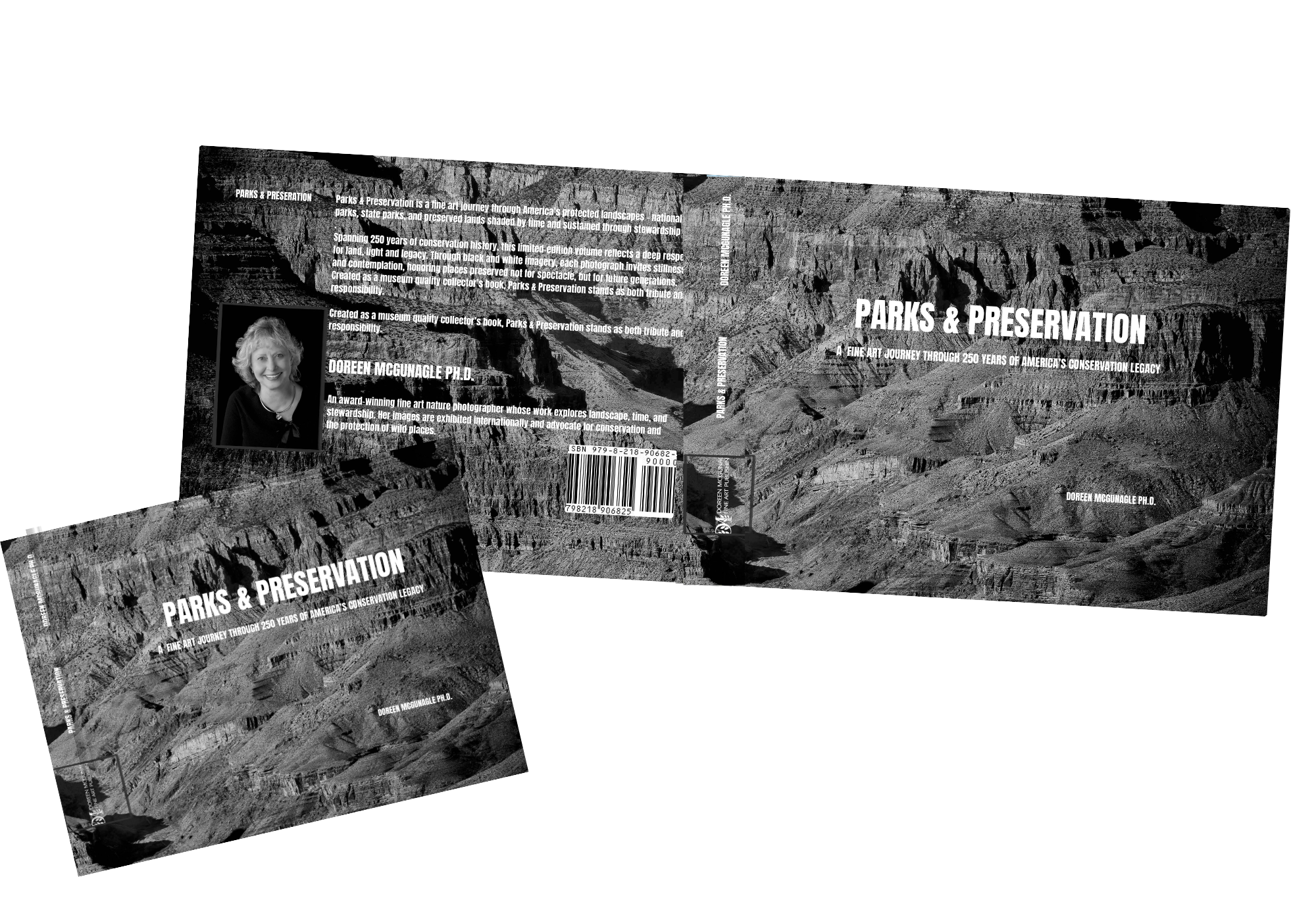
Parks & Preservation — First Edition (Signed Collector Copy)
Created in recognition of the 250th Anniversary of the United States, this volume reflects on preservation as both a civic responsibility and a form of generational stewardship. Through carefully composed imagery emphasizing form, light, and permanence, the collection honors America’s protected landscapes as enduring symbols of shared heritage and environmental responsibility.
🌍 Support Global Voices for Nature Foundation Inc., dedicated to advancing conservation through photography, education, and storytelling—helping preserve unique and lesser-known ecosystems like Capitol Reef for years to come.
Together, we can ensure that these hidden landscapes remain—protected, respected, and enduring—for the next 250 years and beyond.