
Grand Canyon National Park: Where America’s Story Is Written in Stone
There are few places in the world where time feels as visible—and as profound—as it does at the Grand Canyon.
Standing at its rim, you are not just looking at a landscape. You are looking into millions of years of Earth’s history, layered in bands of red, orange, and gold. Each striation tells a story of change, resilience, and the quiet persistence of natural forces that have shaped this land over time.
Grand Canyon National Park is more than one of America’s most iconic destinations—it is a powerful symbol of why preservation matters.
🪨 A Landscape Carved by Time
The Grand Canyon was not formed overnight. It is the result of millions of years of geological transformation, shaped primarily by the Colorado River cutting through layers of rock.
What makes this landscape so compelling is not just its scale, but its story. Each layer represents a different era—an ancient record of shifting climates, seas, and ecosystems.
It is a reminder that the natural world operates on a timeline far beyond our own.
As a photographer, this perspective changes how you approach the scene. You are not simply capturing a moment—you are capturing a fragment of an ongoing story that has been unfolding for millennia.
🌅 Light, Depth, and Emotion
The Grand Canyon transforms with light.
At sunrise, soft hues of pink and gold gently illuminate the canyon walls. By midday, the depth and contrast become more pronounced, revealing the intricate textures carved into the rock. And at sunset, the entire canyon seems to glow, as if holding onto the last light of the day.
It is in these transitions that the canyon feels most alive.
Through fine art photography, I seek to capture these fleeting moments—not just for their visual beauty, but for the emotional connection they create. The Grand Canyon invites reflection. It encourages stillness. It reminds us of both our smallness and our place within something much larger.
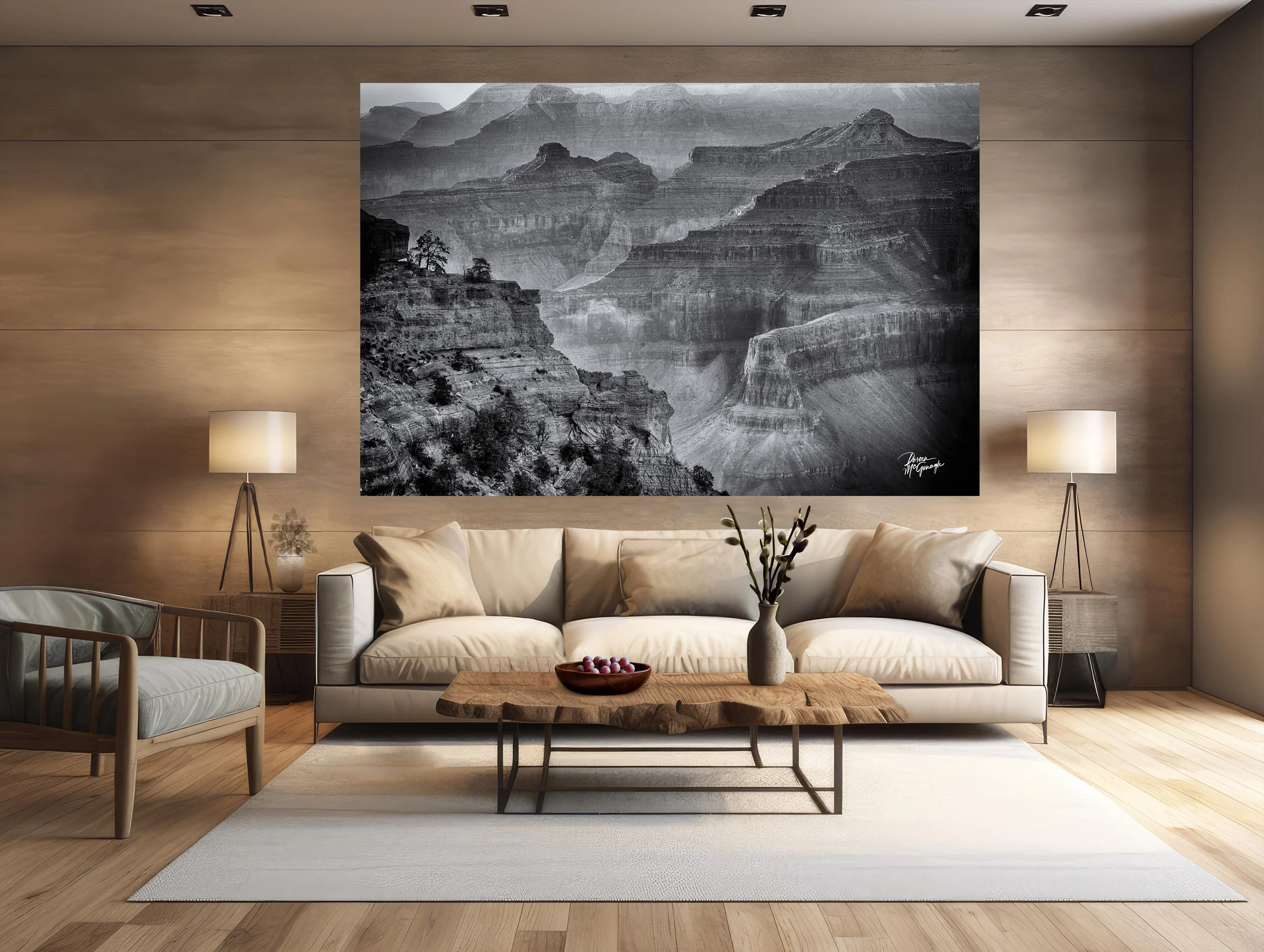
Echoes Beneath the Rim
A powerful statement for a modern interior. Echoes Beneath the Rim makes a commanding focal point in design-forward spaces. Its neutral palette pairs beautifully with matte or limewash walls, natural stone, warm woods, and textured textiles. Hang it as a singular statement above a console, bed, or sofa to invite quiet reflection, or use it to anchor a gallery wall where other natural studies converge. In offices, libraries, or creative studios, the image offers grounding presence and contemplative strength, supporting environments where focus and inspiration matter.
🌿 Preservation of a Natural Wonder
Despite its immense size, the Grand Canyon is not immune to threats.
Increased visitation, environmental pressures, and changes in water flow all impact the delicate balance of this ecosystem. The Colorado River, which continues to shape the canyon, is itself affected by drought and water management challenges.
Preserving the Grand Canyon requires thoughtful stewardship—balancing access with protection, and ensuring that future generations can experience its beauty without compromising its integrity.
This is the essence of conservation: recognizing that even the most powerful landscapes are still vulnerable.
🦅 A Sanctuary Beyond the View
While the canyon’s vast vistas often take center stage, it is also home to a diverse range of wildlife and plant life.
From desert bighorn sheep navigating steep cliffs to California condors soaring overhead, the Grand Canyon is a thriving ecosystem. Its varied elevations and climates create habitats that support an incredible diversity of life.
These elements are often quieter, less visible—but no less important.
They remind us that preservation is not just about protecting views—it is about protecting life.
🇺🇸 A Symbol of America’s Natural Heritage
As we approach the 250th anniversary of the United States, the Grand Canyon stands as a testament to the country’s commitment to preserving its natural wonders.
It represents a shift in how we value land—not for what we can take from it, but for what it offers simply by existing.
The decision to protect places like the Grand Canyon reflects a deeper understanding: that some landscapes are too important to lose.
They define us. They ground us. And they connect us to something timeless.
📷 The Role of Art in Preservation
Art has always played a role in shaping how we see the world.
In the case of the Grand Canyon, early photographs and paintings helped inspire its protection. They revealed its beauty to those who had never seen it, creating a sense of wonder and urgency.
Today, that role continues.
Through fine art photography, we have the opportunity to tell new stories—to highlight not only the grandeur of these landscapes, but also their fragility.
Each image becomes a bridge between viewer and place. And through that connection, awareness grows.
🌿 Continuing the Parks & Preservation Journey
The Grand Canyon is just one chapter in a much larger story.
Across the United States, National and State Parks protect landscapes that are equally powerful, equally fragile, and equally deserving of our attention.
This Parks & Preservation series is an invitation—to explore these places, to understand their significance, and to recognize the role we all play in their future.
✨ Call to Action
If the timeless beauty of the Grand Canyon inspires you, I invite you to continue this journey beyond the page.
📖 Pre-order the upcoming Parks & Preservation book, where fine art photography and storytelling come together to celebrate America’s most iconic landscapes and the importance of protecting them.
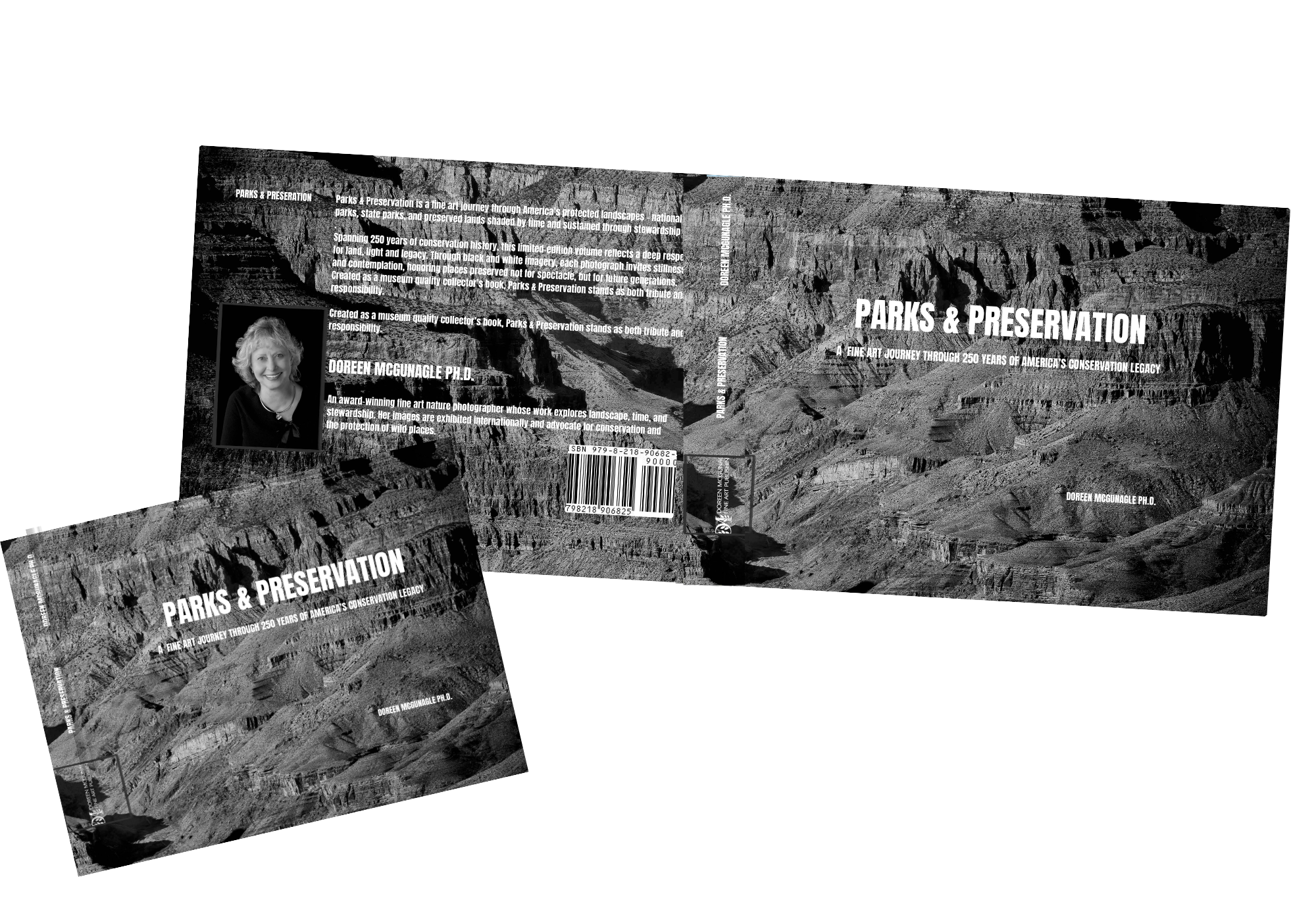
Parks & Preservation — First Edition (Signed Collector Copy)
Created in recognition of the 250th Anniversary of the United States, this volume reflects on preservation as both a civic responsibility and a form of generational stewardship. Through carefully composed imagery emphasizing form, light, and permanence, the collection honors America’s protected landscapes as enduring symbols of shared heritage and environmental responsibility.
🌍 Support Global Voices for Nature Foundation Inc., dedicated to advancing conservation through photography, education, and storytelling—helping preserve places like the Grand Canyon for generations to come.
Together, we can honor these landscapes not just as destinations, but as enduring symbols of resilience, beauty, and the shared responsibility to protect what matters most.