
In southern Colorado, at the base of the Sangre de Cristo Mountains, rises a landscape unlike any other in North America.
Great Sand Dunes National Park is home to the tallest dunes on the continent—massive waves of sand that shift, reshape, and evolve with every passing day. At first glance, they appear still, frozen in time. But in reality, they are constantly moving.
This is a place defined by change.
Wind, water, and gravity work together to sculpt the dunes, creating a landscape that is never quite the same twice. It is both powerful and fragile—an environment that reminds us that even the most striking natural features depend on delicate balance.
🌬️ A Landscape in Motion
The dunes of this park are formed by a unique combination of geography and natural forces.
Sediment from surrounding mountains is carried by wind and water into the San Luis Valley. Over time, prevailing winds push that sand toward the mountains, where it accumulates and builds into towering dunes.
But the process does not stop there.
Wind continues to reshape the dunes—lifting grains of sand, shifting ridgelines, and creating new patterns across the surface. Each gust contributes to a landscape that is constantly evolving.
Walking across the dunes, you can feel this movement. The surface shifts beneath your feet, and the contours of the land change with every step.
It is a reminder that this landscape is alive.
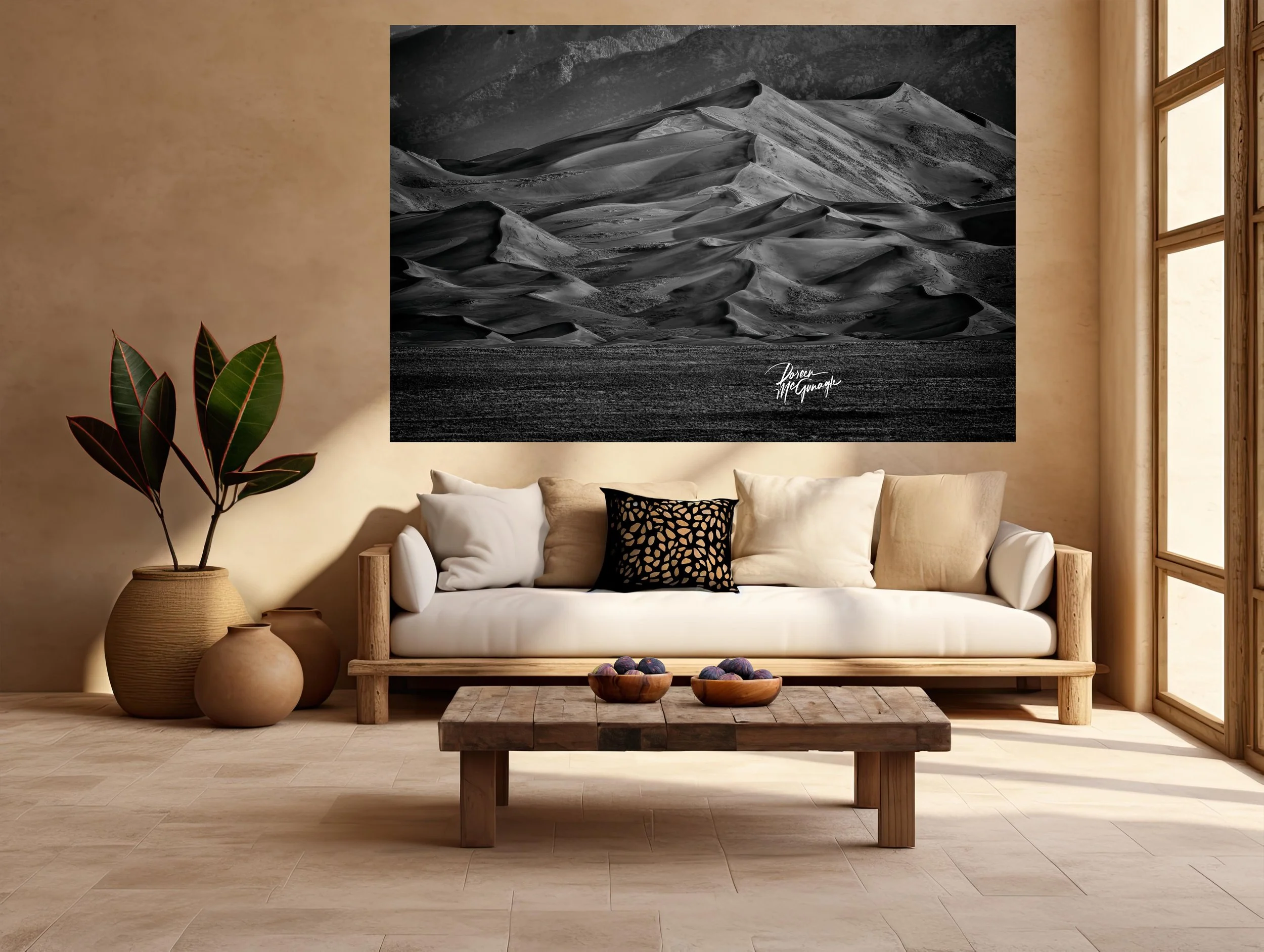
Veins of Shadow and Sandstrom
In Veins of Shadow and Sandstorm, the desert reveals its architecture. Rendered in stark black and white, this photograph presents an expansive field of dunes where knife-edged ridges intersect with smooth, flowing curves. Sunlight cuts across the surfaces and carves depth into the terrain, casting shadows that settle like ink in the lees. The result is a disciplined study of form and light—an image that honors both the desert’s sculptural grace and the quiet force that shapes it.
🌅 Light and Texture in the Desert
Great Sand Dunes National Park is a study in light and texture.
At sunrise, soft light stretches across the dunes, casting long shadows that define their shape. The ridges become more pronounced, and the surface reveals intricate patterns formed by the wind.
As the day progresses, the light intensifies, flattening the landscape and emphasizing its scale. By sunset, the dunes once again come alive—glowing in warm tones of gold and amber.
The contrast between light and shadow is constantly shifting.
For a photographer, this creates endless opportunities to explore composition and mood.
Through fine art photography, I seek to capture these transitions—the moments when light and movement come together to reveal the true character of the landscape.
🌿 A Fragile High-Desert Ecosystem
Despite its stark appearance, Great Sand Dunes National Park supports a surprisingly diverse ecosystem.
Plants and animals have adapted to survive in this challenging environment, where water is scarce and temperatures can fluctuate dramatically.
Grasses and shrubs stabilize parts of the dunes, while insects, reptiles, and small mammals find ways to thrive within the shifting sands. Even seasonal streams, like Medano Creek, play a critical role—bringing water into the system and influencing the movement of sand.
This ecosystem is finely balanced.
Disruption—whether from human activity or environmental change—can have lasting effects. Preserving this landscape means understanding its complexity and respecting its limits.
⚖️ Preservation in a Changing Environment
Great Sand Dunes National Park highlights an important aspect of conservation: protecting not just static landscapes, but dynamic ones.
Unlike mountains or forests, which may appear more stable, the dunes are constantly changing. Preservation here is not about keeping the landscape the same—it is about ensuring that the natural processes shaping it can continue uninterrupted.
This includes protecting surrounding water sources, managing visitor impact, and maintaining the delicate balance between land, wind, and water.
It is a different kind of preservation—one that embraces change while safeguarding the conditions that make it possible.
📷 Capturing Movement Through Fine Art
Photographing the dunes is about more than capturing scale—it is about capturing motion.
The lines etched into the sand, the patterns created by wind, and the shifting light all contribute to a sense of movement that is both subtle and powerful.
Through fine art photography, I aim to translate that movement into something still—an image that holds a moment in time within a landscape that is constantly evolving.
These photographs become reflections of change.
They remind us that beauty is not always found in permanence, but often in transformation.
🇺🇸 A Landscape That Reflects America’s Natural Diversity
As the United States approaches its 250th anniversary, Great Sand Dunes National Park stands as a testament to the diversity of landscapes within our borders.
From wetlands and forests to deserts and mountains, each ecosystem tells a different story—each shaped by its own forces, each deserving of protection.
The dunes represent a unique chapter in that story.
They remind us that preservation is not one-size-fits-all. It must adapt to the landscape, just as the landscape adapts to time.
🌿 Continuing the Parks & Preservation Journey
Great Sand Dunes National Park adds depth to our understanding of America’s protected lands.
Each park in this series reveals a different perspective—on movement, on resilience, and on the importance of preserving both.
Together, they form a narrative that is as dynamic as the landscapes themselves.
✨ Call to Action
If the beauty and movement of Great Sand Dunes National Park inspire you, I invite you to continue this journey of exploration and preservation.
📖 Pre-order the upcoming Parks & Preservation book, where fine art photography and storytelling come together to celebrate America’s most unique landscapes and the importance of protecting them.
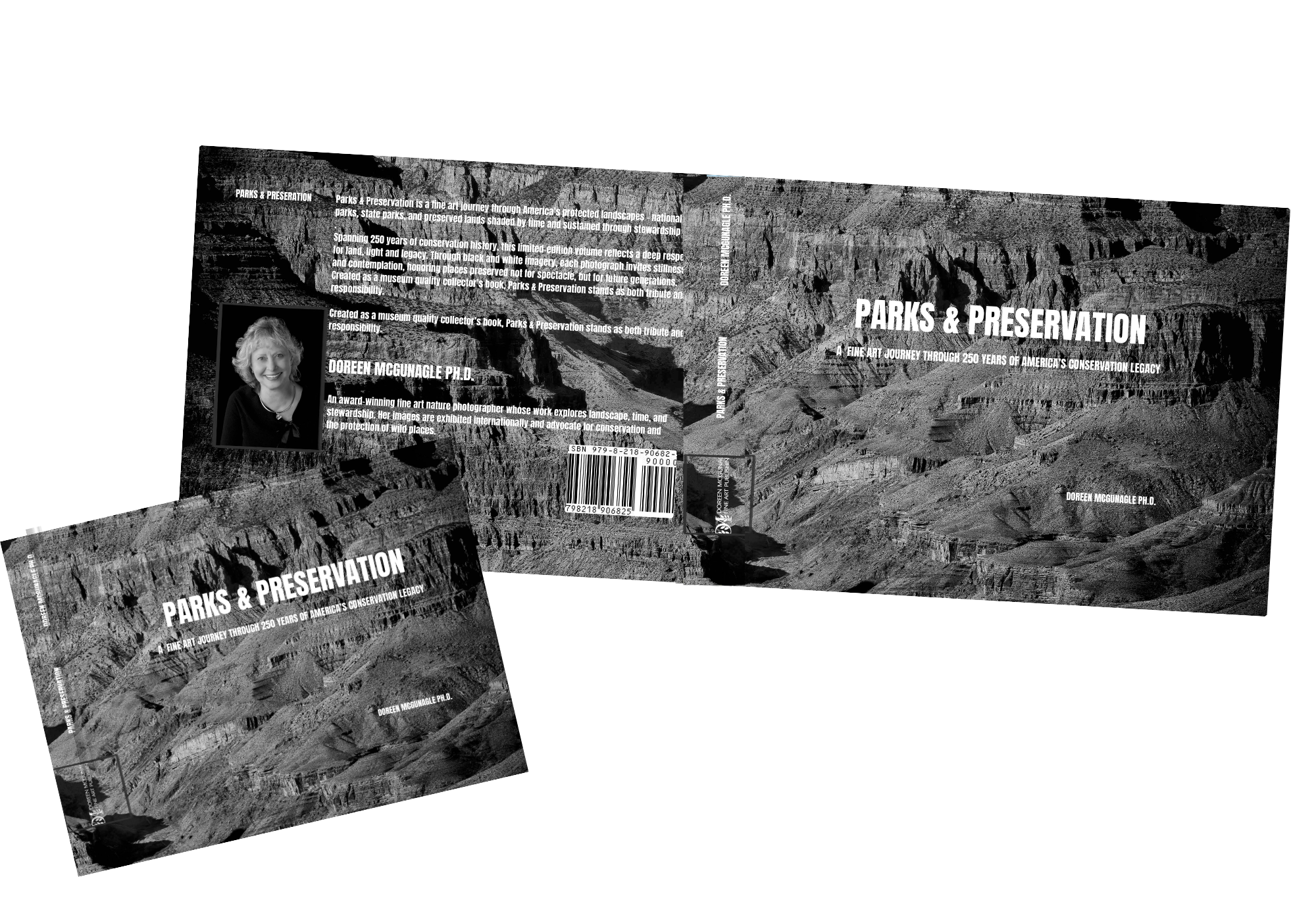
Parks & Preservation — First Edition (Signed Collector Copy)
Created in recognition of the 250th Anniversary of the United States, this volume reflects on preservation as both civic responsibility and generational stewardship. Through carefully composed imagery emphasizing form, light, and permanence, the collection honors America’s protected landscapes as enduring symbols of shared heritage and environmental responsibility.
🌍 Support Global Voices for Nature Foundation Inc., dedicated to advancing conservation through photography, education, and storytelling—helping preserve dynamic ecosystems like the dunes for future generations.
Together, we can ensure that these ever-changing landscapes continue to evolve—protected, respected, and enduring—for the next 250 years and beyond.