
How to Care for and Display Fine Art Photography Prints
Fine art photography is created to last, but proper care and thoughtful display are essential to preserving its beauty and integrity over time. Whether you’ve invested in a large landscape photography print or a more intimate wildlife image, understanding how to care for fine art photography ensures it remains vibrant and meaningful for generations.
As a fine art nature and landscape photographer, I consider longevity at every stage of creation—from capture to print materials. With a few mindful practices, collectors can protect their artwork while allowing it to shine within their space.
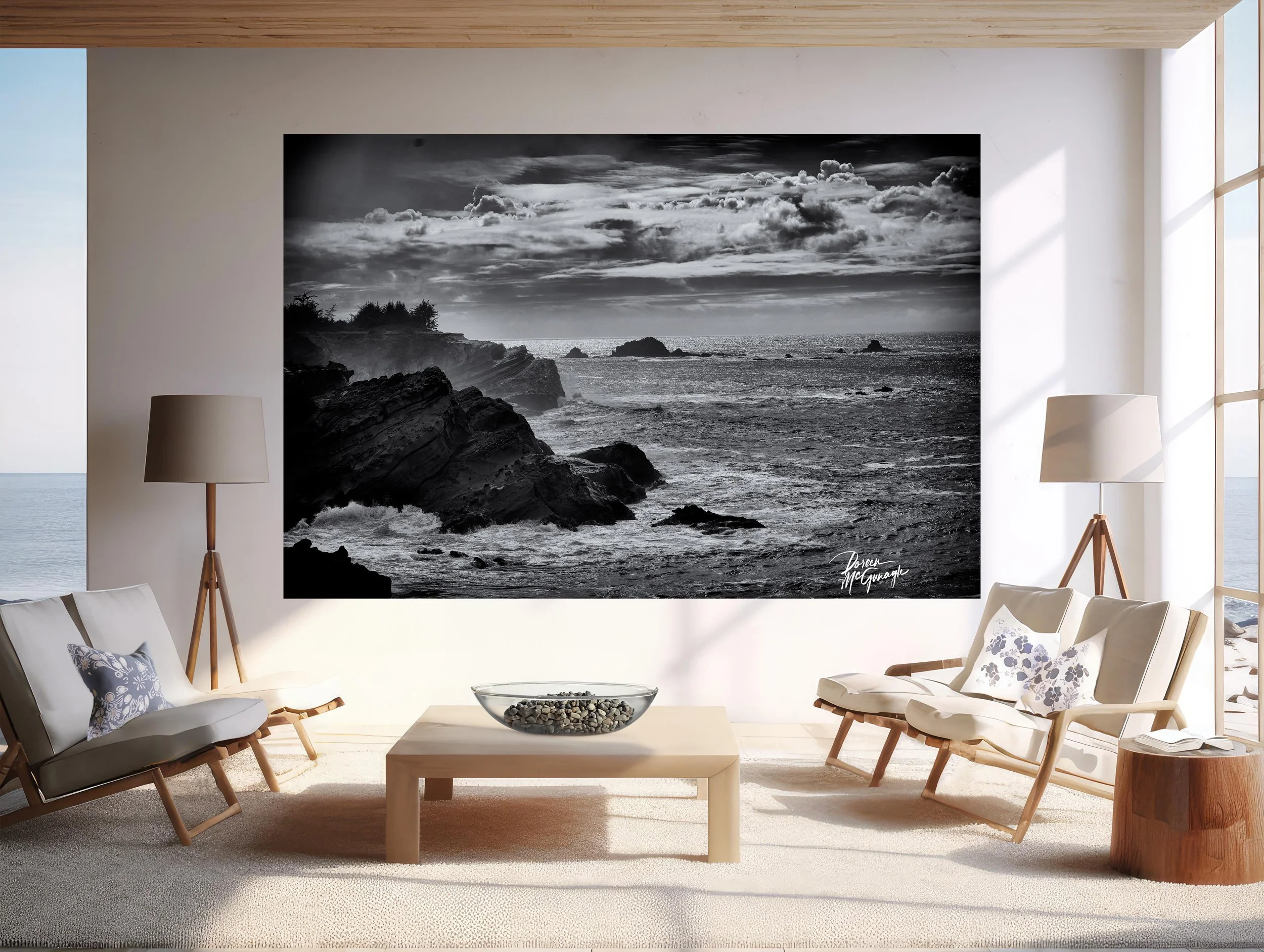
Monochrome Roar of the Oregon Shore
I worked on the backside of a storm when swells kept their cadence. Between gusts, I timed the exposure to hold motion with detail—the moment the wave shouldered the rock, the lace of spindrift, the dark seam of water gathering for the next strike. The cloud field moved like a slow engine, banding light and shadow across the surface. What I felt most was gravity and rhythm: the shore receiving the sea’s voice, again and again.
OR 4084-77BW SR c2025 Learn More
Choosing the Right Environment
The environment where fine art photography is displayed plays a critical role in its preservation. Artwork should be placed in areas with stable temperature and humidity. Extreme fluctuations can affect both the print and mounting materials over time.
Avoid hanging fine art photography in direct sunlight, as prolonged UV exposure may cause fading—even with museum-quality inks and papers. Indirect natural light or controlled interior lighting is ideal, especially for large prints that command attention within a room.
Bathrooms, kitchens, and spaces with high moisture should be approached with care unless the artwork is specifically produced for those environments.
The Importance of Professional Framing
Framing is not only about presentation—it’s about protection. Professional framing using archival materials helps shield fine art photography from dust, pollutants, and physical damage.
Museum-grade mats, UV-protective glazing, and acid-free backing materials are essential for preserving tonal quality and preventing discoloration. For large landscape photography prints, proper framing also ensures structural stability, allowing the artwork to remain flat and secure.
Minimalist frames often work best, allowing the image itself to take center stage without distraction.
Handling Fine Art Photography with Care
When handling fine art photography prints, clean hands or cotton gloves are recommended. Oils and residue from skin can transfer to the surface, potentially causing long-term damage.
If artwork needs to be moved or stored, it should be wrapped in archival materials and kept flat or upright in a protective environment. Limited edition prints should always remain accompanied by their documentation, such as certificates of authenticity.
Careful handling reinforces the long-term value of the artwork.
Displaying Large Prints with Intention
Large prints require thoughtful placement. Because of their scale, they naturally become focal points within a space. Position large fine art photography at eye level whenever possible, and allow sufficient wall space around it so the image can breathe.
Avoid overcrowding walls with multiple competing pieces. A single large landscape photography print often creates more visual calm and emotional impact than several smaller works placed too closely together.
Intentional spacing allows the artwork to enhance the room without overpowering it.
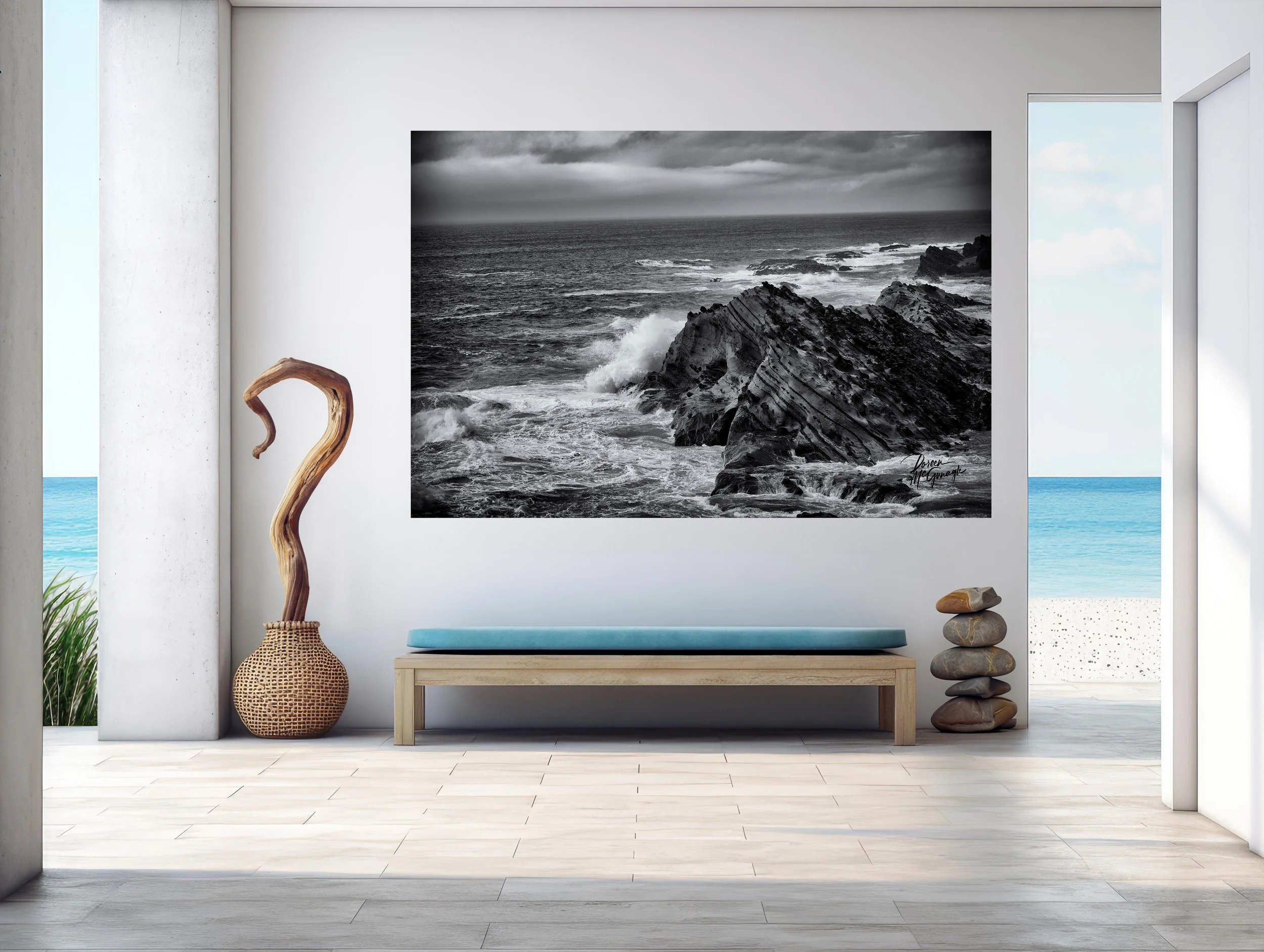
Monochrome Clash with Rock and Wave
I worked at the edge of a passing front when swells arrived in deliberate sets. Between gusts, I timed the exposure to hold motion with detail—the instant a breaker shouldered the rock, lacework foam pulling back, the darker seam where the next wave gathered. The sky moved like a slow engine, banding highlights and graphite shadow. What I felt most was balance under pressure: stone receiving impact, sea resetting, again and again.
OR 4091-78BW SR c2025 | Learn More
Cleaning and Maintenance
Fine art photography requires minimal maintenance when displayed properly. Dust frames gently with a soft, dry cloth. Avoid using cleaning products directly on glass or acrylic surfaces unless recommended by the framer.
If professional cleaning or reframing becomes necessary, consult an experienced art professional to ensure the materials and methods used are appropriate for fine art photography.
Routine care helps maintain the artwork’s clarity and presence over time.
Art with Purpose
Caring for fine art photography is also about honoring the values behind the work. Nature-inspired art reflects appreciation for beauty, balance, and preservation.
A portion of proceeds from fine art photography sales supports Global Voices for Nature Foundation Inc., a nonprofit dedicated to conservation education, environmental awareness, and protecting the landscapes and wildlife that inspire this work. Through thoughtful collecting and care, patrons help ensure these images—and the environments they represent—continue to inspire future generations.