
The Role of Conservation in Fine Art Nature Photography
Fine art nature photography is more than an artistic practice—it is a form of advocacy. At its best, it invites viewers to pause, reflect, and recognize the intrinsic value of the natural world. Conservation plays a central role in this process, shaping not only what is photographed, but why it matters.
As a fine art nature and landscape photographer, conservation is inseparable from the creative process. Every image is rooted in respect for place, wildlife, and the fragile balance that sustains both.
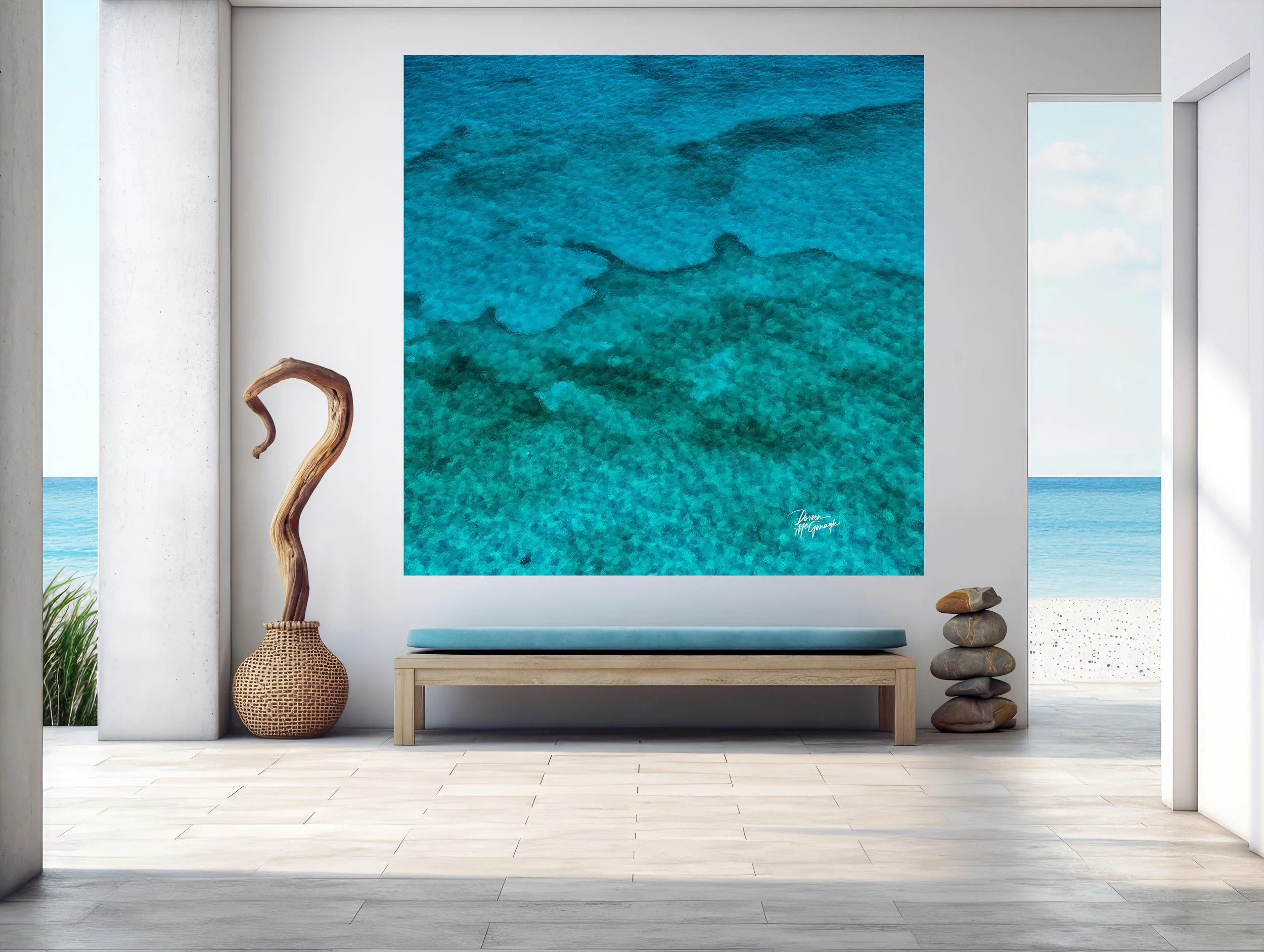
Silent Currents of the Turquoise Vel
From above, clear turquoise waters stretch across the frame, revealing intricate coral formations that appear like organic patterns woven into the ocean floor. The composition is defined by layers of blues and greens that shift gently across the surface, each tonal variation suggesting subtle changes in depth. Sunlight filters through the water, illuminating textures and contours that might otherwise remain hidden, while soft ripples create a delicate veil over the reef below. The result is an image that feels simultaneously immersive and calming — alive with detail, yet grounded in quiet stillness.
LKFL 3656-29 | c2026 | Learn more
Photography as Witness and Storytelling
Photography has long served as a visual record of the world as it exists in a specific moment in time. In the context of nature and wildlife, this role becomes especially significant. Landscapes change. Habitats shrink. Species face increasing pressures.
Fine art nature photography acts as witness—capturing moments that may not exist in the same way in the future. But it also goes further. Through artistic intention, photography transforms documentation into storytelling.
A quiet landscape at dawn or a tender wildlife interaction becomes a reminder of what is at stake. These images encourage viewers to see nature not as background, but as something worthy of care and protection.
The Responsibility of the Landscape Photographer
A landscape photographer working in natural environments carries responsibility. Ethical practices—respecting wildlife, minimizing impact, and honoring protected spaces—are foundational to conservation-driven work.
This responsibility also extends to representation. Fine art photography avoids sensationalism, instead offering images that convey balance, resilience, and interconnectedness. The goal is not to exploit nature’s beauty, but to honor it.
By presenting landscapes and wildlife with dignity, photography fosters appreciation rather than consumption.
Emotional Connection Leads to Awareness
Conservation begins with connection. People protect what they care about, and they care about what they feel connected to. Fine art nature photography builds this connection through emotion rather than instruction.
Large landscape photography prints immerse viewers in place, allowing them to experience scale, atmosphere, and stillness. Wildlife photography captures moments of vulnerability and strength that resonate across species. Black and white photography distills these experiences into pure emotion.
These visual experiences encourage reflection—and reflection often leads to awareness.
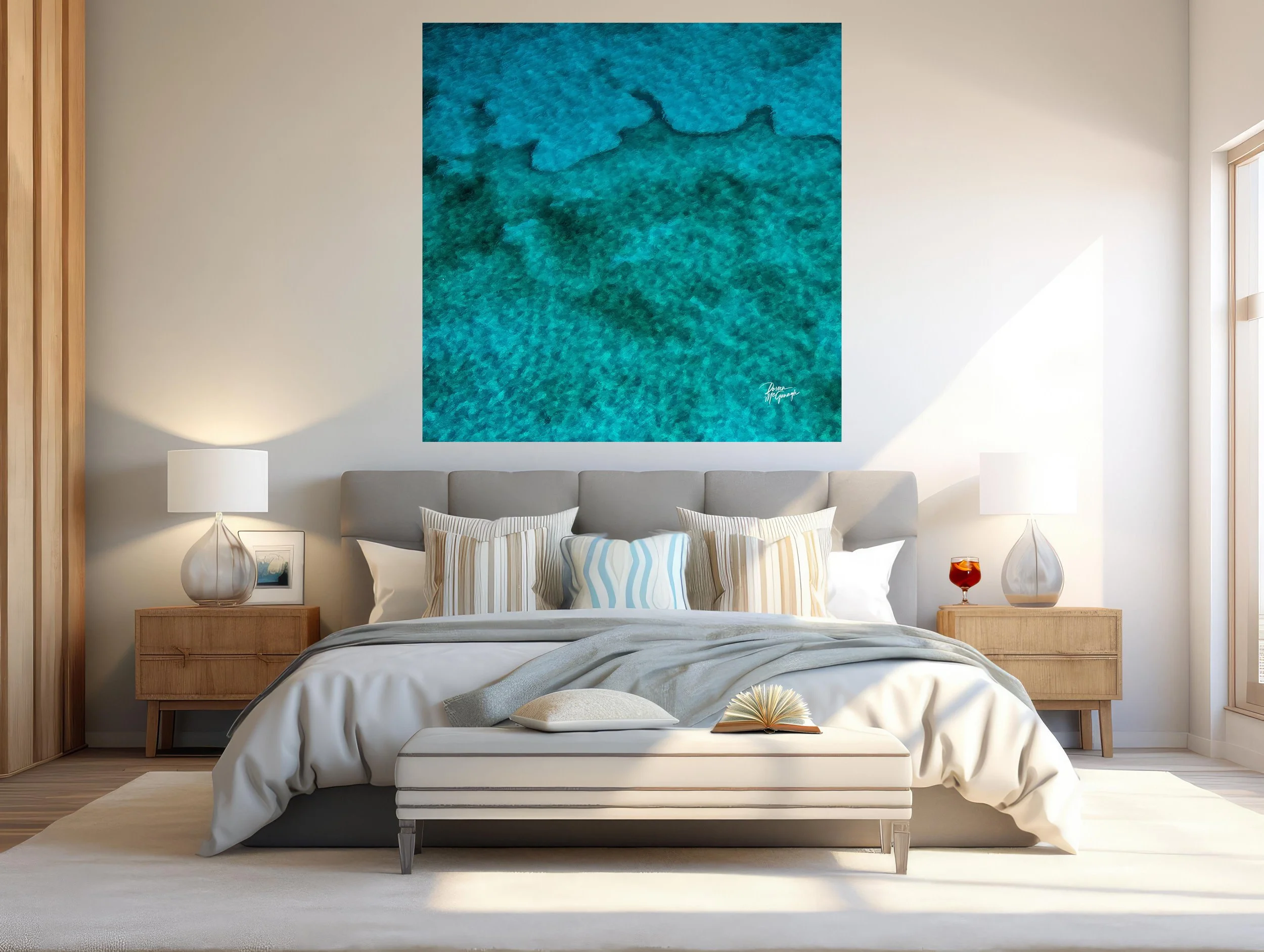
Depths of Fluid Serenity
Captured from an aerial perspective above the protected waters of the Florida Keys National Marine Sanctuary, this fine art nature photography piece embraces the philosophy of abstract realism, where natural forms become expressive compositions shaped by light, texture, and flow. The image transforms the reef environment into a meditative space that balances energy with tranquility, inviting prolonged observation and emotional connection.
LKFL 3662-30 | c2026 | Learn More
Art as a Catalyst for Action
While photography alone cannot solve environmental challenges, it plays a powerful role in shaping perception. Art reaches people where data and statistics often cannot—through feeling.
Fine art photography displayed in homes, offices, and public spaces keeps nature present in daily life. It serves as a quiet reminder of the landscapes and wildlife that exist beyond our routines, and of our role in their preservation.
When art is paired with purpose, it becomes a catalyst for meaningful action.
Collecting with Conservation in Mind
Collectors increasingly seek artwork that aligns with their values. Fine art nature photography offers an opportunity to support conservation through intentional collecting.
Limited edition prints created with museum-quality materials ensure longevity while reinforcing the importance of stewardship over mass production. Each piece represents a commitment to both artistic integrity and environmental responsibility.
Choosing art rooted in conservation reflects a broader understanding of value—one that extends beyond aesthetics.
Art with Purpose
A portion of proceeds from fine art photography sales supports Global Voices for Nature Foundation Inc., a nonprofit dedicated to conservation education, environmental awareness, and protecting the landscapes and wildlife that inspire this work. Through collecting fine art, patrons actively contribute to preserving natural environments for future generations.
Fine art nature photography reminds us that beauty and responsibility are deeply connected—and that protecting what inspires us is an act of both care and creativity.