
A finished fine art photograph may capture one fraction of a second.
The story behind it can take years.
When viewers encounter a photograph in a gallery, they see the final image: carefully selected, edited, printed, and presented. What they do not see are the months of research, travel planning, weather decisions, equipment choices, unsuccessful attempts, early mornings, changing conditions, and countless frames that came before it.
For me, those unseen moments are part of every photograph.
Research Comes First
Fine art nature photography often begins long before I arrive at a location.
I research the landscape, ecosystem, seasonal conditions, access, light, environmental significance, and potential visual story.
For aerial projects, preparation becomes even more important.
Where should the helicopter fly?
What altitude might reveal the patterns I am seeking?
Where are sensitive or restricted areas?
How will the direction of sunlight interact with water?
What equipment can I safely manage in a doors-off aircraft?
Preparation creates possibilities, but nature ultimately decides what happens.
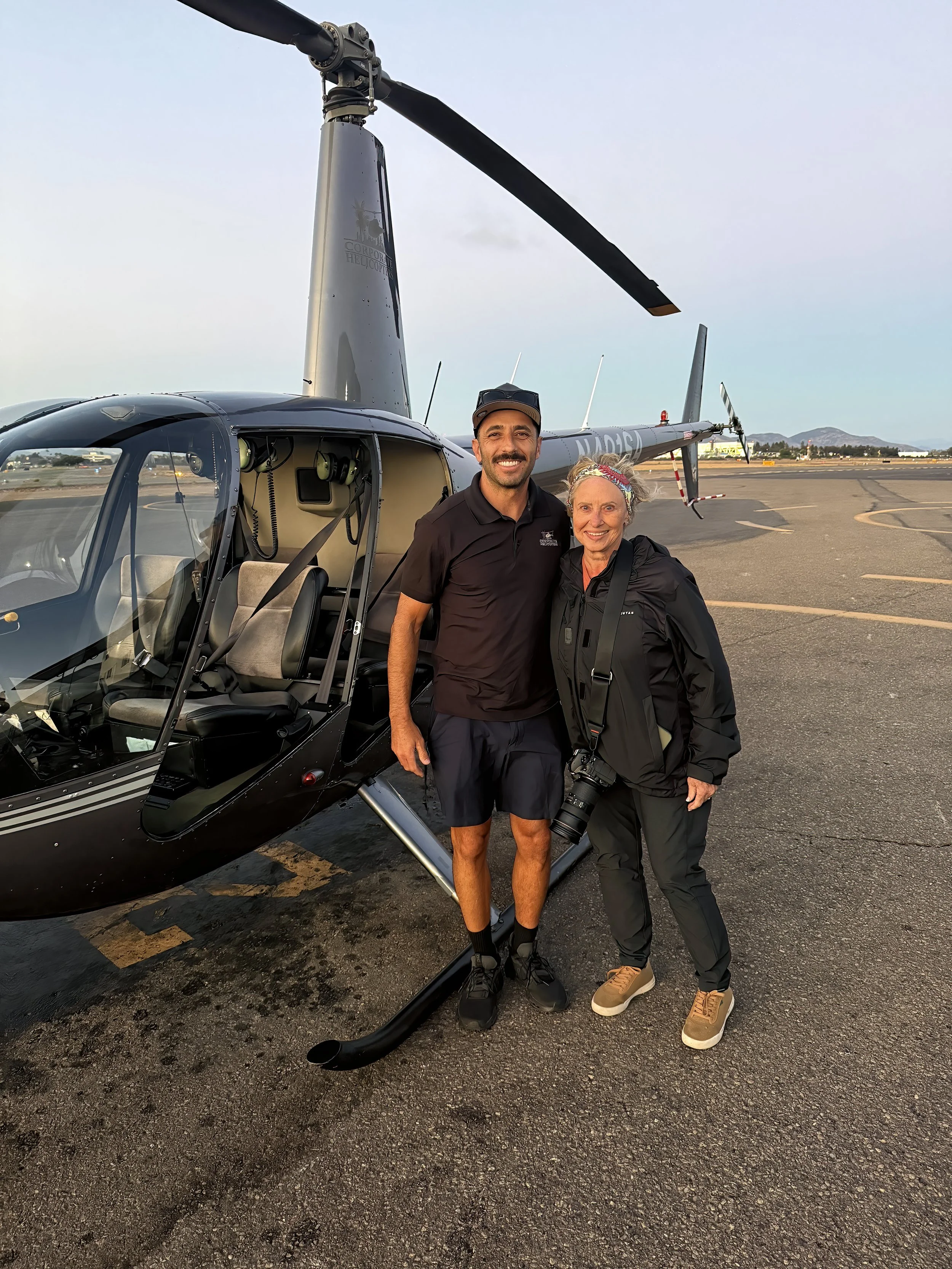
Behind the Lens: Above San Diego
Photographing San Diego’s coastline from a doors-off helicopter with an experienced pilot offered an extraordinary perspective of the Pacific below. With the landscape constantly shifting beneath us, every moment required anticipation—watching the light, water, kelp forests, and coastline come together for just seconds to create the final image.
The Landscape Has the Final Word
Nature photography teaches patience because the environment does not follow our schedule.
Fog arrives unexpectedly.
Wildlife moves.
Wind increases.
Clouds block the light.
Water changes color according to depth, sunlight, and weather.
The photograph imagined before a trip may never materialize.
Sometimes something better does.
That uncertainty is part of why I continue to work in natural environments.
Editing Is Part of Seeing
Returning home with thousands of photographs does not mean thousands of finished artworks exist.
Selection is one of the most demanding parts of the process.
I look for images that communicate something beyond documentation.
Does the composition hold your attention?
Is there movement?
Does the photograph reveal something unexpected?
Does it fit within a larger body of work?
Some images are technically excellent but never become fine art pieces.
Others immediately stand apart.
From Digital File to Physical Artwork
The transformation continues when an image leaves the screen.
Material matters.
Scale matters.
A photograph printed on Metal PRO can have a very different visual character from the same image on Canvas PRO or Acrylic PRO.
Large-scale works can reveal details that are almost invisible on a computer monitor.
This is particularly important with aerial photography.
When enlarged, a reef, glacier, coastline, or kelp forest becomes immersive.
The viewer can explore the photograph almost as if looking through a window from above.
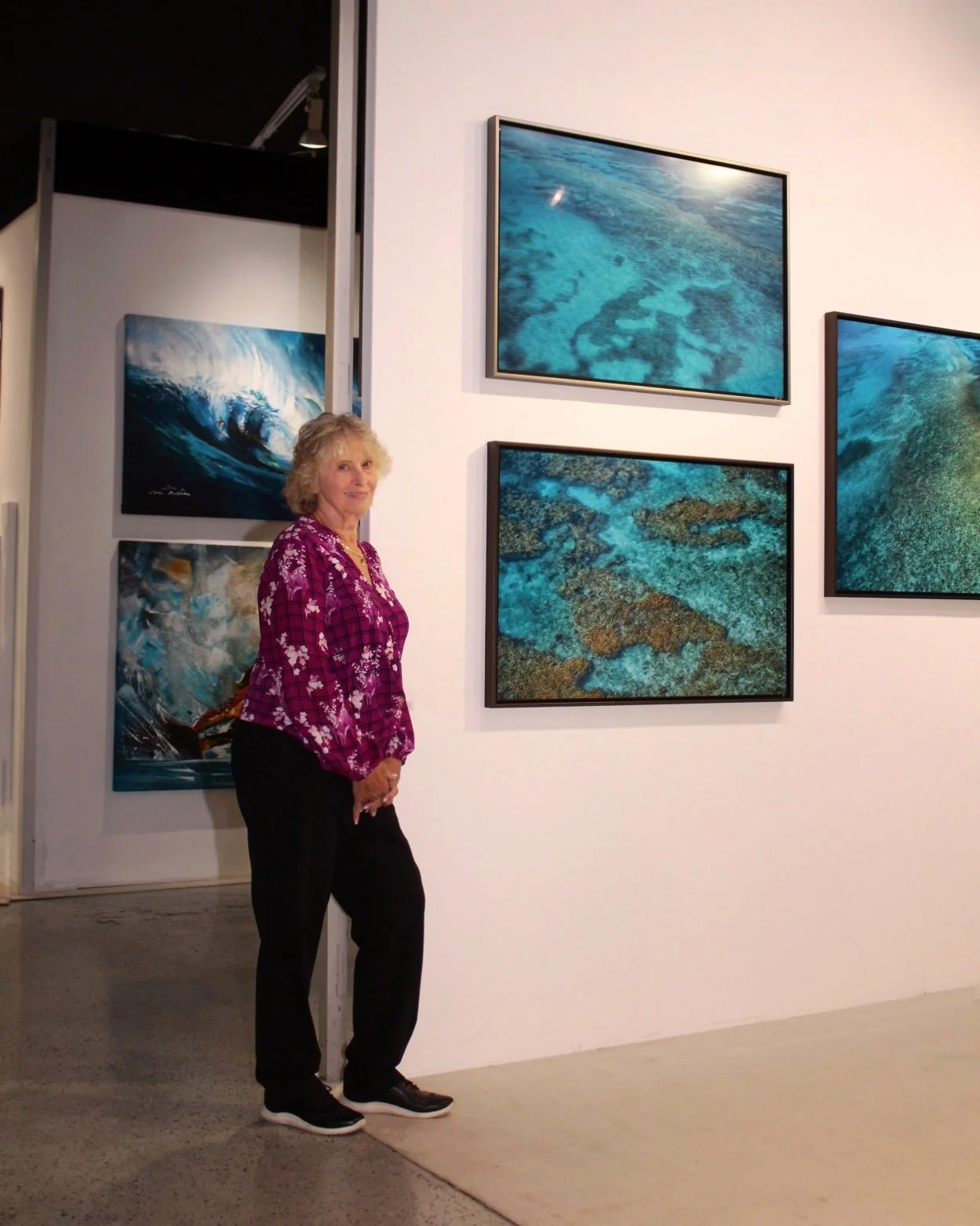
From Above to the Gallery
The Looe Key Aerial Collection comes to life at the Palm Beach Art, Antique & Design Showroom in Lake Worth Beach, Florida. Presented at large scale, these aerial works reveal the intricate patterns, luminous waters, and living architecture of the reef in a way that invites viewers to experience the ecosystem from an entirely new perspective.
Why the Story Matters
Knowing how an artwork was created is not necessary to appreciate it.
But the story can deepen the connection.
A photograph of Greenland becomes different when you understand that it represents a living glacial environment.
A turquoise abstraction changes when you realize the forms beneath the water are coral.
A dark organic pattern becomes more intriguing when you discover it is a Pacific kelp forest photographed from a helicopter.
The story returns the abstraction to the landscape.
More Than a Photograph
Ultimately, fine art photography exists somewhere between observation and interpretation.
I photograph what is there.
But I also make decisions about where to stand, when to fly, what to include, what to exclude, and which fraction of a second becomes permanent.
That is where documentation becomes artistic interpretation.
A portion of purchases from Doreen McGunagle Fine Art supports Global Voices for Nature Foundation Inc., a 501(c)(3) nonprofit dedicated to conservation education and awareness.
The Foundation extends the stories behind these photographs beyond gallery walls, using visual storytelling and education to encourage greater awareness of the natural world.
Every photograph begins with observation.
My hope is that it ends with connection.