
How Fine Art Photography Enhances Interior Design Without Overpowering a Space
Great interior design is about balance. Every element—furniture, light, texture, and color—should work together to create harmony. Fine art photography plays a unique role in this process. When thoughtfully selected, it enhances a space emotionally and visually without dominating it.
As a fine art nature and landscape photographer, I create artwork that complements interiors rather than competes with them. The goal is to add depth, intention, and presence while allowing the space itself to breathe.
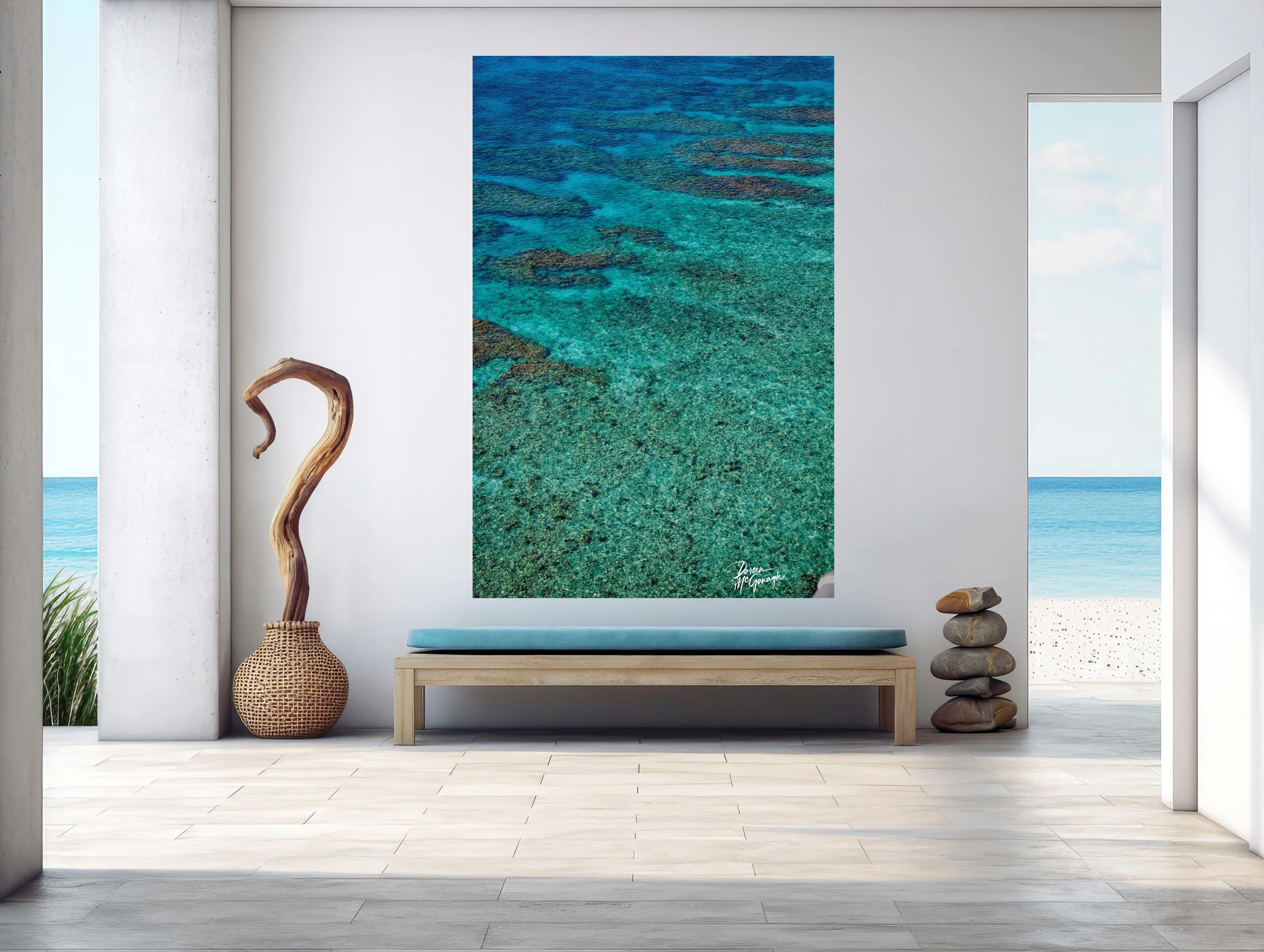
Celestial Depths of Looe Key
Celestial Depths of Looe Key invites a moment of quiet reflection through a striking aerial depiction of an underwater world bathed in light and color. Seen from above, the photograph reveals a luminous expanse of turquoise water where shifting tones of blue and green trace the contours of hidden depths. The perspective transforms the reef into a visual meditation — one that balances clarity with mystery — revealing how light, movement, and form converge within one of the most delicate marine ecosystems in the Florida Keys National Marine Sanctuary.
LKFL 3444-22 | c2026 | Learn more
The Difference Between Decoration and Fine Art
Decorative artwork is often chosen to match color palettes or fill empty walls. Fine art photography, by contrast, is selected for meaning and emotional resonance. It doesn’t need to shout to be noticed.
Nature-inspired fine art photography brings calm and cohesion to interiors. Landscapes introduce openness and flow, while wildlife imagery adds quiet strength and connection. These images integrate naturally into a space, supporting the overall design rather than overpowering it.
This subtlety is what makes fine art photography so effective in both residential and professional environments.
Using Scale to Create Balance
One common misconception is that large prints overwhelm a room. In reality, scale—when chosen correctly—creates balance. A single large fine art photography print can feel calmer and more intentional than multiple small pieces competing for attention.
Large landscape photography prints work especially well in modern interiors. Their expansive compositions mirror architectural openness, allowing the artwork to anchor a room without clutter. Black and white fine art photography also performs beautifully at scale, offering bold presence without color overload.
The key is proportion. When artwork is sized appropriately for the wall and surrounding elements, it feels integrated rather than intrusive.
Letting the Artwork Breathe
Fine art photography benefits from space. Allowing generous margins around a print—both physically and visually—helps it enhance the room without dominating it. Clean walls, simple framing, and thoughtful placement allow the image to speak softly but clearly.
Rather than filling every available wall, selecting one or two key pieces often creates stronger impact. This approach aligns with contemporary design principles focused on intentionality and restraint.
The artwork becomes a focal point, not a distraction.
Choosing Imagery That Supports the Space
The subject matter of fine art photography plays a significant role in how it interacts with an interior. Calm landscapes, flowing water, and subtle natural textures support relaxation and focus. Wildlife photography that captures stillness or contemplation adds emotional depth without intensity.
As a landscape photographer, I often guide collectors toward images that reflect the mood they want to create—serene, grounded, reflective—rather than selecting artwork solely for visual impact.
This alignment ensures the artwork enhances the emotional tone of the space.
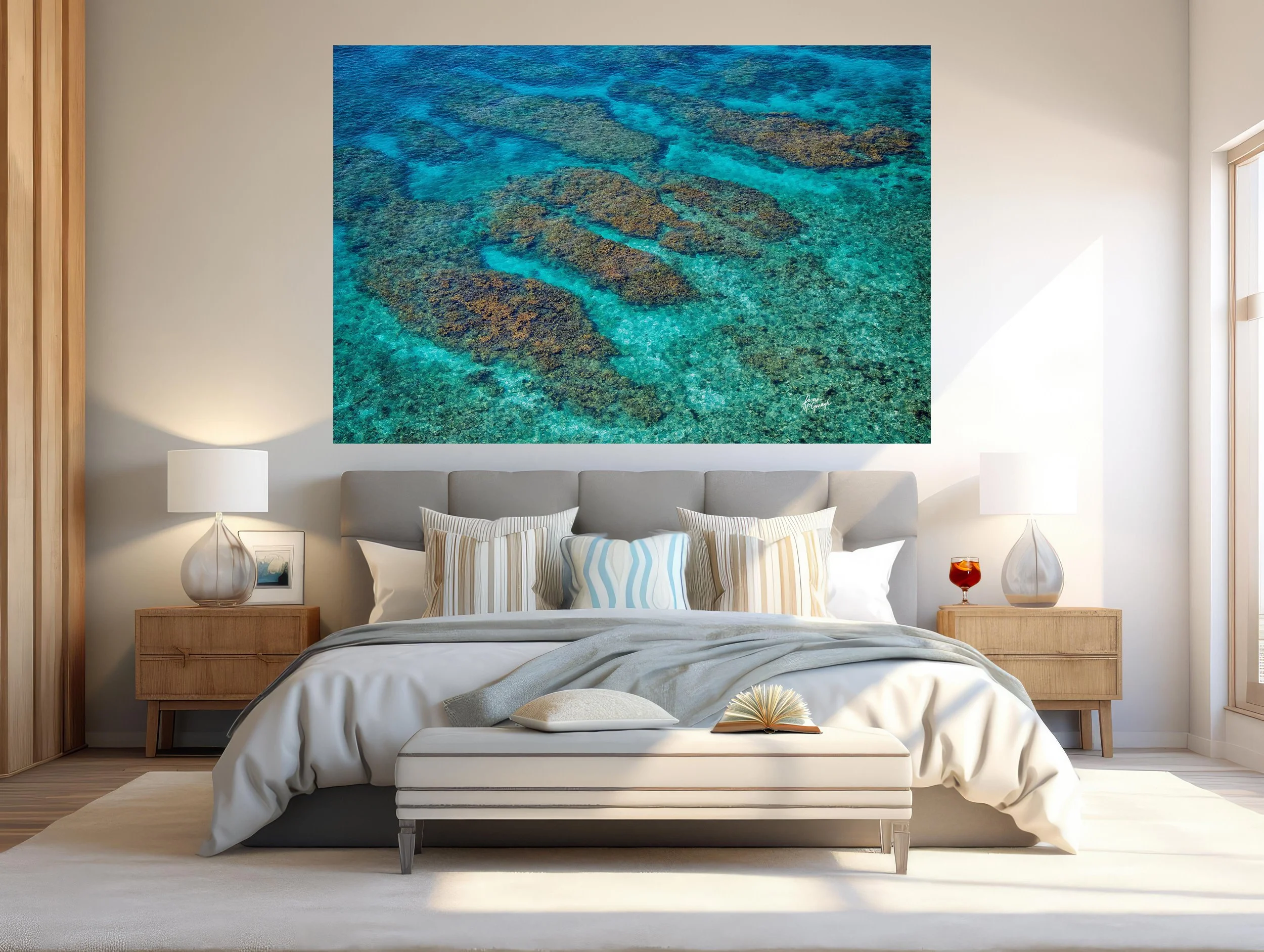
Mosaic Currents of Looe Key
Mosaic Currents of Looe Key offers an immersive glimpse into the delicate vitality of an underwater coral reef, seen from an elevated aerial perspective. Suspended between documentation and abstraction, this fine art nature photography piece reveals a living tapestry shaped by water, light, and time. Captured within the protected waters of the Florida Keys National Marine Sanctuary, the image transforms the reef into an expansive composition in which natural patterns unfold like a mosaic — each element distinct yet intrinsically connected to the greater whole.
Quality and Craftsmanship Matter
Fine art photography is designed to endure. Limited edition prints produced using museum-quality materials maintain tonal balance, texture, and integrity over time. This quality allows the artwork to remain relevant even as interior styles evolve.
Well-crafted large prints feel intentional and refined, reinforcing the sense that the space has been thoughtfully curated rather than decorated.
Art with Purpose
Fine art photography can enhance interiors while also reflecting values. Choosing nature-inspired artwork expresses appreciation for the natural world and responsible stewardship.
A portion of proceeds from fine art photography sales supports Global Voices for Nature Foundation Inc., a nonprofit dedicated to conservation education, environmental awareness, and protecting the landscapes and wildlife that inspire this work. Through collecting fine art, patrons help preserve the environments that bring meaning and beauty into our spaces.