
Conservation photography presents an interesting challenge.
How do we communicate environmental vulnerability without allowing concern to overwhelm beauty?
My answer begins with wonder.
I believe people are more likely to care about places when they first develop a connection with them.
That is why beauty remains central to my work.
Beauty Opens the Conversation
A photograph can attract someone before they know anything about its environmental context.
Color catches the eye.
Pattern creates curiosity.
Scale produces wonder.
Only then does the story unfold.
A viewer might initially see turquoise water and intricate shapes. When they learn they are looking at a coral reef, the experience changes.
The image becomes connected to an ecosystem.
That transition—from beauty to curiosity to understanding—is powerful.
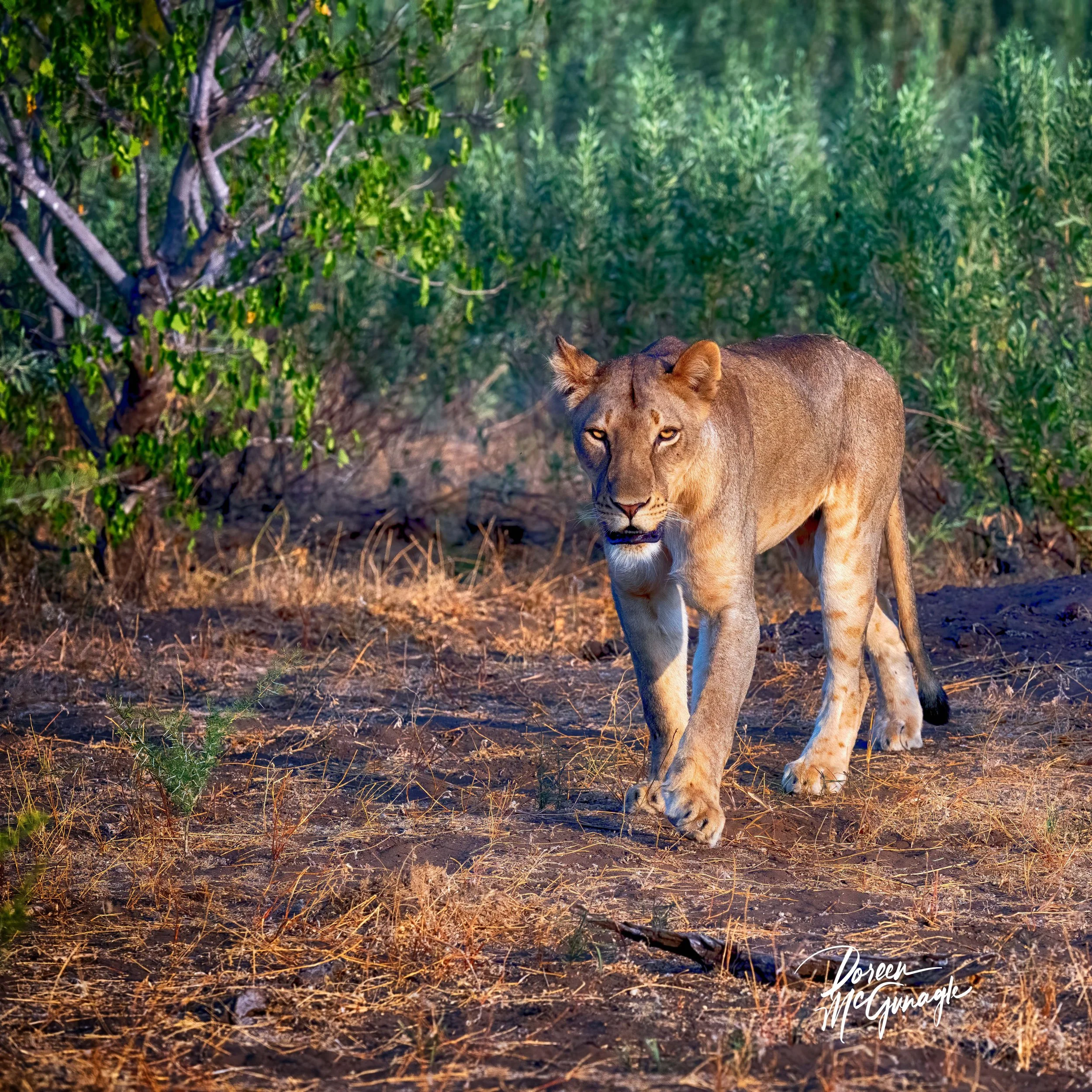
Savannah Queen in Glowing Ambience
Be transported into the majestic realm of "Savannah Queen in a Glowing Ambience," where elegance and power converge in a single, breathtaking moment. This fine art photograph immortalizes a lioness, the embodiment of grace and strength, as she strides through her natural habitat with unyielding poise. Her form, captured in a dynamic pose, becomes the focal point of this visual narrative, guided by skillful composition and impeccable timing.
Avoiding the Photograph of Despair
Environmental communication often focuses understandably on loss.
There are important reasons to document environmental damage.
But conservation storytelling can also show what remains.
Healthy habitat.
Extraordinary geological formations.
Wildlife relationships.
Protected landscapes.
Restoration efforts.
Natural resilience.
These stories matter because conservation is not only about documenting what has disappeared. It is also about recognizing what exists and why protecting it matters.
Fragility and Strength Can Coexist
The ecosystems I photograph often demonstrate both vulnerability and extraordinary resilience.
Coral structures withstand constant ocean movement.
Kelp forests bend rather than resist currents.
Mountain environments endure dramatic weather.
Wildlife adapts to changing seasons.
Glaciers reveal both immense physical power and visible transformation.
Nature is not simply fragile.
Nor is it invulnerable.
That complexity is important to communicate.
Photography as Evidence and Interpretation
During field projects, I increasingly think about two kinds of photographs.
The first is the fine art image.
The second is supporting evidence.
Signs, conservation practices, environmental structures, research activity, habitat boundaries, and human interaction with landscapes may not become gallery artwork, but they help document the larger story of a place.
Together, artistic imagery and supporting documentation provide a richer environmental narrative.
A Global Story
My photography has taken me from national parks across the United States to Botswana, the Florida Keys, the Dolomites, France, Greenland, and the Pacific coastline.
Each environment is different.
But certain questions follow me everywhere.
What makes this place distinctive?
What is changing?
What is being protected?
What do people need to understand about it?
And how can photography make that story visible?
These questions increasingly guide both my fine art work and conservation initiatives.
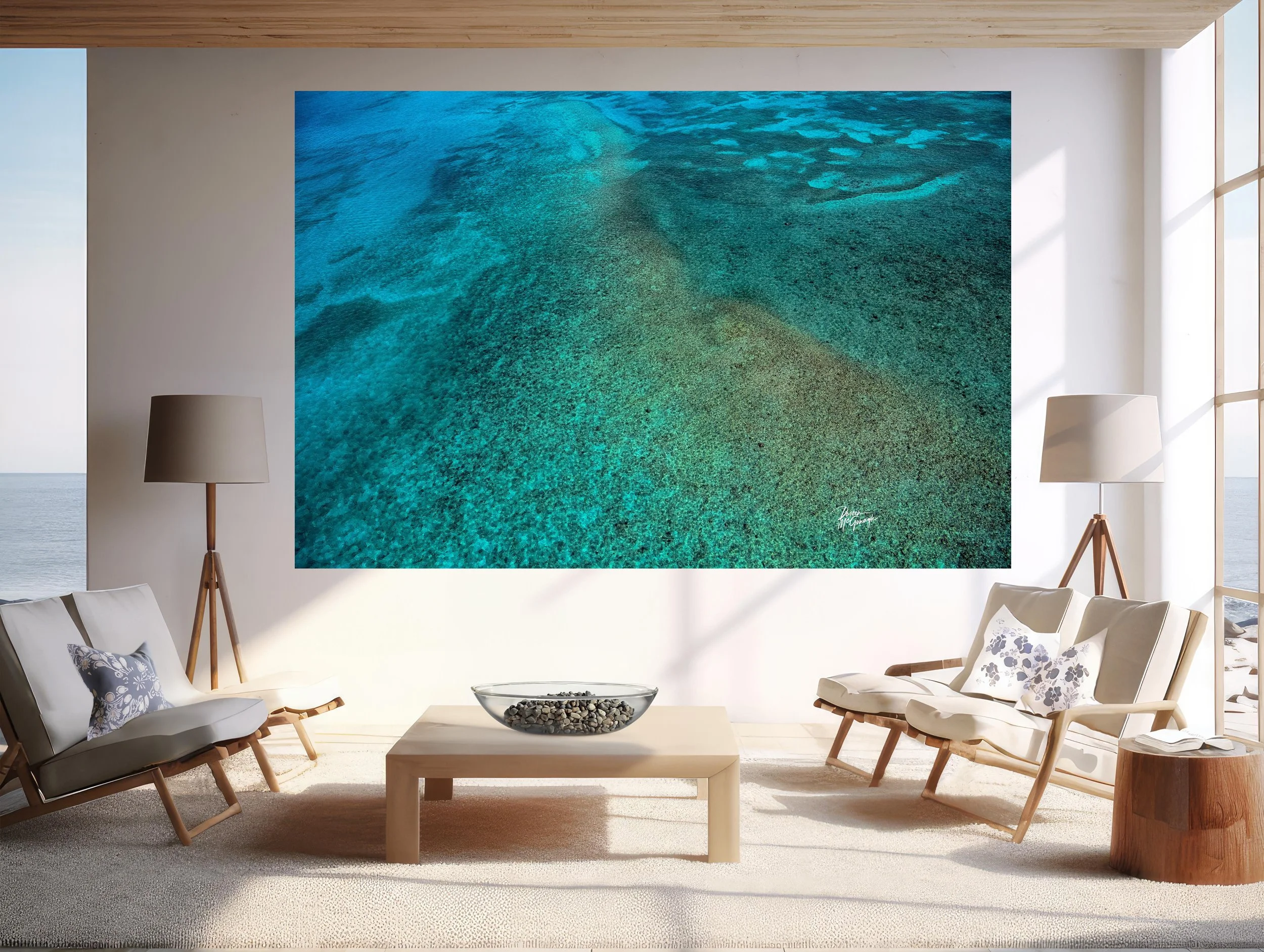
Shimmering Depths of the Sanctuary
Shimmering Depths of the Sanctuary invites viewers into a moment of quiet clarity beneath the surface of the ocean, revealing an intimate portrait of light, water, and presence. Captured from above within the protected waters of the Florida Keys National Marine Sanctuary, this fine art nature photography piece explores the subtle beauty of shallow coastal environments, where transparency and depth exist in delicate balance. Through the lens of abstract realism, the image transforms a simple moment into a contemplative visual experience — one that celebrates stillness, natural rhythm, and the quiet intelligence of the sea.
Where Fine Art Meets Purpose
A collector may choose an artwork because it brings beauty into a home.
A museum visitor may connect with the same photograph because of its environmental story.
A student may see it as evidence of an ecosystem they have never experienced.
None of those responses is more legitimate than another.
The power of visual storytelling is that one image can create multiple pathways toward connection.
A portion of purchases from Doreen McGunagle Fine Art supports Global Voices for Nature Foundation Inc., a 501(c)(3) nonprofit dedicated to conservation education and awareness of our natural resources.
Through fine art photography, conservation videos, educational storytelling, and outreach, the Foundation seeks to make distant ecosystems feel less distant.
Because before we can protect a place, we must first recognize that it matters.