7996-14
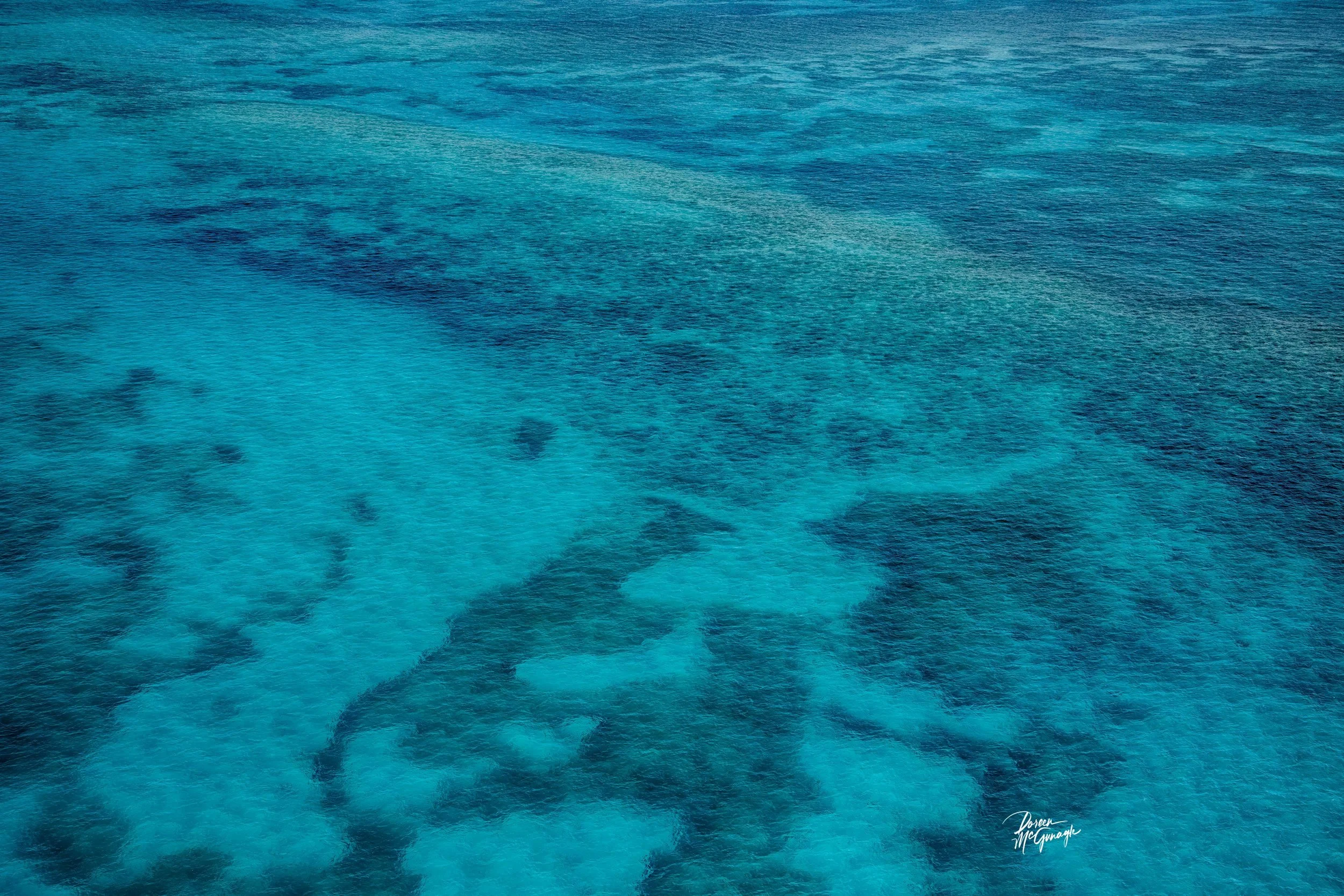
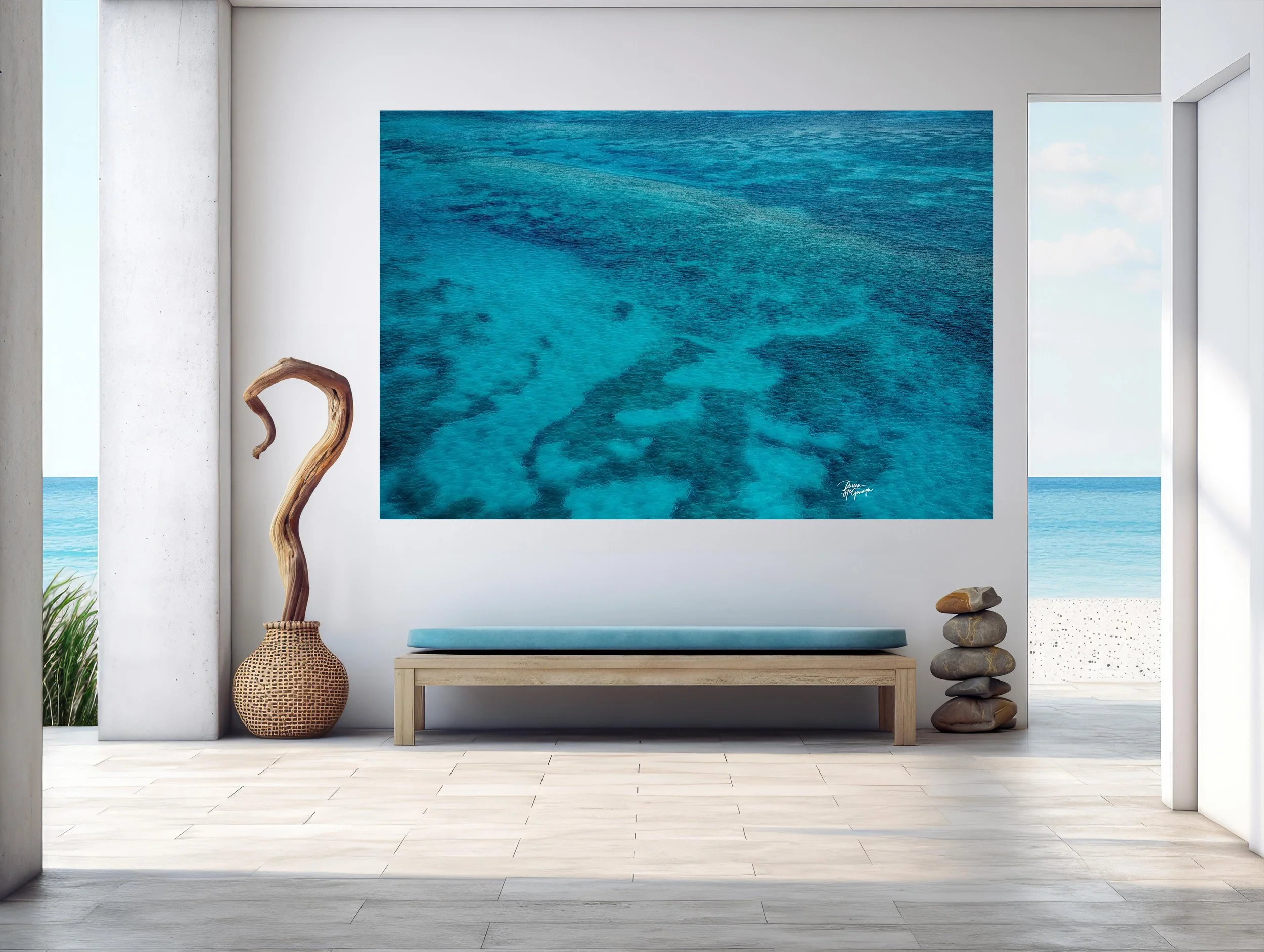
Currents of the Kelp Mosaic reveals the Pacific Ocean as a living canvas, where water, light, and marine vegetation converge in an intricate composition visible only from above. Photographed from a helicopter along the San Diego coastline, the image transforms a thriving kelp forest into an expression of aerial abstract realism—one in which the boundaries between landscape, pattern, and abstraction begin to disappear.
Across an expanse of luminous turquoise water, dark organic forms gather, separate, and reconnect. At first glance, they might appear to be brushstrokes suspended beneath glass or fragments of pigment drifting across a painted surface. Look more closely, however, and the forms reveal themselves as part of a dynamic marine ecosystem. Kelp rises toward the sunlight from the ocean floor, its floating canopy responding continuously to currents, tides, wind, and waves.
Seen from the air, these individual elements become a mosaic.
There is no rigid geometry here. Instead, the composition is shaped by movement. Rounded masses give way to delicate passages of open water; darker concentrations of kelp dissolve into isolated strands and irregular edges. The currents seem to draw invisible pathways through the scene, continually reorganizing the landscape beneath the helicopter. What appears momentarily fixed in the photograph is, in reality, an ecosystem in perpetual motion.
The extraordinary color of the water provides an essential counterpoint. Variations of turquoise, aqua, and deeper blue reveal changes in depth, light, and the underwater environment. Against these luminous tones, the kelp appears almost calligraphic. Its rich, shadowed forms create visual weight while smaller fragments establish rhythm across the composition. Light penetrates the water in some areas while reflection and shadow obscure it in others, producing a layered surface that seems simultaneously transparent and mysterious.
This tension between what can and cannot be seen is central to Currents of the Kelp Mosaic. From ground level, our understanding of a coastline is often defined by the horizon. From above, that familiar perspective disappears. The ocean becomes spatial rather than linear, revealing relationships among water, vegetation, light, and movement that are difficult to perceive from shore.
The aerial perspective also offers an opportunity to reconsider the kelp forest itself. These underwater forests are not simply visual features of the Southern California coastline. They are complex habitats supporting interconnected marine communities and contributing to the ecological character of the Pacific coast. Yet from hundreds of feet above the water, their complexity is distilled into shape, color, texture, and repetition.
That transformation lies at the heart of my approach to aerial abstract realism. The photograph remains grounded in an actual place and ecosystem, but altitude changes the visual language. Familiar elements become unfamiliar. Scale becomes ambiguous. Documentary observation begins to resemble abstraction.
The resulting image asks the viewer to move between those two ways of seeing.
From a distance, Currents of the Kelp Mosaic can be experienced simply as an arrangement of color and form—a natural abstraction created without human intervention. Up close, the ecological reality becomes increasingly apparent. The dark shapes are living organisms. The spaces between them are channels of moving water. The apparent brushstrokes are the result of biological growth interacting with the physical forces of the Pacific Ocean.
This duality is important to the larger body of work emerging from my San Diego aerial photography. I am interested not only in documenting beautiful places, but in revealing patterns that help us see natural systems differently. From reef structures and kelp forests to coastlines shaped by repeating fractal forms, the aerial perspective makes visible the interconnectedness that exists within landscapes and ecosystems.
Currents of the Kelp Mosaic ultimately becomes a meditation on that interconnectedness. No single shape dominates the image. Instead, its visual strength comes from the relationship among hundreds of forms—kelp and water, darkness and light, movement and stillness. Together, they create something larger than any individual element.
The photograph preserves one fleeting configuration within a constantly changing sea. Moments later, the currents would shift, the kelp would move, the light would change, and the mosaic would be redrawn.
In that impermanence lies both its beauty and its message: nature's most compelling designs are often not static objects, but living systems continually reshaping themselves.
Through Currents of the Kelp Mosaic, the San Diego kelp forest becomes both subject and abstraction—a reminder that some of nature's most extraordinary works of art already exist beneath the surface, waiting for a change in perspective to reveal them.
A portion of the proceeds supports Global Voices for Nature Foundation Inc., helping advance conservation and education through photography.
7996-14
Currents of the Kelp Mosaic reveals the Pacific Ocean as a living canvas, where water, light, and marine vegetation converge in an intricate composition visible only from above. Photographed from a helicopter along the San Diego coastline, the image transforms a thriving kelp forest into an expression of aerial abstract realism—one in which the boundaries between landscape, pattern, and abstraction begin to disappear.
Across an expanse of luminous turquoise water, dark organic forms gather, separate, and reconnect. At first glance, they might appear to be brushstrokes suspended beneath glass or fragments of pigment drifting across a painted surface. Look more closely, however, and the forms reveal themselves as part of a dynamic marine ecosystem. Kelp rises toward the sunlight from the ocean floor, its floating canopy responding continuously to currents, tides, wind, and waves.
Seen from the air, these individual elements become a mosaic.
There is no rigid geometry here. Instead, the composition is shaped by movement. Rounded masses give way to delicate passages of open water; darker concentrations of kelp dissolve into isolated strands and irregular edges. The currents seem to draw invisible pathways through the scene, continually reorganizing the landscape beneath the helicopter. What appears momentarily fixed in the photograph is, in reality, an ecosystem in perpetual motion.
The extraordinary color of the water provides an essential counterpoint. Variations of turquoise, aqua, and deeper blue reveal changes in depth, light, and the underwater environment. Against these luminous tones, the kelp appears almost calligraphic. Its rich, shadowed forms create visual weight while smaller fragments establish rhythm across the composition. Light penetrates the water in some areas while reflection and shadow obscure it in others, producing a layered surface that seems simultaneously transparent and mysterious.
This tension between what can and cannot be seen is central to Currents of the Kelp Mosaic. From ground level, our understanding of a coastline is often defined by the horizon. From above, that familiar perspective disappears. The ocean becomes spatial rather than linear, revealing relationships among water, vegetation, light, and movement that are difficult to perceive from shore.
The aerial perspective also offers an opportunity to reconsider the kelp forest itself. These underwater forests are not simply visual features of the Southern California coastline. They are complex habitats supporting interconnected marine communities and contributing to the ecological character of the Pacific coast. Yet from hundreds of feet above the water, their complexity is distilled into shape, color, texture, and repetition.
That transformation lies at the heart of my approach to aerial abstract realism. The photograph remains grounded in an actual place and ecosystem, but altitude changes the visual language. Familiar elements become unfamiliar. Scale becomes ambiguous. Documentary observation begins to resemble abstraction.
The resulting image asks the viewer to move between those two ways of seeing.
From a distance, Currents of the Kelp Mosaic can be experienced simply as an arrangement of color and form—a natural abstraction created without human intervention. Up close, the ecological reality becomes increasingly apparent. The dark shapes are living organisms. The spaces between them are channels of moving water. The apparent brushstrokes are the result of biological growth interacting with the physical forces of the Pacific Ocean.
This duality is important to the larger body of work emerging from my San Diego aerial photography. I am interested not only in documenting beautiful places, but in revealing patterns that help us see natural systems differently. From reef structures and kelp forests to coastlines shaped by repeating fractal forms, the aerial perspective makes visible the interconnectedness that exists within landscapes and ecosystems.
Currents of the Kelp Mosaic ultimately becomes a meditation on that interconnectedness. No single shape dominates the image. Instead, its visual strength comes from the relationship among hundreds of forms—kelp and water, darkness and light, movement and stillness. Together, they create something larger than any individual element.
The photograph preserves one fleeting configuration within a constantly changing sea. Moments later, the currents would shift, the kelp would move, the light would change, and the mosaic would be redrawn.
In that impermanence lies both its beauty and its message: nature's most compelling designs are often not static objects, but living systems continually reshaping themselves.
Through Currents of the Kelp Mosaic, the San Diego kelp forest becomes both subject and abstraction—a reminder that some of nature's most extraordinary works of art already exist beneath the surface, waiting for a change in perspective to reveal them.
A portion of the proceeds supports Global Voices for Nature Foundation Inc., helping advance conservation and education through photography.

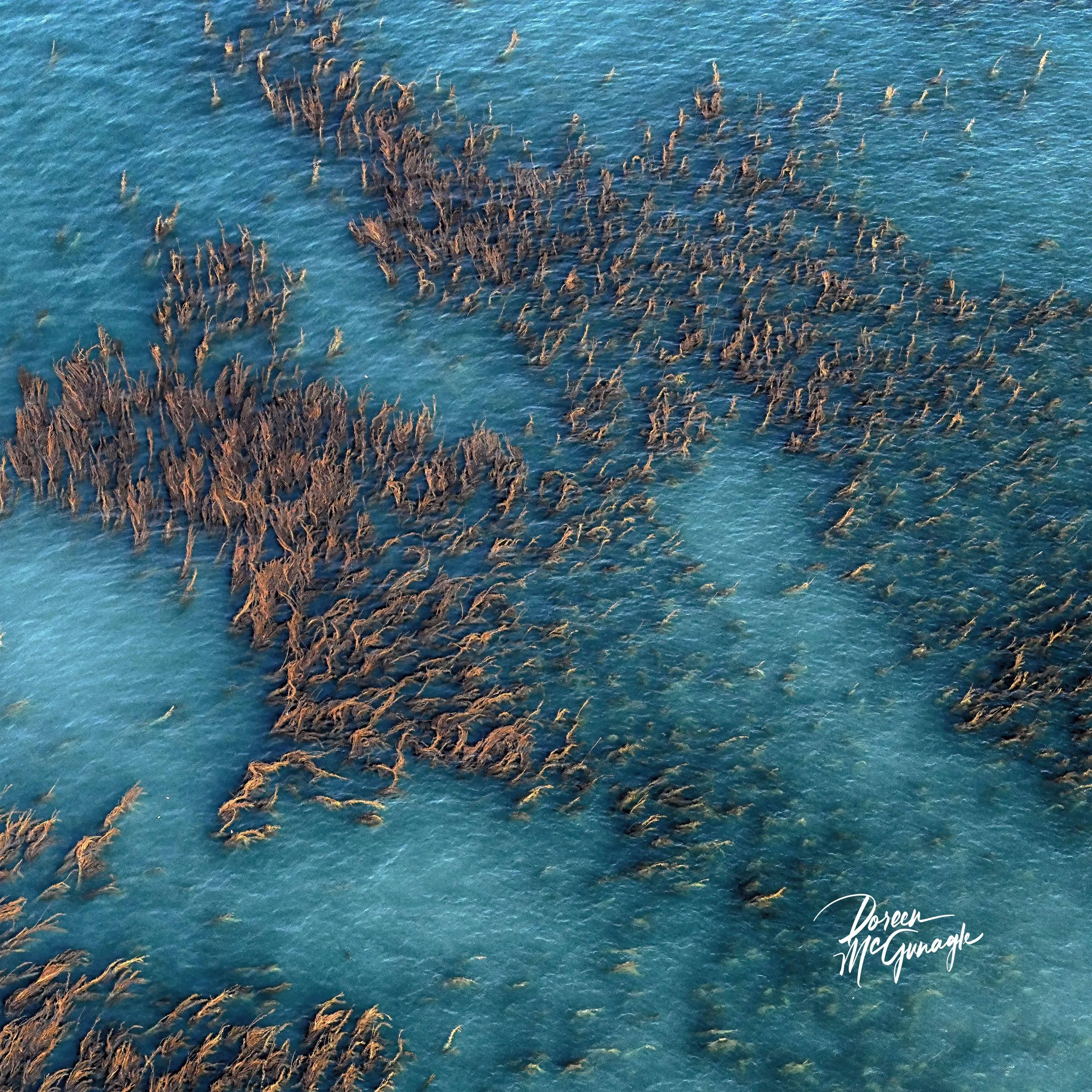 Image 1 of 4
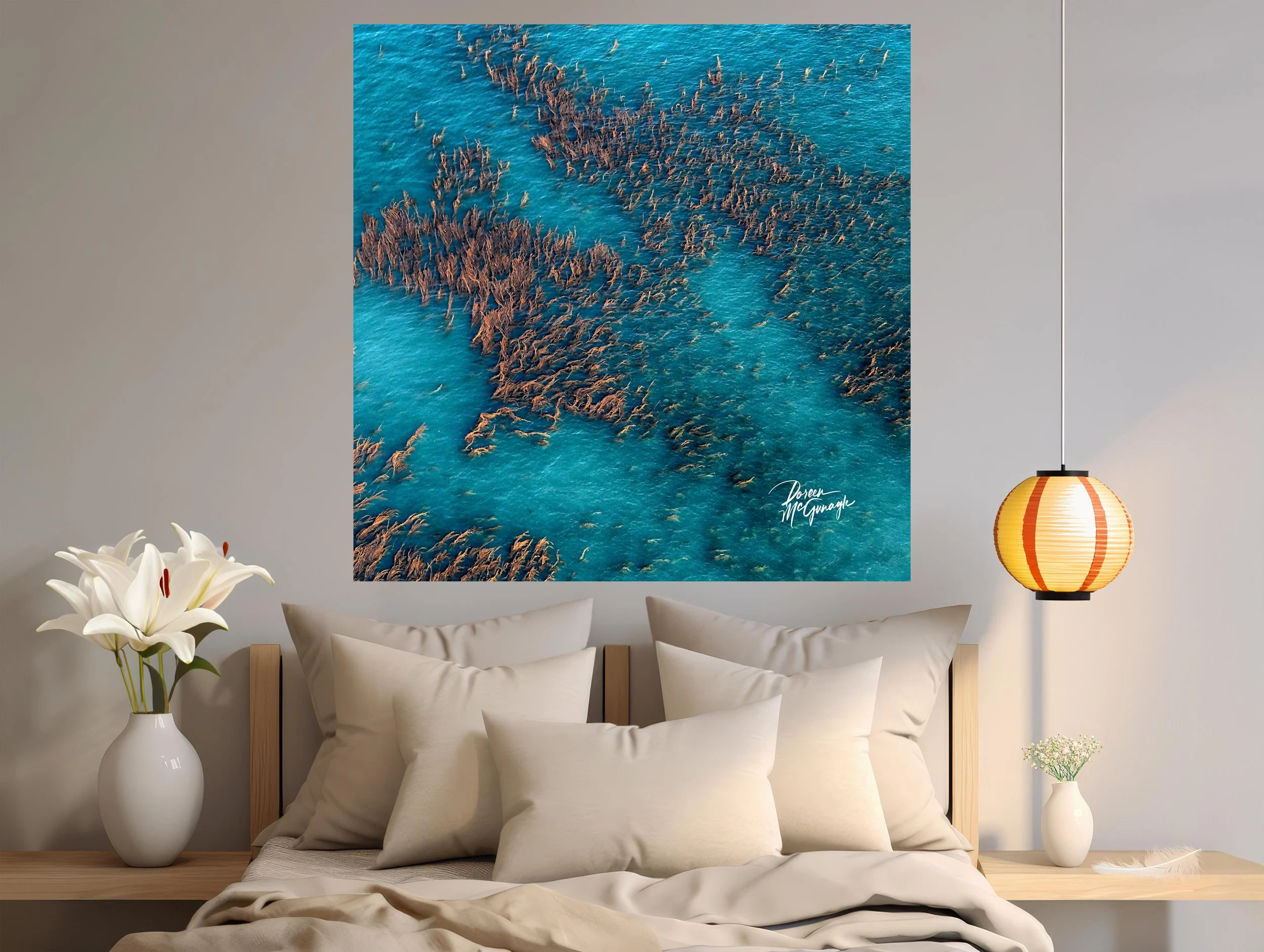 Image 2 of 4
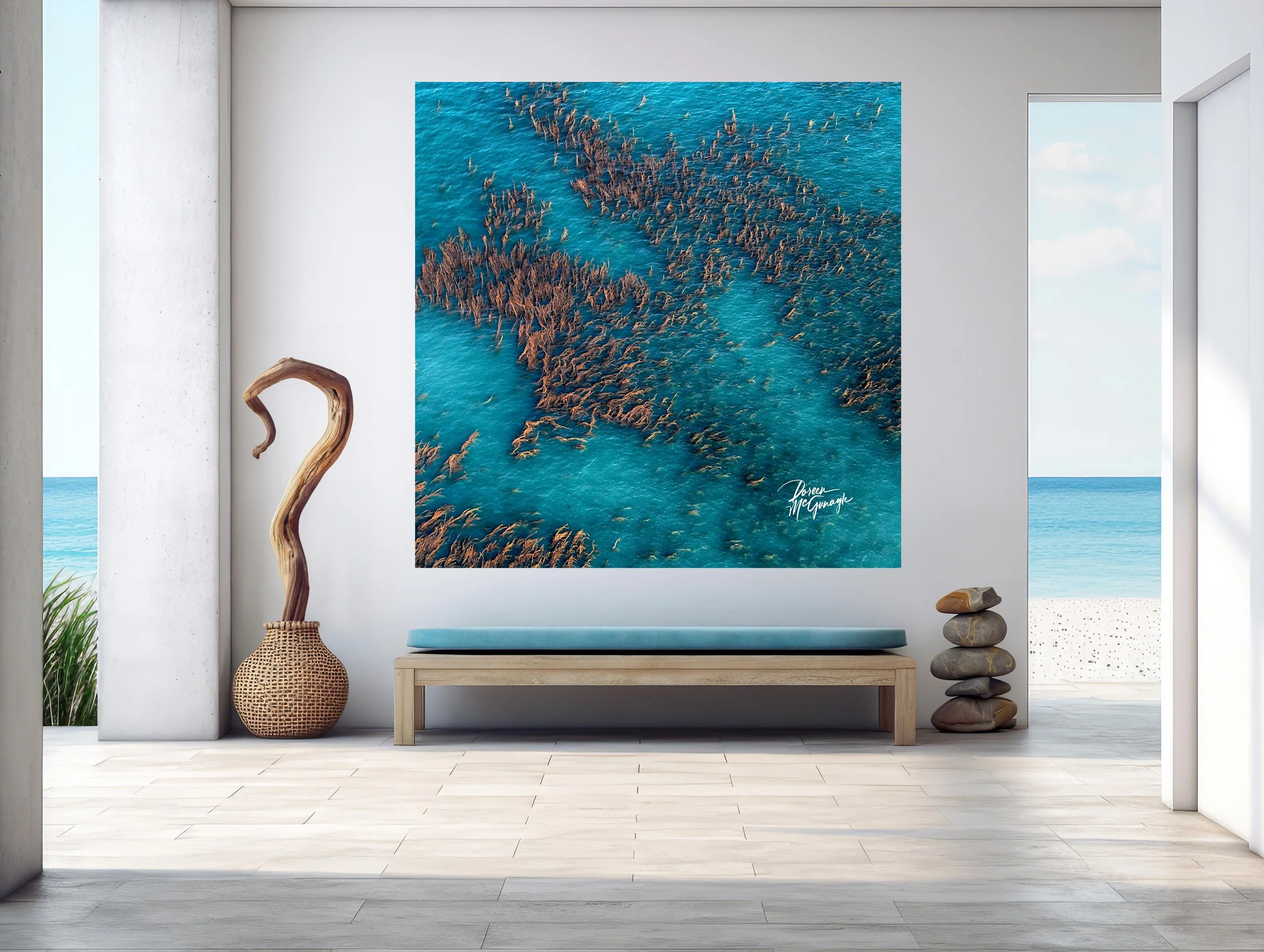 Image 3 of 4
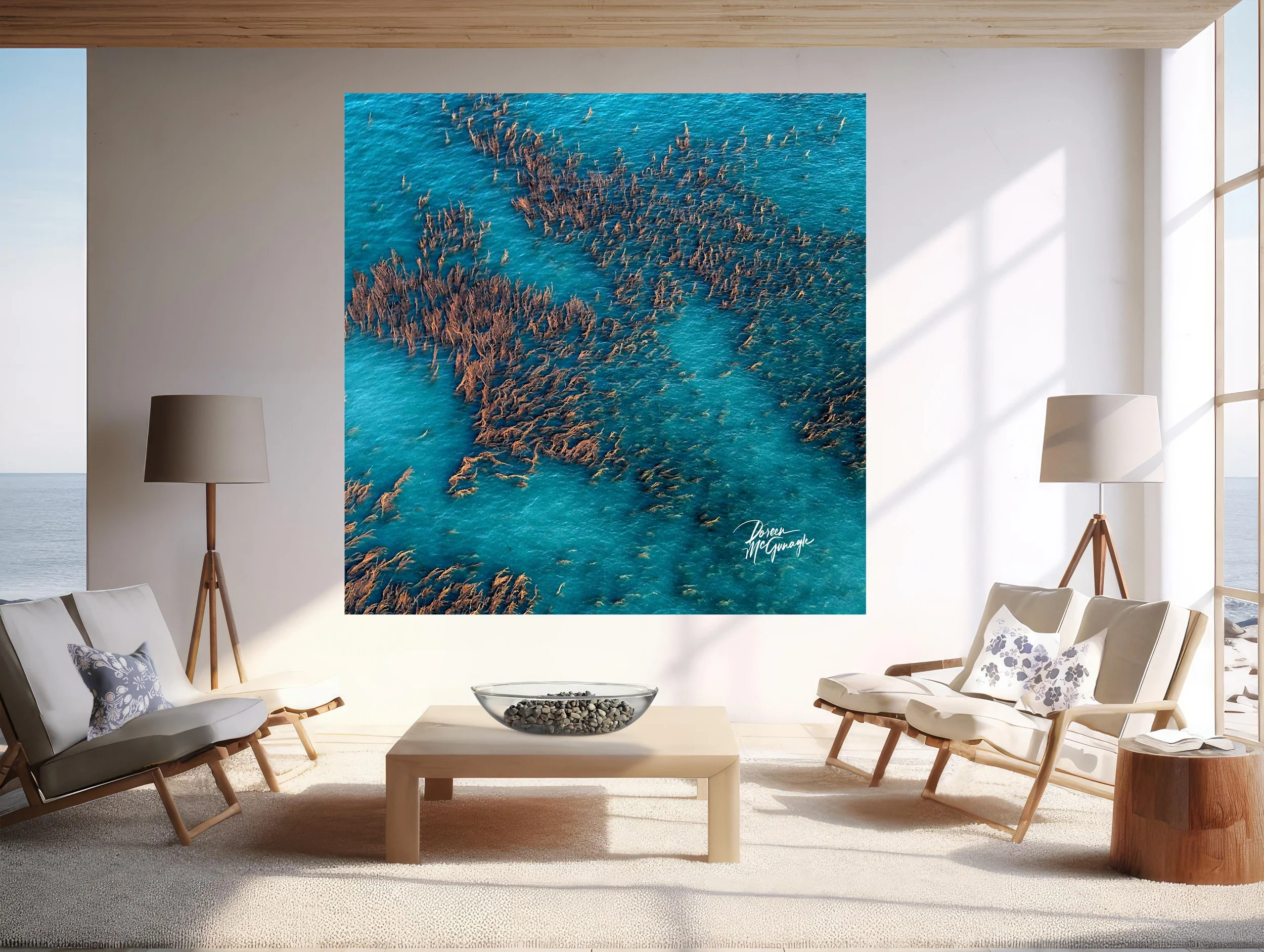 Image 4 of 4