
The Hidden World of Kelp Forests: Photographing San Diego from Above
Looking down from a helicopter over the Pacific Ocean, the water does not appear empty.
It is alive with pattern.
Dark ribbons drift beneath turquoise water. Waves trace white lines along the coastline. Rock formations interrupt the movement of the sea, while enormous areas of kelp create shifting organic shapes beneath the surface.
From the ground, these elements may appear separate.
From the air, they become one composition.
My recent aerial photography project along the San Diego coastline was created to explore this remarkable intersection of kelp forests, coastal geology, ocean currents, and fine art abstraction.
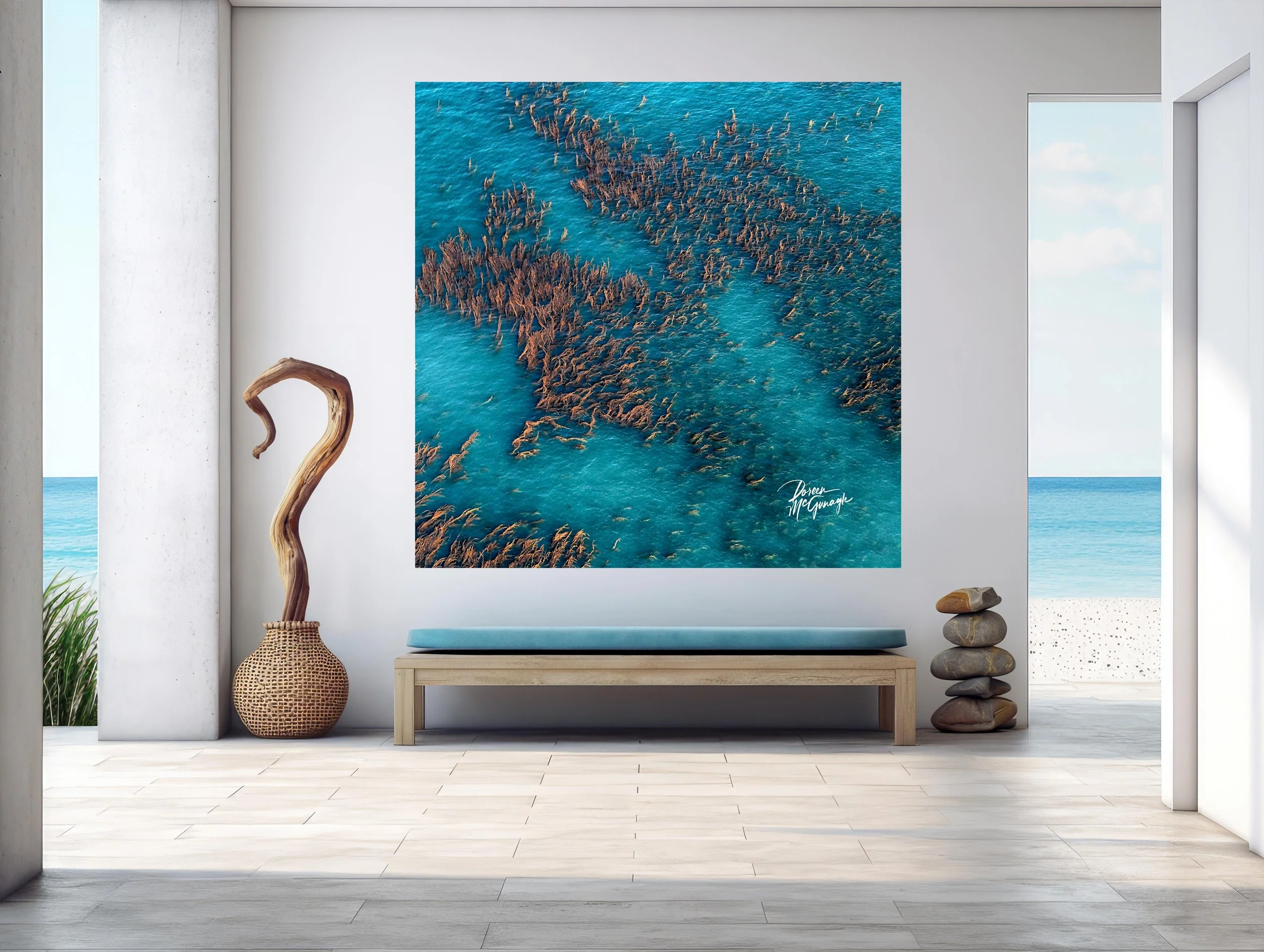
Currents of the Kelp Mosaic
Seen from the air, these individual elements become a mosaic.
There is no rigid geometry here. Instead, movement shapes the composition. Rounded masses give way to delicate passages of open water; darker concentrations of kelp dissolve into isolated strands and irregular edges. The currents seem to draw invisible pathways through the scene, continually reorganizing the landscape beneath the helicopter. What appears momentarily fixed in the photograph is, in reality, an ecosystem in perpetual motion.
Seeing the Kelp Forest from a Different Angle
Kelp forests are among the most visually fascinating environments I have photographed.
From above, the kelp does not immediately announce itself as vegetation.
Instead, it creates texture.
The shapes shift according to the water, current, tide, sunlight, and viewing angle. In some photographs, strands of kelp create sweeping directional movement. In others, they appear as dark fragments suspended within brilliant blue-green water.
The resulting photographs move between realism and abstraction.
That is precisely what interests me.
My work is grounded in recognizable natural environments, yet aerial perspective allows the landscape to become something unexpected.
The Search for Natural Fractals
Nature repeats itself.
Branches divide into smaller branches. Rivers form tributaries. Coral grows in repeating structures. Ice fractures. Waves create recurring curves.
These patterns are often described as fractals—forms that repeat at different scales throughout the natural world.
Aerial photography provides an extraordinary opportunity to discover these patterns.
During the San Diego project, I was particularly interested in the relationship between kelp, currents, breaking waves, and shoreline formations.
Images such as Currents of the Kelp Mosaic, Fractal Pulse at Tidal Embrace, and Veins of the Ocean’s Breath emerged from this exploration.
The titles intentionally reflect movement rather than simply location.
These are photographs of San Diego, but they are also photographs about rhythm, structure, and natural design.
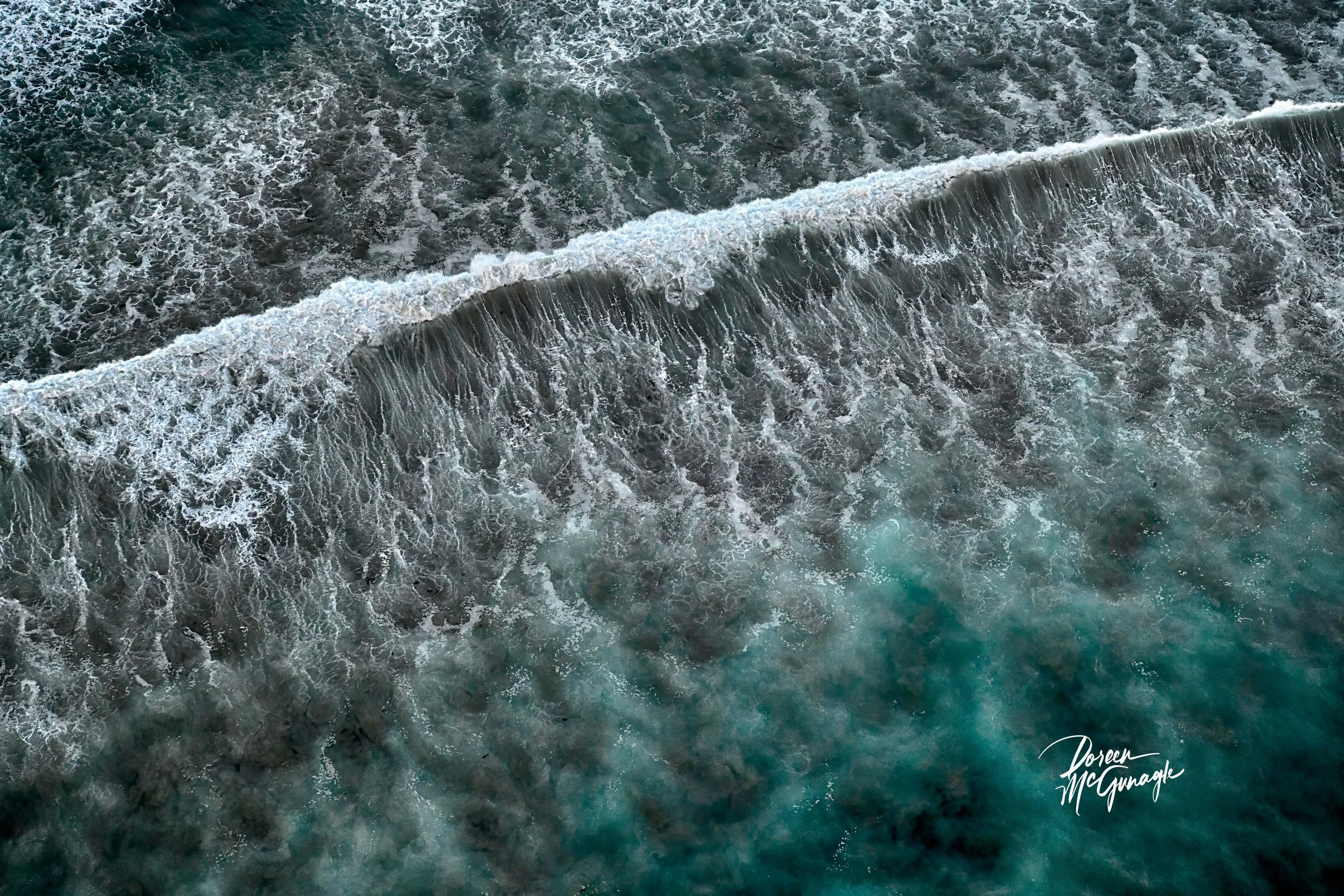
Aerial Collection
A glimpse into Doreen McGunagle’s emerging aerial fractal series, where ocean currents, kelp, and shoreline patterns form naturally occurring abstract compositions. This selected image previews the larger body of work to be presented at the Cornell Art Museum in 2027.
Why Photograph from a Helicopter?
Creating fine art aerial photography requires giving up many of the controls available when photographing from the ground.
The landscape moves quickly beneath you.
Light changes.
The helicopter changes position.
The subject cannot be rearranged.
There is often only a brief moment when composition, altitude, angle, water conditions, and light come together.
Doors-off helicopter photography adds another physical dimension. Wind, vibration, equipment management, and constant movement become part of the creative process.
But the reward is a perspective that cannot be experienced from shore.
From San Diego to Edges of the Earth
The San Diego photographs will become one of three environmental stories presented in my 2027 solo exhibition, Edges of the Earth: Fragile Ecosystems from Reef to Glacier, at the Cornell Art Museum.
The Pacific kelp environment will be shown alongside the coral reefs of Looe Key and the immense ice formations of Greenland.
These places are separated by thousands of miles.
Yet water connects every one of them.
The exhibition asks viewers to consider what becomes visible when we move beyond seeing a landscape simply as scenery.
A reef becomes structure.
A kelp forest becomes pattern.
A glacier becomes architecture.
And photography becomes a way of exploring the relationships hidden within the landscape.
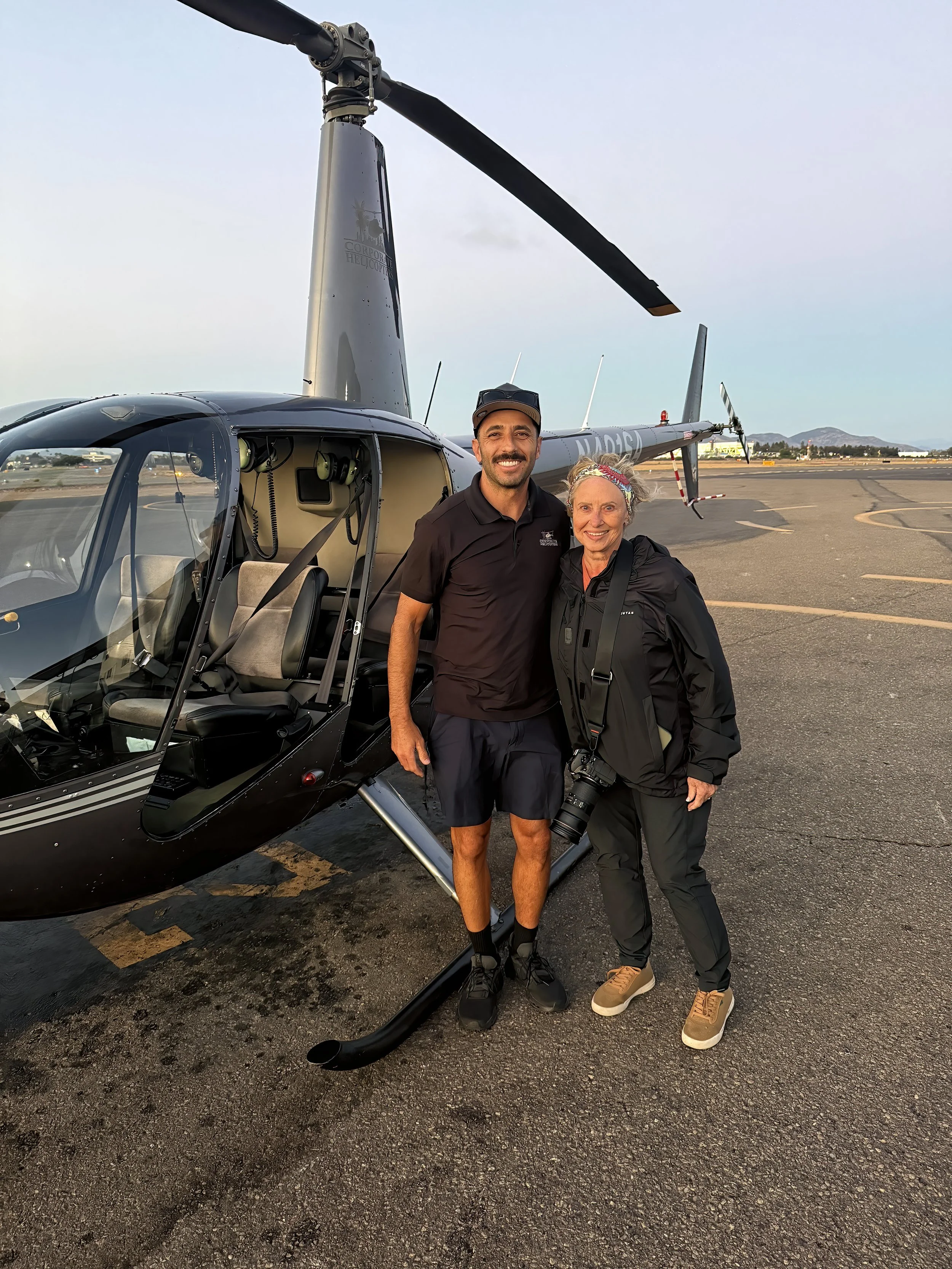
Supporting Conservation Through Fine Art
A portion of purchases from Doreen McGunagle Fine Art supports Global Voices for Nature Foundation Inc., a 501(c)(3) nonprofit dedicated to conservation education and awareness.
The Foundation uses visual storytelling, educational initiatives, and conservation-focused projects to encourage a deeper understanding of the natural environments we share.
The San Diego kelp forests reminded me that some of nature’s most extraordinary landscapes exist just beneath the surface.
Sometimes all we need is a different perspective to see them.